





News
Falana: Nigerian Politicians Can’t Conduct Credible 2027 Polls If They Can’t Run Party Primaries
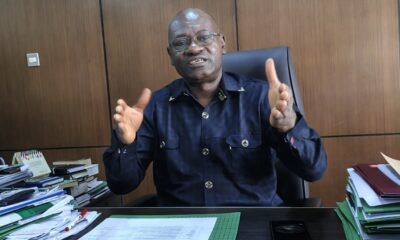
Human rights lawyer Femi Falana has warned that Nigeria’s political class lacks the capacity to deliver free and credible elections in 2027, arguing that parties cannot even conduct successful primaries under the current legal framework.
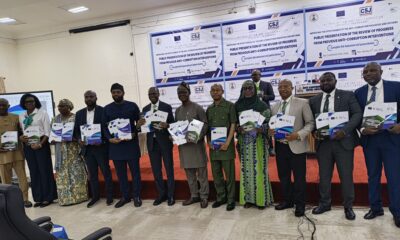
Falana spoke as keynote speaker at the June 12 Democracy Day Commemoration Lecture organized by National Human Rights Commission in Collaboration with Prof. Humphrey Nwosu Center for Democracy and Human Rights in Abuja on Tuesday.
He drew parallels between today’s electoral challenges and the annulled June 12, 1993 election supervised by Prof. Nwosu as NEC Chairman.
“The crop of politicians now can’t even conduct a successful primary for their parties, therefore cannot conduct free and credible elections in 2027,” Falana stated.
He cited the recent party primaries where Section 84(2) of the Electoral Act 2026 restricted options to consensus or direct primaries, forcing aspirants to withdraw and triggering multiple court cases. The situation, he said, exposes how internal party democracy has collapsed.
Falana recalled the legal battle after Prof. Nwosu’s NEC tried to publish presidential election results in 1993. “We looked at all the laws. We couldn’t find any provision that prevented us from knowing the results… So we published the results and were attacked,” he said. He and others were arrested, detained in Keffi prison, and denied bail because a magistrate feared “more demonstrations in town.”

He linked that history to present-day repression, saying the Cybercrimes Act is now being used to charge citizens for expressing dissent. “Today, if you make any statement against the governor or president, you are charged… Free speech has been taken away from us,” he said.
The activist condemned terrorism, kidnapping, and negotiations with “repentant criminals,” citing Section 12 of the Terrorism Prevention and Prohibition Act which prescribes 20 years for negotiating with terrorists. “They have killed children, abducted citizens, and still government pays them. The law says they shall be tried,” he argued.
Falana also lamented Nigeria’s 13.5 million out-of-school children, collapsing hospitals, poor electricity, and worsening poverty despite increased government revenue. He called on the National Human Rights Commission and the Nwosu Center to demand monthly publication of statutory allocations, recalling how the Minister of Finance once published them regularly. “All of us must know what is going on,” he said.
He criticized the exclusion of women from politics after recent primaries, noting that while Namibia, Rwanda, Senegal, and Ethiopia have achieved near 50-50 representation, Nigeria still marginalizes over 50% of its population. “You can’t have democracy without the liberation of women,” Falana said.
He urged citizens, media, and civil society to demand answers from politicians on security, jobs, and welfare instead of ethnicity and religion, and to stand for justice “without saying this person is from this side of the country.”
The lecture honored the late Prof. Humphrey Nwosu for his role in conducting the freest election in Nigeria’s history on June 12, 1993