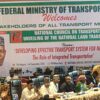
Non-state actors must move from the sidelines to the center of Nigeria’s agricultural policy process if the country is to meet its Comprehensive Africa Agriculture Development Programme commitments, Mrs. Jennifer Ogle, Deputy Country Director of CARE International Nigeria, said at a workshop in Abuja.
Speaking at Nigeria’s Non-State Actors Workshop on “Strengthening Coordination and Policy Influence in CAADP Implementation” Ogle noted that fragmented advocacy and weak coordination continue to limit the impact of civil society, farmer groups, and the private sector in shaping food systems policy.
“CAADP is not just a government document. It is a compact with citizens,” Ogle said. “Non-state actors must invest in data, in budget tracking, in citizen scorecards. Then we must speak with one voice to the government and ensure that Africa has better food security and nutrition.”
She added that CARE will continue to convene, build capacity, and amplify community voices.
Nasom Richard Ngaro, Policy and Advocacy Technical Coordinator for CARE International Nigeria, said the 3-day workshop, organised by CARE in collaboration with COANSA, GIZ, and ActionAid, aims to facilitate a roadmap for advocating implementation of the CAADP Kampala Declaration.
“For CARE, our role aligns perfectly with our strategy for connecting globally and acting locally, and also one of our pillars of implementation in food security,” Ngaro said. “How do we influence the government to carry out the commitments they made in Kampala for sustainable agricultural practices in Nigeria?”
He stressed the need for coalition-building. “What we’ve identified is that we have government actors and non-state actors. This workshop is primarily dealing with non-state actors, to see what is their role in catalyzing implementation. We come together to advocate for better implementation and streamline issues that affect the everyday farmer, because the everyday farmer is increasing agricultural production and food security for Nigeria.”
According to Ngaro, improving agricultural production requires going “back to the basics”: land, access to finance, access to improved inputs, and policies that make trade fair. “If you want to catalyze access to improved technology, reduce the wage impact for the young farmer, then you start with how much finance does he have, how much access does he have to that technology, and is he able to use it to improve his yield.”
Adele Djoda Bello, GIZ Technical Adviser for Gender and CSO Engagement in Agriculture, said Nigeria cannot achieve food security if women are left behind.
“Nigeria cannot achieve food security if we leave half the population behind. Women make up 70% of agricultural labour and produce 60-80% of food consumed in rural households,” Bello said in her goodwill message.
“Food security is not just about yield per hectare. It is about who plants, who owns, who decides, and who eats. If we ignore gender gaps, we ignore productivity gaps,” she added.
She said GIZ prioritises gender and civil society engagement as core pillars through its Agriculture and Food Security Programme. “Civil society organisations are closest to smallholder farmers, especially women and youth. They bridge the last mile. They translate policy into local language and practice. They hold us accountable.”
Bello noted that GIZ is currently working with over 40 CSOs across 12 states to deliver climate-smart training, land rights awareness, and market linkages for women farmers. “We must move from seeing CSOs as contractors to seeing them as co-creators of food security solutions,” she said.
Mrs. Rosemary Effiong, Chairperson of the Community of Agric Food System Non-State Actors, said COANSA is an advocacy team made up of researchers, farmers, non-state actors, agro-processors, and the private sector.
“We try to pick up policy, interpret and break it down to the barest minimum where farmers and other beneficiaries understand,” Effiong said. She added that COANSA works with research organisations, the Federal Ministry of Agriculture and Food Security, the National Assembly, and international agencies.
Effiong said the current CAADP cycle runs from 2026 to 2035. “The challenge in previous programmes was that players were running their programmes independently. But now they’re coming together to save resources and execute programmes efficiently.”
On food security, she warned that short-term government policies to cut food prices are hurting producers. “The short term government policy to reduce the prices of foods in the market is affecting the farmers as they produce and sell their harvests very cheap but can’t be able to buy inputs for the next farming season because of high cost. The government must review these policies as intervention in synergy with stakeholders to benefit the farmers,” she said.
Hon. Dr. John OnyeOkoro, representing Hon. Chike Okafor, Chairman of the House Committee on National Food Security and Nutrition, said malnutrition and food insecurity are widespread and require action beyond Abuja.
“So, for us to have any meaningful law, we must organize this. That’s why the Committee may drive the formation of the Committee in the State Houses of Assembly,” OnyeOkoro said. He said the network of lawmakers will focus on appropriation, resource mobilization, lawmaking, legislative oversight, and citizen representation.
He said a review of existing laws is ongoing to align with international frameworks, while urgent bills are also advancing. These include a bill to extend paid maternity leave to six months, which has passed first reading, and a bill to ban the open sale of adulterated cooking oil.
“Some of these oils cause harmful body damage. They cause severe deleterious effects on our body. This ban, when it becomes law, will help to promote healthy living and prevent some non-communicable diseases,” he said.
Olabisi Ogedegbe, Coordinator of the Gwagwalada Small Scale Women Farmers Association of Nigeria, commended CARE International and partners for the workshop.
She said food security cannot be addressed without policies that benefit local farmers. “Many times we hear about government interventions for grassroots farmers but we can’t access such loans. Therefore we’re calling on the government to assist farmers with land and eliminate the issues of insecurity threatening the farmers across the country,” Ogedegbe said.