By Matthew Denis
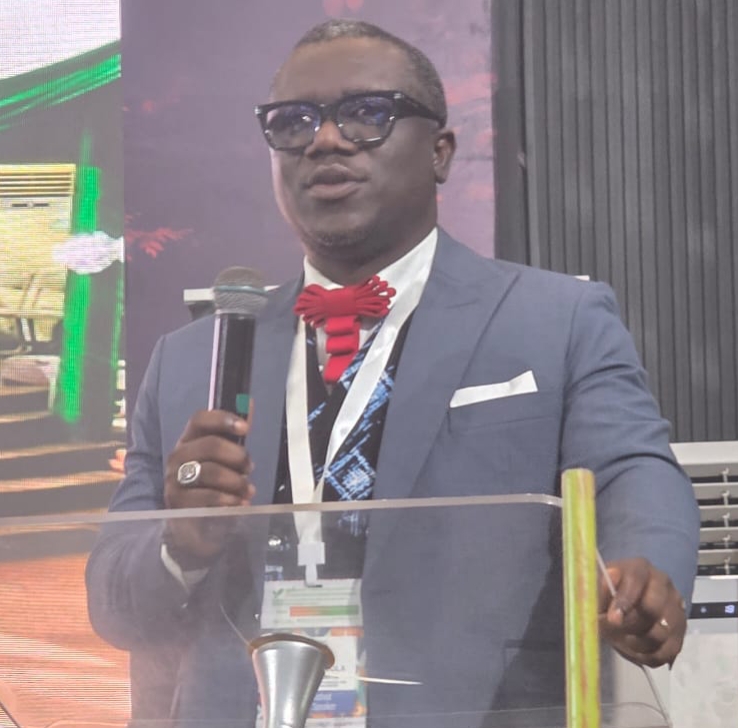
The National Chairman of the Nigerian Institution of Highway and Transportation Engineers (NIHTE), *Engr. Dr. Bola J. Mudasiru, has called for stricter enforcement of engineering standards, improved infrastructure maintenance and stronger accountability to ensure roads and bridges across West Africa remain durable and safe.
Bola said the region’s major infrastructure challenge was not a lack of engineering knowledge, but the failure of institutions to consistently apply established standards, provide adequate funding throughout the lifespan of public assets and hold decision-makers accountable.
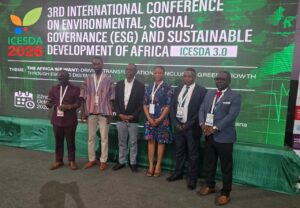
He made the call while delivering a keynote address at the 2026 International Conference on Engineering, Sustainable Development and Allied Matters (ICESDA 2026) on Thursday, October 22, 2026 in Accra, Ghana.
In his address, titled “Delivering Roads and Bridges That Last: Engineering Standards and Asset Governance Across West Africa,” Mudasiru stressed that the failure of roads and bridges often originated long before construction began.
He explained that poor traffic forecasts, inadequate drainage designs, substandard materials, undocumented project variations and insufficient maintenance funding could undermine infrastructure projects even before contractors arrived on site.
According to him, while contractors could compromise a sound design, they could not rescue a fundamentally inadequate one.
“My central message is simple: West Africa does not lack engineering knowledge. Our challenge is institutional consistency—applying knowledge, funding the full life of assets, and holding decision-makers accountable,” he said.
The engineer noted that roads designed to carry heavy freight must reflect realistic traffic projections, while bridges exposed to flooding, erosion and climate-related pressures must incorporate those risks into their investigation, design, inspection and maintenance plans.
He added that infrastructure development should not be assessed solely by the successful completion of construction contracts, but by the ability of the resulting assets to deliver reliable public services over time.
“A project can be completed successfully as a contract, yet fail as a public asset. Contract completion is a milestone. Asset performance is the real test,” Mudasiru stated.
Bola Mudasiru emphasised the need for engineering standards to guide project decisions, warning that specifications that could be disregarded without proper documentation, risk assessment and approval would have little practical value.
He said any deviation from established standards must be supported by evidence detailing the reasons, associated risks, responsible authorities and implications for safety, cost and the expected lifespan of infrastructure.
The NIHTE boss also highlighted the importance of regional cooperation in improving road infrastructure, noting that the Economic Community of West African States (ECOWAS) and its member states were developing a harmonised regional road design code and manual suited to West Africa’s materials, climate, topography and safety requirements.
He explained that harmonisation should provide a common engineering foundation while allowing justified adjustments for local conditions.
On axle-load control, Mudasiru identified the continued overloading of trucks as a major source of damage to regional road corridors.
He said ECOWAS and the West African Economic and Monetary Union (UEMOA) needs to harmonise relevant standards and procedures, consistent enforcement remained necessary at ports, border crossings, industrial sites and along freight corridors.
“A rule on paper is not enough. Enforcement, data, capacity and accountability must work on the ground,” he said.
The engineer further urged governments and infrastructure managers to prioritise the maintenance of roads and bridges beyond their commissioning ceremonies.
He argued that public infrastructure remained a government responsibility long after construction, requiring continuous inspection, maintenance, rehabilitation and eventual replacement.
According to him, the true measure of infrastructure performance was its ability to remain safe and functional over decades, rather than the ceremony marking its completion.
Mudasiru warned that roads without maintenance plans, bridges without regular inspections and drainage systems without routine desilting could become liabilities and pose serious risks to public safety.
He explained that deferred maintenance allows deterioration to accumulate, causing road surfaces to fail, structural defects to worsen, repair costs to rise and service quality to decline.
Such neglect, he said, could turn relatively inexpensive routine maintenance into costly rehabilitation, prolonged disruption to road users or premature replacement of infrastructure.
“The message is simple: neglect is not savings. Neglect is deferred cost—and it is usually paid at a much higher price,” he stated.
Bola Mudasiru also called for stronger collaboration between engineering professionals and financiers, arguing that sustainable infrastructure development depended on investor confidence in project planning, procurement, regulation and long-term performance.
He said investors considered more than the initial cost of projects, paying attention to the credibility of project sponsors, transparency in governance, realistic cost estimates, predictable regulations and the ability of infrastructure to perform over time.
The NIHTE chairman stressed that built-environment professionals had critical roles in ensuring that designs, feasibility studies, risk assessments and construction quality met the standards required for successful investments.
He advocated the development of projects that were technically sound, financially viable, socially beneficial, climate-resilient and capable of being maintained throughout their useful lives.
“Africa needs shovel-worthy projects: technically sound, financially viable, socially beneficial, climate-resilient and maintainable,” he said.
He added that when professionals incorporated credibility into projects and investors committed capital with discipline, infrastructure development could expand and contribute to economic prosperity.
To address recurring infrastructure failures, Mudasiru urged governments and relevant institutions to make engineering standards enforceable, align designs with actual traffic demands and local environmental conditions, and require comprehensive asset information during project handover.
He also recommended linking the physical condition of infrastructure to maintenance budgets, adopting procurement practices that prioritise whole-life value, strengthening professional accountability and deepening regional cooperation.
He maintained that sustainable infrastructure development did not depend on a particular technology or institutional model, but on clearly defined responsibilities, reliable information, professional competence and sustained commitment.
The keynote speaker urged stakeholders to move beyond assessing whether a road had been constructed to determining whether it was safe, functional, properly maintained and supported by transparent decisions.
He said such an approach would help West African countries deliver infrastructure capable of serving present and future generations.
“Maintenance is not an afterthought. It is an expression of the value we place on public assets, public resources and the people who depend on them,” he said.