
Energy
Nigeria Launches National Guidelines for Solar Mini-Grid Interconnection with EU, Germany Backing
The Nigerian government, with technical support from Germany and the European Union, on Tuesday launched national Guidelines for Interconnecting Solar Mini-Grids to Distribution Networks, a move aimed at standardizing connections, reducing uncertainty for investors and expanding electricity access to last-mile communities.
The launch by the Nigerian Electricity Management Services Agency (NEMSA), under the Federal Ministry of Power, also featured the handover of advanced solar testing equipment from the EU and German Government to NEMSA. The equipment, procured under the third phase of the Nigerian Energy Support Programme, NESP, will support field inspections of solar mini-grid installations nationwide.
Declaring the event open, the Honourable Minister of Power, Joseph Olasunkanmi Tegbe
said the guidelines provide a critical framework for the safe, reliable and efficient interconnection of solar mini-grids to distribution networks. He noted that as mini-grids increasingly interface with existing networks, clear technical and operational standards are now “even more critical.”
“The Guidelines establish clear procedures, technical standards and responsibilities for stakeholders, while promoting grid stability, power quality, investor confidence and consumer protection,” the Minister said. He urged Distribution Companies, mini-grid developers, financiers and regulators to ensure full compliance.
Represented by the Permanent Secretary, Federal Ministry of Power, Alhaji Mahmuda Mamman, congratulated NEMSA and thanked development partners for continued support.
He emphasized Nigeria’s openness to partnerships and innovative solutions, noting that solar mini-grids are key to delivering electricity to underserved communities.

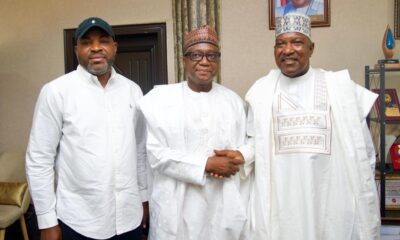
Group photograph shortly after the launch
NEMSA Managing Director/Chief Executive Officer and Chief Electrical Inspector of the Federation, Engr. Olusegun Adesayo said the guidelines provide clarity on technical requirements, roles and responsibilities, and interconnection processes.
He added that the new testing equipment will enhance “the quality, accuracy, and efficiency of solar mini grid inspections and assessments.”
The NEMSA Boss said the document aligns with the Electricity Act 2023, NERC’s Mini-Grid Regulations 2026, existing NEMSA guidelines and International Electro-Technical Commission, IEC, standards.
Representing the EU Delegation to Nigeria & ECOWAS, Programme Manager Godfrey Ogbemudia said the guidelines are “particularly significant” because they will provide consistency and increase investor confidence in interconnected mini-grid projects. “The European Union remains committed to continuously support Nigeria’s energy transition and electrification ambitions,” he said.
Dr. Karin Jasen, Head of Development Cooperation at the German Embassy, said Germany is proud to support Nigeria’s efforts to expand energy access and build a thriving renewable energy market. She underlined continued partnership to strengthen institutions and mobilize private investment.
Duke Benjamin, Head of Programme, NESP, said the programme will continue capacity building for NEMSA. “The Guidelines seek to provide clarity and guidance for stakeholders in developing interconnected solar mini grids, while helping to reduce uncertainty, improve coordination and enhance growth,” he said.
With solar mini-grids expanding across Nigerian communities, interconnected systems can deliver reliable power, reduce pressure on the national grid and support economic activities in underserved areas. NEMSA said it remains committed to enforcing technical standards to guarantee safety of lives, property and efficient electricity delivery under its mandate in the Electricity Act 2023.
The launch was attended by power sector stakeholders including NERC, Discos, mini-grid developers, development partners and members of the diplomatic community.
_NEMSA_: Nigerian Electricity Management Services Agency enforces technical standards, inspects, tests and certifies electrical installations including renewable energy projects to ensure safe, reliable electricity supply.
_NESP_: Nigerian Energy Support Programme is co-funded by the EU and German Federal Ministry for Economic Cooperation and Development, implemented by GIZ in collaboration with the Federal Ministry of Power, to foster renewable energy investments and improve rural electricity access.