

The Federal Government has reaffirmed its commitment to repositioning Nigeria’s foreign service through institutional reforms, stronger stakeholder collaboration and a foreign policy focused on advancing the welfare and prosperity of Nigerians.
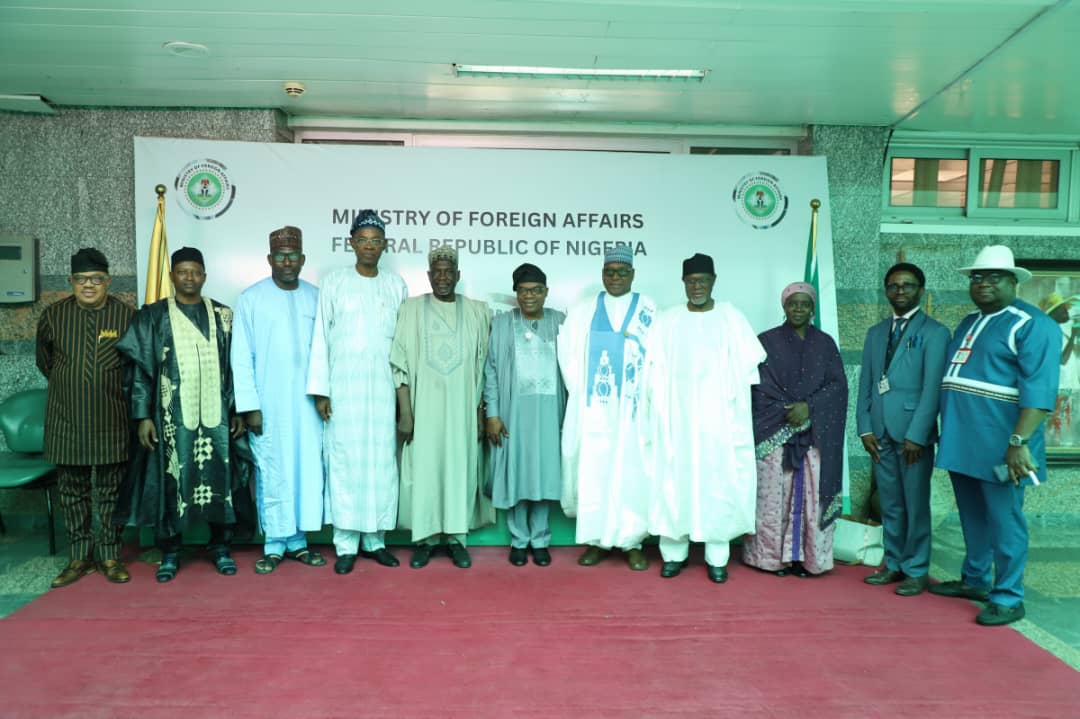
The Minister of State for Foreign Affairs, Sola Enikanolaiye, stated this on Monday while receiving a delegation of the Association of Foreign Relations Professionals of Nigeria, led by its First Vice President, Sani Saulawa Bala, in Abuja.
Enikanolaiye described the Ministry as the professional home of both serving and retired diplomats, commending the association for its contributions to Nigeria’s foreign policy development.
He said the vast experience of AFRPN members remained a national asset that should be harnessed to strengthen the country’s diplomatic institutions
According to the minister, the Ministry’s foreign policy framework has been refocused to place the interests and welfare of Nigerians at the centre of the country’s international engagements.
He said Nigeria’s diplomacy must deliver measurable benefits through economic growth, investment promotion, job creation, poverty reduction, national security and the protection of Nigerians abroad.
Enikanolaiye also highlighted ongoing reforms aimed at restoring professionalism, transparency and efficiency within the Ministry. He said the reforms include the revitalisation of policy planning structures, institutional committees, training programmes, inspection mechanisms and merit-based administrative processes to strengthen the Foreign Service.
The minister stressed the need to improve public understanding of the role of diplomacy in national development, noting that greater awareness would attract stronger institutional support and improved funding for the country’s foreign service.
He disclosed that the Ministry was exploring innovative funding mechanisms and engaging relevant government institutions to improve resource mobilisation for effective service delivery.
Enikanolaiye identified policy research, strategic advisory services, diplomatic training, mentorship, capacity building, public advocacy and strategic communication as key areas for collaboration with AFRPN.
He urged the association to continue providing evidence-based policy recommendations to support informed decision-making on Nigeria’s foreign relations.
Speaking on behalf of the delegation, Bala congratulated the minister on his appointment and expressed confidence in his leadership.
He reaffirmed AFRPN’s commitment to supporting the Ministry through policy engagement, specialised diplomatic training, mentorship programmes, research and public advocacy.
Bala said the association had consistently supported the Ministry through professional conferences, policy dialogues and capacity-building initiatives while mobilising independent resources to complement government efforts.
Members of the delegation also called for stronger institutional mentorship involving retired diplomats, enhanced professional training, improved recruitment processes, the establishment of a Foreign Service Commission and increased visibility for the activities of Nigeria’s diplomatic missions abroad.
In his closing remarks, Enikanolaiye thanked the delegation for its contributions and assured members that their recommendations would receive due consideration.
He reiterated the Ministry’s resolve to strengthen professionalism, accountability and operational efficiency across the Foreign Service through sustained collaboration with stakeholders.
The meeting ended with both the Ministry of Foreign Affairs and AFRPN reaffirming their commitment to building a modern, professional and results-oriented diplomatic service capable of effectively promoting and protecting Nigeria’s national interest.