


Business
From 5% to 61% — Nigeria’s Local Content Drive Enters a New Phase at NOG Energy Week
By Matthew Otabe
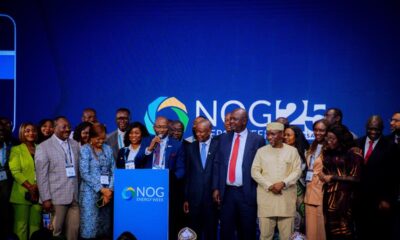
Inside the Abuja conference hall on Monday, the numbers told a story of quiet transformation. Fifteen years ago, less than 5% of Nigeria’s oil and gas work was done by Nigerians. Today, that figure stands at 61%.
That milestone framed the opening of NOG Energy Week 2026, where industry leaders, regulators, and investors gathered not to celebrate, but to ask: what comes next?
Beyond the Law, Toward Industry
The answer, according to the Nigerian Content Development and Monitoring Board, is “beyond compliance.”
At the Nigerian Content Seminar that kicked off the week, NCDMB Executive Secretary Engr. Felix Omatsola Ogbe, represented by Engr. Bamidele Abayomi, laid out the next agenda. The NOGICD Act has delivered results, he said. Now the real work begins: turning regulatory success into industrial muscle.
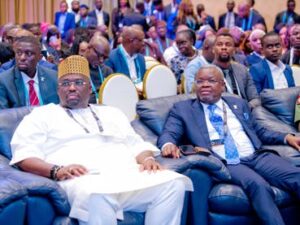
“Manufacturing cannot thrive without projects,” Ogbe told the room. “Every new field development, gas processing plant, pipeline, refinery expansion and infrastructure project creates opportunities for Nigerian businesses and communities.”
The challenge is scale. Nigeria has capacity across the oil and gas value chain, but many local manufacturers still hit the same walls: limited market access, tight financing, and technology gaps.
To close them, the NCDMB is rolling out digital approval platforms, upgraded certification procedures, and dedicated escalation channels. A new industry capacity database is also in the works, designed to map who can do what, guide investment, and anchor major projects from deep-water fields to gas infrastructure.
Ogbe was blunt about the Board’s role: “We are a development-focused regulator committed to enabling business growth rather than creating bottlenecks.”
The People Behind the Percentages
DMG Events, the conference organizers, pushed the conversation toward talent. Sustained investment in technology, innovation, and human capital, they argued, is what will keep Nigerian firms competitive beyond contract awards and assembly work.
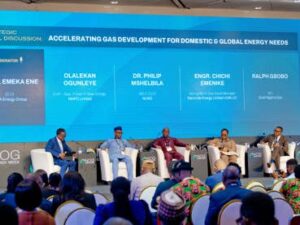
That theme carried into the panel _“Emerging Leaders: Shaping the Future of Energy.”_ The session brought together a cross-section of the industry’s next generation: Ikhuoria Aimienwanhu and Bashir Ahmed of the NCDMB, Yinka Atunde, CEO of Yikodeen Company Limited, Engr. Yetunde Aladeitan of NIPetE, and God’slove Chinyere Oliver of NNPCL.
Their focus was practical: technical skills, digital competencies, international certifications, and continuous professional development. The goal is clear — build a workforce that can meet Nigeria’s 2030 energy production targets.
Artificial Intelligence kept surfacing in the discussion. From data analysis to decision-making, speakers urged professionals to adopt emerging tools to sharpen productivity. NNPCL, for its part, reaffirmed its commitment to putting young professionals in leadership roles on strategic national projects.
A Continental Question
Nigeria’s gains aren’t happening in isolation. On the panel _“Building Africa’s Local Content Alliance: Progress, Gaps and Opportunities,”_ regional voices weighed in.
Maggy Shino, Director of Petroleum Upstream in Namibia’s Office of the President, joined PETAN Chairman Engr. Wole Ogunsanya and ALCA Executive Secretary Ibrahim Talla to take stock. The verdict: African countries have made real progress on local participation, but the continent’s energy potential won’t be unlocked without stronger regional collaboration.
The Road From Abuja
NOG Energy Week 2026 runs all week, with sessions set to tackle investment, gas development, energy transition, offshore projects, manufacturing, and regional partnerships. The ambition is big: position Africa as a global energy hub.
But the message from day one was grounded. Stakeholders agreed that three things will decide whether Nigeria’s local content gains hold: sustained investments, faster project approvals, and deliberate empowerment of young professionals.
The shift from 5% to 61% took 15 years and an Act of Parliament. The next phase — moving from compliance to competitiveness — will test whether policy can become prosperity.
And in a hall full of engineers, investors, and policymakers in Abuja, that work has already begun.