Business
Steron Mining Boss Says Nigeria Has ‘Limitless’ Rare Earth Potential, Calls for Local Refining

Sadiq Abubakar Omar, Managing Director of Steron Mining Company, says Nigeria has “limitless” deposits of rare earth elements and must develop them locally to benefit Africans first.
Speaking to journalists on the sidelines of the AfNIS event in Abuja, Omar said Steron is prioritising rare earths as global demand surges for use in inverter systems, electronics, electric vehicles, and other green technologies.
“We didn’t put them there, but it’s our duty to develop these resources for the benefit of humanity, starting with the host communities and the host countries,” Omar said.
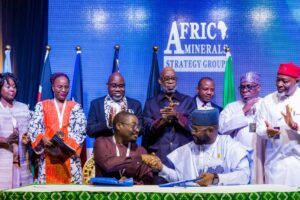

He noted that while the world is “still learning to even pronounce the names of these elements,” Africans already “pay top dollar” for the finished products. Steron’s commitment, he said, is to establish the reserves, quality, and quantity of Nigeria’s rare earth deposits and “do everything in our power for the benefit of the people.”
Omar disclosed that the company has identified “about three large deposits of rare earth elements in the Middle Belt of Nigeria.” Steron is dedicating resources under an MOU to develop the intellectual property and skills needed to process the minerals into finished products within Nigeria and across Africa.
“What people know us for most is as a source of minerals. However, one thing they keep away from us is that we are one of the largest markets in the world. Africa still consumes everything produced,” he said. “So, you can imagine that if we ourselves would use the products, and we are the source, then what we need to develop are the skills required to finish these products for our own benefit.”
On challenges, Omar pointed to operational costs and the realities of being a young executive in Africa.
“Being young in Africa and managing any business is already a challenge. These problems are ours, and ultimately it will be up to us to fix them,” he said.
He credited cooperation and guidance from elders for helping him navigate the sector.
He praised the Ministry of Solid Minerals Development under Dr. Dele Alake, describing the minister as a “visionary” whose leadership “couldn’t have come at a better time,” given global energy transition targets for 2030 and 2050.
“We now have this Africa Minerals Strategy Group led by His Excellency, the Honourable Minister, Dr. Dele Alake. Amazingly, he understands the language and what is required to bring everybody on board to share in this collective benefit. He has been very supportive, and the timing is perfect,” Omar said.
He added that the world requires a major shift away from fossil fuels and that “this is the time for Africa to visualise” its role in the transition.
According to Omar, Africa should move beyond exporting raw minerals and instead build the capacity to refine and manufacture locally, capturing more value from its own resources.