

By Matthew Otabe
The Abuja Chamber of Commerce and Industry (ACCI), in collaboration with the University of Abuja and Innovo & Crescentia Limited, has launched a digital innovation hub aimed at transforming Nigeria’s agricultural sector and strengthening the competitiveness of agro-based micro, small and medium-sized enterprises (MSMEs).
The Farm-to-Table Digital Innovation Hub (F-TAIP DIH), launched on Friday, November 20, 2026, at the Prince Adetokunbo Kayode SAN Trade and Convention Centre, ACCI, Abuja, is designed to promote technology adoption, improve agricultural value chains and equip agro-entrepreneurs with digital skills.
The initiative is also expected to enhance market access, improve business operations and support the growth of agricultural enterprises through digital solutions.
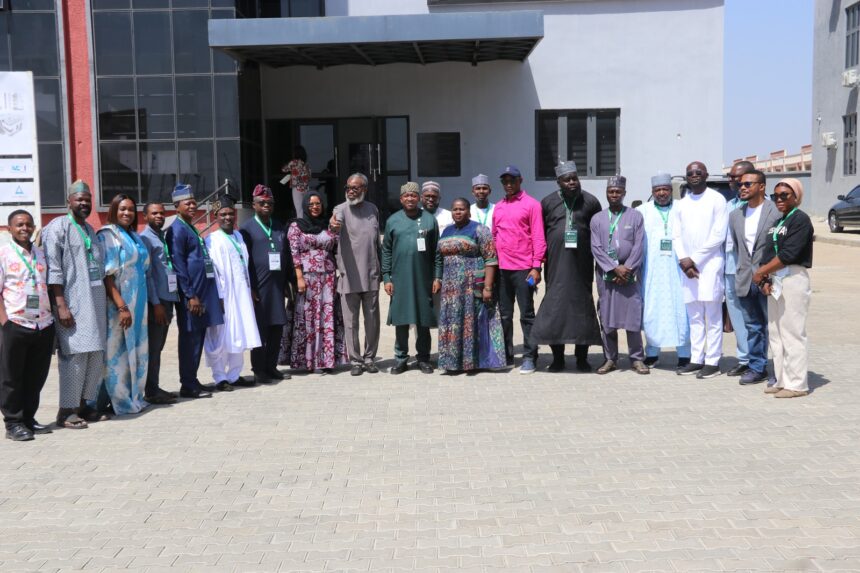
The launch attracted government representatives, development partners, academics, private-sector stakeholders and agricultural entrepreneurs.
Speaking at the event, the First Deputy President of ACCI and incoming President, Prof. Adesoji Adesugba, said the private sector had a critical role to play in driving economic transformation through innovation and enterprise development.
He described the Hub as a platform for equipping agro-MSMEs with digital capabilities, technology adoption support, business development services and stronger market linkages.
Adesugba also reflected on the development of the ACCI Business Entrepreneurship Skills and Technology (BEST) Centre, describing it as a platform for enterprise development, innovation and strategic collaboration.
He called for sustained stakeholder support, talent development and stronger partnerships to ensure the initiative achieves its objectives.
The ACCI First Deputy President subsequently led other dignitaries in the official unveiling of the Hub, marking the beginning of a new phase in its operations.
Delivering the keynote address titled “Digitalization and the Future of Agro Value Chains in Nigeria,” the Vice-Chancellor of the University of Abuja, Prof. Hakeem B. Fawehinmi, identified digital technology as a critical tool for addressing persistent challenges in the agricultural sector.
He listed low productivity, post-harvest losses, inadequate processing capacity and limited market access among the challenges that digital solutions could help address.
Fawehinmi explained that technologies such as artificial intelligence, satellite imagery, digital marketplaces and financial technology could improve efficiency across agricultural value chains.
He described the Hub as an important platform for bridging digital capability gaps among agro-MSMEs through skills development, technology adoption and business support.
According to him, the integration of digital technology into agriculture would help improve productivity, strengthen enterprise performance and create opportunities for sustainable growth.
The Minister of Innovation, Science and Technology, Dr Kingsley Tochukwu Udeh, SAN, represented by the Director of the Bioresources Technology Department in the ministry, Mrs Eunice Orekha, commended the initiative as an example of effective collaboration between government, academia, the private sector and development partners.
The minister reaffirmed the ministry’s commitment to leveraging science, technology and innovation to advance agricultural development.
He highlighted precision agriculture, smart farming, digital extension services and improved processing systems as important tools for boosting productivity, reducing post-harvest losses and improving farmers’ incomes.
Udeh also expressed the ministry’s readiness to deepen collaboration with the Hub to expand the adoption of digital solutions in the agricultural sector.
Similarly, the Director-General of the National Information Technology Development Agency (NITDA), Dr Kashifu Inuwa Abdullahi, represented by the Director of Digital Development Services Department, Mr Oladejo Olawumi, reaffirmed the agency’s support for the initiative.
Abdullahi expressed NITDA’s readiness to collaborate with the Hub in extending digital solutions to farmers and agricultural entrepreneurs.
He highlighted the agency’s National Adopted Village for Smart Agriculture (NAVSA), which has trained 956 farmers across the country in the use of technologies, including artificial intelligence and the Internet of Things (IoT).
The NITDA director-general also disclosed that the agency had established 12 hubs to support the agricultural sector.
In a goodwill message, the Head of Project, GIZ Digital Transformation Centre Nigeria, Dr Thuweba Diwani, disclosed that the F-TAIP Digital Innovation Hub had trained more than 470 agro-entrepreneurs and agro-MSMEs across Abuja and Nasarawa State in practical digital skills.
The training covered digital marketing, record-keeping, mobile payments and online market access, with women constituting the majority of participants.
According to Diwani, assessments showed that participants’ digital maturity scores nearly doubled, while more than 85 per cent subsequently applied the digital tools acquired during the training.
The goodwill message emphasised the need to strengthen market access, financial inclusion and sustainable partnerships to expand the impact of digital transformation in agriculture.
Stakeholders seek practical application of digital solutions
A major highlight of the event was a panel session themed “Digital Agriculture in Nigeria: From Technology Adoption to Agro-MSME Competitiveness.”
The session examined practical approaches to accelerating technology adoption and improving the performance of agricultural enterprises.
Participants emphasised the need to move beyond digital awareness and training towards the practical application of technology and measurable business outcomes.
The event also provided an opportunity for students of the Faculty of Agriculture, University of Abuja, to engage stakeholders on the intersection of agriculture, technology and entrepreneurship.
The Farm-to-Table Digital Innovation Hub is being implemented through a consortium comprising the ACCI BEST Centre, the University of Abuja’s Centre for Entrepreneurship Development and Student Mentorship, and Innovo & Crescentia Limited.
The initiative is supported by the European Union, the German Government through GIZ and the Government of Denmark.
In her closing remarks, the Deputy Director-General of ACCI, Dr Tinuke Temitope, expressed appreciation to the partners and stakeholders for their contributions to the initiative.
She called for continued support and collaboration to advance the Hub’s objectives and strengthen its impact on agricultural enterprises.
Amina Abdullahi Samuel
Assistant Media Officer, ACCI