By Matthew Otabe
The Joint Revenue Board (JRB) says 23 states recorded a 27 per cent increase in revenue performance between January and June 2026 compared with the corresponding period last year, following the implementation of Nigeria’s new tax laws.
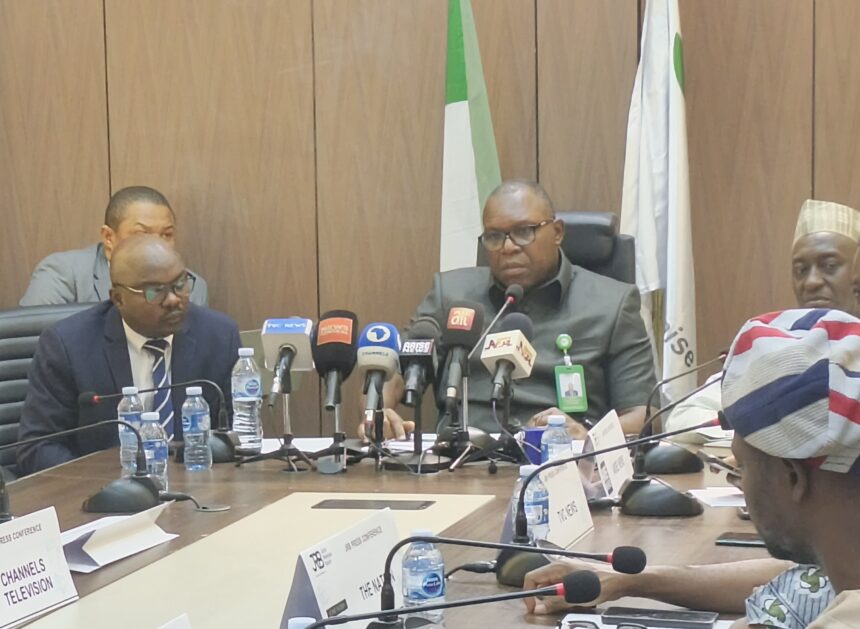
The Executive Secretary of the board, Mr. Olusegun Adesokan disclosed this on Wednesday in Abuja during a media parley to assess the first year of implementation of the tax reforms.
He said the improvement was recorded across the 23 states that submitted their revenue returns for the period under review.
“From the returns we got from 23 states, when compared to their performance last year, the same 23 states, we’ve seen a 27 per cent increase. This is between January and June this year,” he said.
The JRB chief attributed the growth to a shift in tax administration towards high-net-worth individuals and greater prosperity, rather than placing additional burdens on low-income earners.“The vision is to tax prosperity, not poverty,” he said.
According to him, data from the 23 states showed that approximately 92 per cent of income earners who pay taxes now enjoy lower tax rates or are no longer required to pay personal income tax under the new regime.
New Tax Structure to Boost Disposable Income
Explaining the changes introduced under the new personal income tax structure, the Executive Secretary said the first N800,000 of annual income is exempt from tax, while the next N2.2 million is taxed at 15 per cent.
He added that the highest personal income tax rate under the new framework is 25 per cent, which he described as the lowest among Africa’s 12 largest economies.
The reforms, he said, are designed to reduce the tax burden on ordinary Nigerians while ensuring that higher-income earners contribute more fairly to government revenue.
He illustrated the potential benefits by stating that an earner with a particular level of deductions could save more than N80,000 monthly, translating to almost N1 million annually under the new tax regime.
No New Taxes Introduced
The Executive Secretary dismissed concerns that the reforms had introduced additional taxes, insisting that the policy was designed to simplify and harmonise existing tax obligations.
“No new tax has been introduced. Instead, multiple levies have been consolidated into nine taxes, and the model harmonisation law has been adopted by 21 states,” he said.
He explained that the consolidation was intended to tackle multiple taxation, particularly at the state and local government levels, where individuals and businesses often face overlapping levies.
He added that the board had issued uniform guidelines to promote consistency in tax administration across the country.
According to him, the adoption of the model harmonisation law by 21 states represents progress towards establishing a more transparent and predictable tax system.
National Tax ID to Eliminate Double Taxation
The JRB chief also highlighted the introduction of the National Tax Identification system, developed in collaboration with the Nigerian Revenue Service, as a major step towards improving tax administration.
He said the system was designed to operate across state boundaries, enabling relevant authorities to verify taxpayers’ records without requiring repeated checks in different jurisdictions.
According to him, the initiative would reduce administrative bottlenecks, prevent unnecessary duplication of tax obligations and ease the burden on individuals and businesses operating in multiple states.
JRB Moves Against Illegal Road Collections
On complaints about illegal collections by unions, associations and other groups on roads, the Executive Secretary said the board was collaborating with the police and state authorities to establish a national framework to address the practice.
He condemned the harassment of motorists and traders by individuals demanding unauthorised payments, stressing that revenue collection must be conducted through recognised and transparent channels. “You can’t just be stopping and harassing people,” he said.
He called for the deployment of technology to improve monitoring and enforcement, while acknowledging that eliminating illegal road collections would require sustained efforts.
The Executive Secretary further clarified that informal-sector traders who fall within the applicable exemptions are not required to pay personal income tax, warning that nobody should demand such payments from them unlawfully.
He stressed the need for continuous public enlightenment to address misinformation and help Nigerians understand their rights and obligations under the new tax laws.
90-Day Plan to Harmonise State Taxes
Looking ahead, the Executive Secretary said the National Economic Council had approved a 90-day action plan the previous week, including measures to harmonise taxes imposed by sub-national governments.
He expressed optimism that more states would adopt the model harmonisation law within the period, strengthening efforts to eliminate multiple taxation and improve the business environment.
He also urged Nigerians experiencing difficulties with revenue agencies to seek redress through the Office of the Tax Ombud, which he said provides its services free of charge.
The Executive Secretary expressed confidence that the benefits of the reforms would become more evident over time.
“By next year, it will be better, and by 2030, it will be better,” he said.