
By Matthew Denis
The Nigeria Data Protection Commission (NDPC) has announced plans to strengthen the capacity of journalists in data protection and privacy reporting, including the introduction of professional certification to equip media practitioners with specialised knowledge of the emerging field.
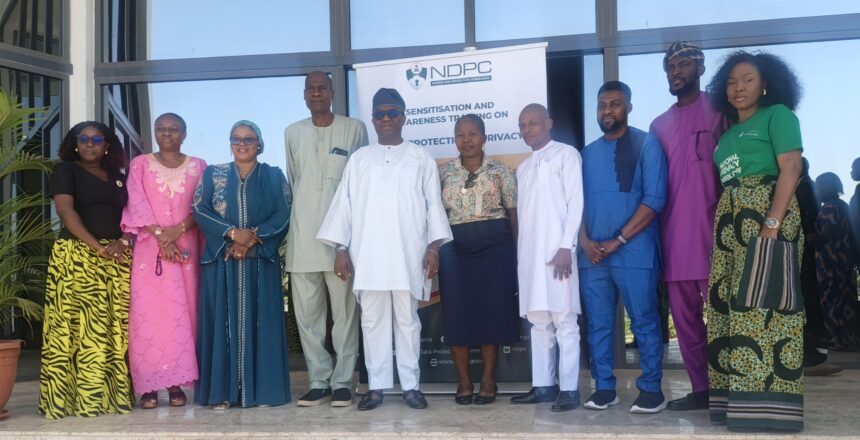
The National Commissioner of the Commission, Dr. Vincent Olatunji, disclosed this on Friday in Abuja during a sensitisation and awareness training on data protection and privacy organised for members of the Nigeria Information Technology Reporters Association (NITRA).
Olatunji said the initiative was aimed at deepening journalists’ understanding of data protection principles, privacy rights and emerging digital technologies to enable them to report accurately and responsibly on issues relating to personal data.
He explained that journalists play a critical role in shaping public understanding of data protection, stressing that media practitioners must have adequate knowledge of the subject before reporting on it.
According to him, the Commission is considering taking the training beyond sensitisation to a professional certification level that would equip journalists with additional qualifications and opportunities to practise in the data protection sector.
“This is just the beginning. We want to take it to the level of certification, whereby journalists can also practise data protection as a job role, in addition to their regular duties as journalists,” he said.
The NDPC boss emphasised that journalists could not effectively communicate issues they did not understand, noting that specialised knowledge would help them produce informed reports and avoid misrepresenting sensitive data protection issues.
He described the training as part of efforts to build a knowledgeable media community capable of supporting the country’s data protection ecosystem.
On compliance with the Nigeria Data Protection Act, Olatunji said the Commission had recorded improvements among organisations operating in the country, particularly multinational companies.
He attributed the progress partly to sustained awareness campaigns and engagement with stakeholders since the establishment of the Commission in 2023.
Olatunji, however, warned that organisations yet to comply with the provisions of the law would face stricter enforcement measures.
He explained that the Commission had initially prioritised public enlightenment and stakeholder engagement to ensure that organisations understood their obligations under the law before intensifying enforcement.
“We have done a lot in the area of creating awareness. We have created awareness for about three years. There is no way you can go out fully to enforce the law without first creating awareness among data controllers and processors,” he said.
He added that the Commission was encouraged by the increasing number of organisations seeking guidance on the requirements for compliance, particularly regarding registration with the regulatory agency.
According to him, multinational companies have demonstrated considerable commitment to complying with Nigeria’s data protection regulations, partly because they operate in other jurisdictions with similar legal frameworks.
The Commissioner reiterated that the NDPC would continue to work with stakeholders as partners in strengthening data protection practices but would not hesitate to enforce the law where violations were established.
He urged organisations to take their data protection responsibilities seriously, noting that compliance was essential to protecting individuals’ privacy and building public confidence in Nigeria’s digital economy.
The sensitisation programme brought together journalists and other stakeholders to deepen understanding of data protection, privacy rights and the responsibilities of organisations and individuals in the handling of personal information.
The initiative is also expected to strengthen collaboration between the NDPC and the media in promoting public awareness and responsible data management in Nigeria.