
By Matthew Otabe
The Chairman of the Revenue Mobilisation, Allocation and Fiscal Commission (RMAFC), Dr. Mohammed Bello Shehu, has led a presidential initiative to develop a sustainable, transparent and predictable funding framework for Nigeria’s diplomatic missions abroad.
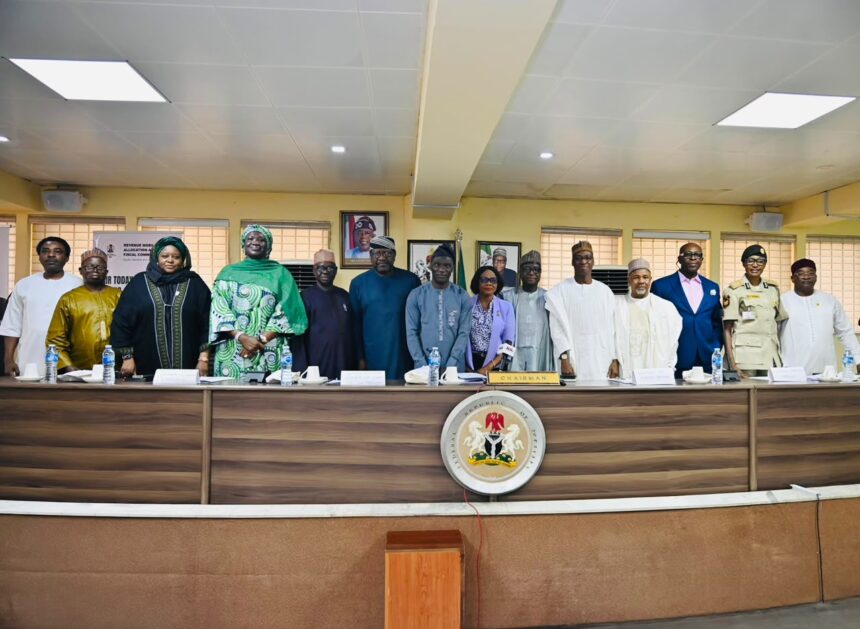
Shehu made this known on Tuesday, November 10, 2026, while chairing the inaugural meeting of the Presidential Technical Working Group on the Review of Funding Arrangements for Nigeria’s Foreign Missions at the Commission’s headquarters in Abuja.
The initiative follows a presidential directive issued on October 14, 2026, mandating a comprehensive fiscal and technical review of the existing funding arrangements for Nigerian diplomatic missions in collaboration with relevant Ministries, Departments and Agencies (MDAs).
The review is aimed at addressing persistent financial challenges affecting the operations of the country’s foreign missions and establishing a reliable funding mechanism capable of sustaining Nigeria’s diplomatic engagements.
Speaking at the meeting, Shehu expressed appreciation to President Bola Ahmed Tinubu for his intervention, describing the directive as a timely step towards finding a lasting solution to the financial difficulties confronting the missions.
He said the President was particularly interested in ensuring that the exercise produced practical and implementable recommendations.
“Mr President is very passionate about this exercise. So he expects us to come up with something that is workable, that can be implemented and that can solve this problem once and for all,” he stated.
The RMAFC Chairman charged members of the Working Group to demonstrate commitment and a strong sense of responsibility in delivering recommendations capable of translating into concrete policy outcomes.
He described Nigeria’s diplomatic missions as enduring symbols of the country’s sovereignty and essential instruments of international engagement, noting that they play critical roles in protecting Nigerians abroad, strengthening bilateral and multilateral relations, promoting trade and investment, and projecting the country’s image internationally.
According to him, the effectiveness of these missions should not be compromised by persistent uncertainties surrounding the release and management of funds required for their operations.
Shehu explained that RMAFC’s intervention was informed by observations from official study visits and interactions with personnel of Nigerian missions in different countries, which exposed the operational difficulties associated with inadequate and unpredictable funding.
He, however, clarified that the Commission’s involvement was within its constitutional mandate and was not intended to interfere with the statutory responsibilities of other government institutions.
Citing Paragraph 32(c), Part I of the Third Schedule to the 1999 Constitution of the Federal Republic of Nigeria, as amended, he noted that RMAFC was empowered to advise the Federal and State Governments on fiscal efficiency and methods of increasing revenue.
He said the Commission would bring together relevant fiscal, administrative and operational expertise to address the challenge through a coordinated institutional approach.
The Chairman disclosed that the Working Group had been given until December 11, 2026, to submit its comprehensive report and an implementation programme for presidential consideration.
Outlining the assignment, Shehu urged members to critically examine existing funding arrangements, identify the causes of financial instability, assess alternative funding options and recommend a framework that would be transparent, predictable, affordable and sustainable.
He emphasised that the solution should go beyond demands for increased budgetary allocations, insisting that attention must also be given to timely fund releases, budget preparation and execution, foreign exchange arrangements, expenditure management and the prioritisation of essential diplomatic commitments.
He further encouraged members to draw lessons from international best practices while ensuring that their recommendations reflected Nigeria’s constitutional, legal and institutional realities.
To guarantee the credibility of the exercise, the RMAFC Chairman identified evidence-based analysis, inclusive deliberations and practical recommendations as the guiding principles of the assignment.
He stressed that the exercise should not be regarded as an investigation into institutional failures or an attempt to apportion blame, but rather as a constructive effort to improve coordination among government agencies and establish a lasting funding arrangement for the country’s diplomatic responsibilities.
Shehu also identified the immediate priorities of the Working Group to include agreeing on clear Terms of Reference, developing a structured work plan, identifying relevant financial and operational documents required from participating institutions, and establishing modalities for broader stakeholder consultations.
He insisted that the final report must go beyond identifying existing challenges to provide evaluated funding options, recommend a preferred financing model and outline a practical implementation framework with clear timelines, institutional responsibilities and necessary administrative or legal measures.
The Chairman called on all participating institutions to give the assignment the required priority by providing timely access to reliable information and adequate support for their representatives.
He assured members that RMAFC would provide the necessary secretariat coordination and technical assistance to ensure the successful completion of the exercise.
He expressed confidence that the collective experience and professional expertise of members would produce a comprehensive report characterised by sound analysis, realistic recommendations and an achievable implementation strategy.
Shehu further emphasised that Nigeria’s diplomatic presence abroad could not be sustained by ceremonial activities alone, but required strong institutional capacity to meet international obligations, protect diplomatic personnel, respond to the needs of Nigerians overseas and engage international partners effectively.
He therefore called for a funding arrangement that would balance the operational needs of foreign missions with fiscal discipline, accountability and prudent management of public resources.
Among the RMAFC Federal Commissioners present were Hon. Ibrahim Bako Shettima (Niger State); Hon. (Barr.) Rakiya Tanko Ayuba Haruna, mni (Kebbi State); Amb. (Prof.) Steve Ugba (Benue State); Amb. Ayuba Jacob Ngbako (FCT); Hon. Muhammed Kabir Mashi, OON (Katsina State); and Hon. (Dr.) Enefe Ekene (Anambra State).
Other dignitaries included the Permanent Secretary, Federal Ministry of Foreign Affairs, Dr. Dunoma Umar Ahmed; Senior Adviser to the President on Foreign Affairs, Amb. Oluremi Olumide; and Deputy Comptroller-General of the Nigeria Immigration Service, DCG Franka Halliday, mni.
Representatives of the National Salaries, Incomes and Wages Commission and the Office of the Accountant-General of the Federation were also in attendance.
.
RMAFC Directors present included Usman Kukandaka Umar, mni, Director of Allocation Department and Secretary of the Presidential Technical Working Group; Abdullahi Garba, Director of Finance and Accounts; Ahmed Rufai Gidado, Director of Federation Account Department; and Mohammed Gidado Yahaya, Director of the Chairman’s Office.
The inaugural meeting signals the commencement of a coordinated inter-agency effort to address the funding challenges confronting Nigeria’s diplomatic missions and strengthen their operational capacity through a sustainable, transparent and accountable financing framework.