
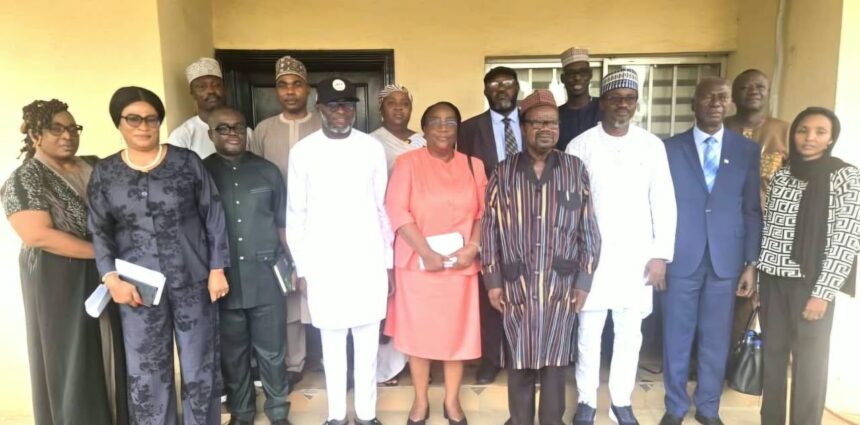
The Economic Community of West African States (ECOWAS) Pre-Election Fact-Finding Mission has engaged the Inter-Party Advisory Council of Nigeria (IPAC) on electoral reforms, political security and strategies to ensure peaceful, credible and inclusive general elections in 2027.
The consultation, held in Abuja on Monday, October 26, 2026, formed part of the mission’s ongoing engagement with key stakeholders to assess Nigeria’s political and electoral environment ahead of the polls.
The meeting focused on institutional trust, electoral transparency, political inclusiveness and measures to prevent election-related violence and tensions.
The ECOWAS delegation was led by the former Vice-President of Sierra Leone, Victor Bockarie Foh, while IPAC was represented by its Director-General and National Chairman of the National Rescue Movement, Prince Chinedu Obi; National Legal Adviser, Obed Okwukwe Agu; National Publicity Secretary, Comrade Egbeola Wale Martins; and the National Chairman of the National Democratic Party.
During the meeting, IPAC representatives expressed concerns over public confidence in Nigeria’s electoral institutions, particularly the perceived independence of the Independent National Electoral Commission (INEC) and the transparency of appointments to its leadership.
They also questioned the extent to which political parties’ recommendations had influenced electoral reforms, stressing the need for more inclusive consultation and transparent processes in the appointment of electoral officials.
The council further called for reforms to candidate nomination procedures and party primaries, citing the high cost of contesting party primaries and concerns about the fairness and consistent application of electoral rules.
According to the representatives, sustained engagement among political parties, electoral authorities and other stakeholders is essential to strengthening democratic participation and ensuring that election outcomes enjoy public legitimacy.
IPAC also emphasised the need for professional, impartial and adequate security arrangements to protect political actors and guarantee that all political parties can exercise their democratic rights without fear, intimidation or undue restrictions.
The council identified vote buying, poverty-related electoral vulnerabilities, inflammatory political rhetoric and perceived weaknesses in enforcing electoral laws as major challenges requiring urgent attention.
It urged relevant authorities to ensure consistent investigation of electoral offences and appropriate sanctions against offenders, irrespective of their political affiliations.
The representatives maintained that addressing these concerns would strengthen electoral integrity, promote fair political competition and reduce the likelihood of disputes before, during and after the elections.
In his response, Foh underscored the importance of sustained dialogue among political parties, INEC, security agencies and civil society organisations in addressing emerging concerns ahead of the 2027 general elections.
He noted that preventive engagement with stakeholders remained critical to identifying potential sources of electoral tension and resolving disagreements before they escalated into wider political disputes.
The ECOWAS mission’s engagement with IPAC is part of broader consultations aimed at understanding Nigeria’s electoral challenges and identifying practical measures to support peaceful, transparent, credible and inclusive elections in 2027.