

By Terdue Atondu, Makurdi
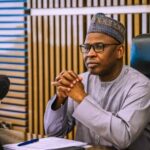
A former Nigerian Ambassador to Namibia and ex-Speaker of the Benue State House of Assembly, Amb. Dr. Prince Terhemen Tarzoor, has criticised former Governor Samuel Ortom over his reported comments about Governor Hyacinth Alia, the Catholic Church and the people of Benue State.
Tarzoor said Governor Alia owed Ortom no apology, insisting that political disagreements should not be allowed to degenerate into personal attacks or derogatory remarks against the people of the state.
The former ambassador made the remarks while responding to questions from journalists in Makurdi, where he condemned Ortom’s reported description of Alia as a “419” and a “fake Reverend Father,” as well as his alleged reference to some Benue people as “shenanigans” during a television programme last week.
According to Tarzoor, such expressions are inappropriate for political discourse and could undermine the dignity of the office of the governor and the people whose votes confer democratic legitimacy on elected leaders.
“My take is that the former governor is not in the position to call the number one citizen 419. He has no right to call him that,” he said.
While acknowledging Ortom as an elder brother whom he respects, Tarzoor expressed concern over what he described as the growing tendency among political actors to resort to inflammatory language when expressing disagreements.
He urged political leaders, particularly those who had previously occupied positions of authority, to demonstrate restraint and promote responsible public discourse.
Tarzoor, who is the Benue State Coordinator of the Renewed Hope Ambassadors, also faulted Ortom’s reported comparison of Alia’s administration with the Catholic Church’s parish system, arguing that the analogy failed to recognise the church’s established accountability mechanisms.
“As a Knight of St. John International, I want to disabuse his mind and the minds of people who listened to that programme that there is a high level of accountability in the Catholic Church,” he said.
He explained that the Catholic Church operates administrative and financial oversight systems involving priests, church councils, elders and lay faithful to ensure accountability in the management of its affairs.
“There is no Catholic priest that can just earn money and spend at ease in the Catholic Church. I therefore say Ortom does not have the equipage to pontificate on such a subject matter,” Tarzoor added.
He called on political leaders to exercise caution when commenting on religious institutions, warning against statements that could be perceived as misrepresenting their administrative practices or undermining their credibility.
Tarzoor Faults Comparison of Alia, Ortom Administrations
On governance, Tarzoor challenged what he described as an unfair comparison between Ortom’s eight-year administration and the current government led by Alia.
He argued that a proper assessment of the two administrations must take into account their respective periods in office, available resources, policy priorities and the circumstances under which they operated.
According to him, government performance should be evaluated through verifiable records, policy implementation and measurable development outcomes rather than political disagreements or selective comparisons.
Tarzoor maintained that differences between the former and incumbent governors should be addressed through constructive criticism and evidence-based arguments.
‘Shenanigans’ Remark Condemned
The former ambassador also condemned Ortom’s reported description of some Benue people as “shenanigans,” describing the expression as offensive and inconsistent with the respect owed to the electorate.
“I see that as repugnant. I see that as unbefitting of a personality who has benefited enormously from the votes of Benue people all his life,” he said.
He stressed that political leaders should recognise the importance of the electorate, irrespective of differences over governance, party affiliation or political interests.
Tarzoor urged Ortom to distinguish his disagreements with Alia’s administration from his responsibility to respect the people of Benue State.
He further advised the former governor to adopt measured language when addressing issues concerning the incumbent administration, arguing that public criticism should be guided by decorum and mutual respect.
“If he has issues, he should apply the right language, apply decorum in the manner to address matters. That is the only legacy we can leave for our children, those yet unborn, and not to talk down on someone in the person of the governor because you are bitter,” Tarzoor said.
He maintained that political leaders should prioritise responsible communication and constructive engagement to preserve the dignity of public office and promote peaceful political relations in Benue State.