

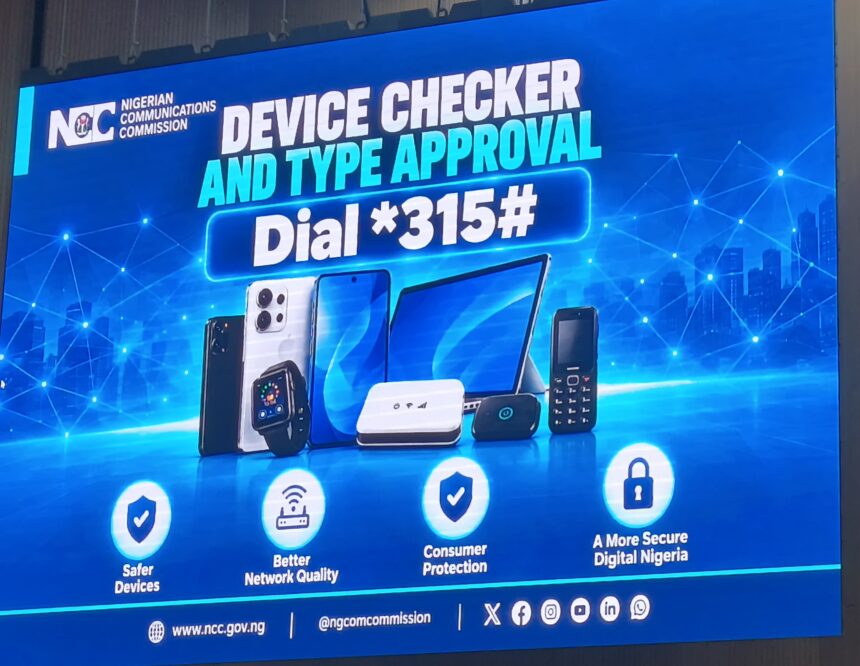
The Nigerian Communications Commission (NCC) has stepped up efforts to protect telecommunications consumers from substandard devices, assuring Nigerians that its enhanced device-checking initiative will not grant the regulator access to their private information or communications.
The Commission said the initiative was designed to ensure that mobile phones and other communication equipment sold and used in Nigeria meet approved technical standards, improve network performance and strengthen consumer confidence in the telecommunications industry.
Speaking at a media engagement in Abuja, the Director of Technical Standards and Network Integrity at the NCC, Mr Edoyemi Ogho, said the device checker would enable consumers to verify the compliance status of communication devices before purchase.
He explained that the initiative would also strengthen the Commission’s capacity to identify non-compliant devices, improve regulatory oversight and prevent equipment that fails to meet applicable standards from accessing Nigeria’s telecommunications networks.
Ogho described the telecommunications sector as a major driver of Nigeria’s economic development, noting that its reliability would be critical to the country’s ambition of building a $1 trillion economy.
He stressed that achieving a secure and efficient digital ecosystem required not only reliable network infrastructure but also communication devices that met established technical and safety requirements.
According to him, non-compliant devices could undermine network performance, create consumer protection challenges and weaken public confidence in telecommunications services.
NCC Allays Fears Over Privacy

Addressing concerns about the possibility of the device checker being used to monitor subscribers, Ogho emphasised that the initiative was strictly for regulatory compliance and device identification.
He said the framework relied on device identification information, including the International Mobile Equipment Identity (IMEI) number, to verify whether communication equipment met the Commission’s type-approval requirements.
The director clarified that the initiative did not give the NCC access to users’ photographs, text messages, contacts, financial information or other personal data stored on their devices.
He added that the system was not designed to monitor subscribers’ conversations or communications.
Ogho said the Commission recognised Nigerians’ legitimate concerns about data privacy and remained committed to protecting consumers in accordance with applicable laws and regulatory requirements.
He maintained that transparency and continuous public engagement would guide the implementation of the device-checking framework.
How to Check Phones Before Purchase
The NCC urged Nigerians to verify the compliance status of their devices before making purchases, particularly when buying mobile phones, tablets, modems, point-of-sale terminals and other equipment that connects to telecommunications networks.
Ogho advised consumers to ask sellers whether devices had received the necessary NCC approval and to use the IMEI number to confirm their compliance status.
The IMEI can be found on a device’s packaging or retrieved directly from the phone.
According to him, consumers can access the device checker through the Commission’s official website to verify the relevant information.
He said the process was free and designed to be straightforward, adding that consumers experiencing difficulties could contact the Commission for assistance.
The director encouraged buyers to check the IMEI information on the packaging before completing a purchase, rather than waiting until after opening or using the device.
He said the initiative would help consumers make informed purchasing decisions and reduce the risk of acquiring equipment that failed to meet approved technical standards.
Existing Phone Users to Be Protected
The Commission also assured Nigerians that the implementation of the enhanced framework would not unfairly penalise consumers who had purchased their devices before the initiative was introduced.
Ogho explained that devices already verified and onboarded would not require their owners to take additional steps under the process.
He said the NCC was working to ensure that devices already in stock were appropriately onboarded, while equipment imported into the country in the future would undergo the necessary verification.
According to him, the Commission had put measures in place to minimise disruption to consumers and legitimate businesses while strengthening compliance across the telecommunications device market.
He added that the framework followed stakeholder consultations, market studies and engagements conducted after the introduction of the Commission’s type-approval business rules in August 2024.
The consultations involved original equipment manufacturers, importers, dealers, service providers, government agencies and relevant industry associations.
Ogho said the Commission would continue collaborating with stakeholders to address implementation challenges and ensure that legitimate businesses operated within a transparent regulatory environment.
Why Device Approval Matters
The NCC director explained that type approval was part of the Commission’s statutory responsibilities under the Nigerian Communications Act, 2003.
He said the regulatory requirement was intended to ensure that communication equipment sold or used in Nigeria complied with applicable technical standards.
According to him, the integrity of telecommunications services depends significantly on the quality, safety and compliance of devices connected to operators’ networks.
He maintained that strengthening type-approval compliance would improve network reliability, enhance consumer protection and make it easier for the Commission to identify equipment that failed to meet regulatory requirements.
The NCC said the device checker represented an important step towards strengthening oversight of the telecommunications device value chain and improving confidence in products available in the Nigerian market.
NCC Seeks Media Support
Meanwhile, the Director of Public Affairs at the Commission, Nneka Okoha, called on media organisations to intensify public awareness of the device checker and other regulatory initiatives.
Okoha said the media engagement was organised to provide journalists with insights into the Commission’s regulatory activities, industry developments and issues affecting telecommunications stakeholders.
She stressed that effective communication was essential to ensuring that regulatory policies achieved their intended objectives, particularly among consumers at the grassroots.
According to her, even well-designed regulations could have limited impact if their objectives and benefits were not adequately communicated to the public.
She urged journalists to provide accurate and balanced information that would help Nigerians understand the device checker, its benefits and their responsibilities when purchasing communication equipment.
The Commission reaffirmed its commitment to protecting telecommunications consumers, strengthening regulatory compliance and supporting the development of a secure and reliable digital ecosystem in Nigeria.