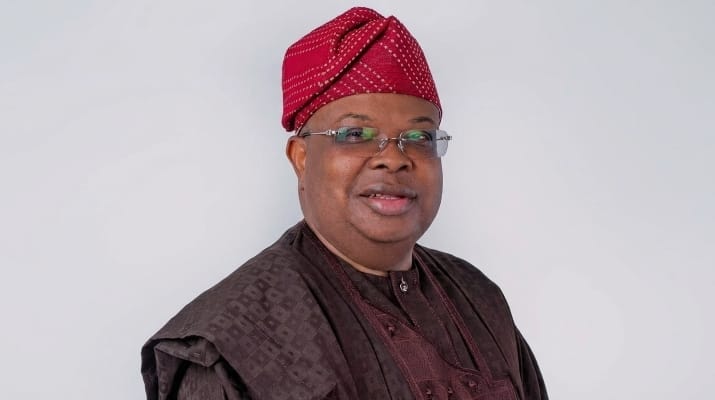
Nigeria’s Power Minister, Chief Joseph Tegbe, has been tasked with addressing the country’s persistent electricity challenges through reforms aimed at improving power supply, strengthening the national grid and attracting investment into the sector.
For millions of Nigerians, unreliable electricity continues to affect households, businesses and industries, forcing many to depend on generators at significant costs.
Tegbe, who assumed office as Minister of Power on June 8, 2026, brings more than 35 years of professional experience across the public and private sectors, including his previous position as Senior Partner and Head of Advisory Services at KPMG Africa.
His experience in economic reforms, governance and institutional development is expected to support efforts to improve the performance of Nigeria’s electricity sector.
Strengthening Nigeria’s Power Sector
Tegbe’s mandate extends across electricity generation, transmission and distribution, with a focus on improving coordination, accountability and efficiency throughout the power value chain.
Upon assuming office, the minister stressed the importance of collaboration among institutions in the electricity sector, noting that sustained improvements would require a coordinated approach.
He also identified strengthening the national grid, attracting investment and improving operational performance as key priorities for achieving a more reliable electricity supply.
24/7 Energy Zones Initiative
One of the major initiatives being pursued under Tegbe’s leadership is the proposed 24/7 Energy Zones programme, designed to improve electricity reliability in key commercial and industrial corridors.
The initiative is expected to begin in Lagos before extending to other designated areas.
In October 2026, the Federal Government and the Lagos State Government advanced discussions on the programme, including plans to establish a joint technical committee to address outstanding implementation challenges.
If successfully implemented, the initiative could help businesses reduce their dependence on generators, lower energy-related operating costs and create a more attractive environment for investment.
However, its impact will depend on effective implementation, adequate investment and the ability to address existing constraints across the electricity value chain.
Nigerians Await Tangible Results
Despite ongoing reform efforts, the challenges confronting Nigeria’s electricity sector remain substantial.
Households continue to demand more dependable power supply, while businesses and industries face high operating costs associated with alternative energy sources.
Hospitals, schools, small businesses and large industries also require stable electricity to deliver essential services, improve productivity and support economic growth.
Consequently, Tegbe’s tenure will be closely scrutinised for measurable improvements in electricity supply, grid stability and the overall performance of the sector.
Beyond policy announcements, sustained investment, transparent governance, effective coordination and consistent implementation will be critical to achieving these objectives.
Turning Hope into Progress
Although Nigeria’s electricity challenges cannot be resolved overnight, stakeholders believe that practical reforms and sustained implementation can help move the country towards a more dependable power system.
Tegbe’s responsibility is to help translate government policies into improvements that Nigerians can experience in their homes, workplaces and businesses.
.
For the Nigeria Policy Group, the expectation is that ongoing reforms will deliver electricity that households can depend on, reduce the burden of energy costs on businesses and strengthen the power sector’s contribution to national development.
Ultimately, the success of the government’s electricity agenda will be measured by tangible outcomes, including improved power supply, a stronger national grid and a more efficient electricity value chain.