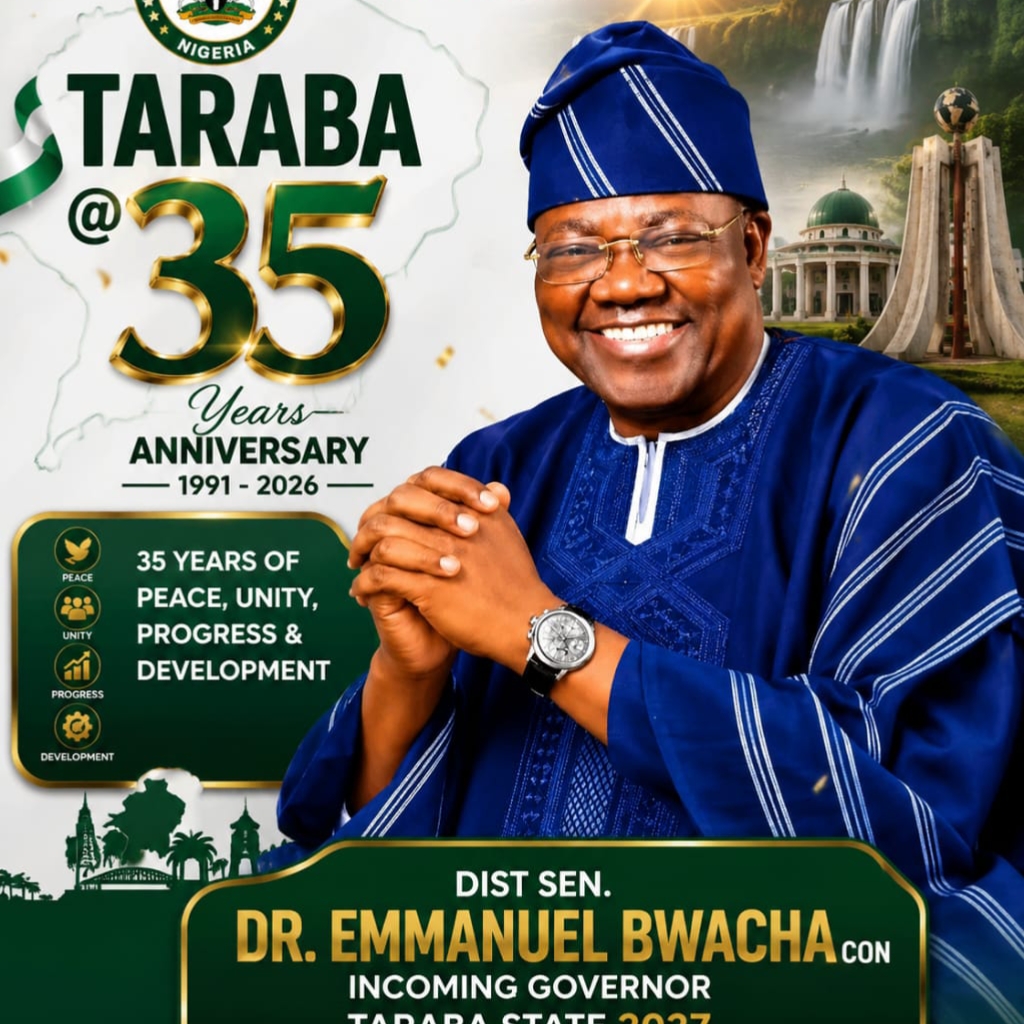
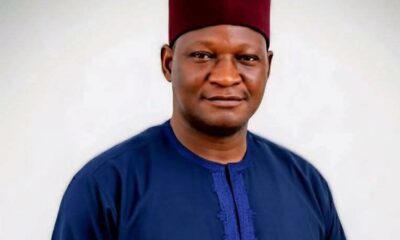
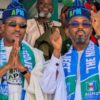
The 2027 Peoples Democratic Party (PDP) governorship candidate in Taraba State, Senator Emmanuel Bwacha, has pledged to rebuild the state’s economy, improve infrastructure and create opportunities for its people if elected governor.
Bwacha made the pledge in a statement to the people of Taraba on Thursday to mark the 35th anniversary of the state’s creation on August 27, 1991.
He said the anniversary provided an opportunity for Tarabans to reflect on the state’s journey, acknowledge the contributions of past administrations and chart a new course for development.
The former senator commended past military and civilian administrations for laying foundations and developing institutions and infrastructure across the state.
He specifically recalled the contributions of former governors Jolly Nyame and the late Danbaba Suntai, noting that their administrations constructed hospitals, roads, schools and other public facilities, while also initiating projects including an airport and university.
Bwacha said the achievements of past leaders placed a responsibility on the present generation to do more, given the increased availability of democratic institutions, technology, knowledge and resources.
He identified poverty as one of the most pressing challenges confronting the state, citing a multidimensional poverty incidence of 92.1 per cent.
According to him, the figure represents millions of Tarabans struggling with inadequate healthcare, poor educational facilities, limited access to markets, unemployment, unreliable electricity and lack of potable water.
“Poverty is not merely the absence of money. It is the absence of opportunity, and of dignity,” he said.
Bwacha argued that the state’s major challenge was not a lack of resources, but its inability to convert its abundant natural and human resources into broad-based prosperity.
He noted that Taraba, with about 54,473 square kilometres of land and an estimated population of 3.25 million people across 16 local government areas, possessed fertile agricultural land, rivers, forests, minerals and major tourism attractions.
He listed rice, maize, cassava, yam, sugarcane, cocoa, honey, palm oil and gum arabic among the state’s agricultural products, while identifying gold, barite, zinc and bauxite as some of its mineral resources.
The PDP candidate also highlighted the Mambilla Plateau, Gashaka-Gumti National Park and Chappal Waddi as tourism assets capable of contributing significantly to the state’s economy.
He said Taraba must move beyond the extraction of raw resources to processing, manufacturing and value addition.
Bwacha further expressed concern over the state’s dependence on federal allocations, noting that its Internally Generated Revenue stood at ₦16.06 billion compared with ₦220.58 billion received from the Federation Account.
He said the figures showed that about 93 per cent of the state’s recurrent revenue still came from FAAC, warning that a large budget alone could not guarantee economic development.
“A ₦653 billion budget does not automatically create a strong economy. The real question is what the money produces,” he said.
The governorship candidate outlined an agenda centred on moving the state “from spending to building,” including the construction of roads linking farmers to markets, expansion of agricultural production and processing, and establishment of a Taraba Export Council.
He also promised to pursue affordable healthcare, electricity partnerships, agricultural industrialisation, mineral processing and tourism development.
Bwacha said security must also be treated as an economic priority, stressing that farmers and investors could not contribute meaningfully to the economy where their lives and investments were at risk.
He noted that with 86.6 per cent of Taraba’s population living in rural areas, development should not be concentrated in the state capital, Jalingo.
“The real Taraba lives in the villages, farms, mountains and border communities,” he said, adding that the success of government should be measured by whether people in remote communities have better opportunities than they do today.
Bwacha pledged to rebuild the state’s economy, schools, healthcare system, roads and rural communities, while restoring public trust and confidence in the possibility of development.
“Thirty-five years ago Taraba was created with a promise. At 35, let us make a new one: not a promise of what we will say, but a promise of what we will build.
“Taraba has waited long enough. It is time to rebuild,” he declared.