Nigeria is facing an estimated $100 billion annual infrastructure financing gap and over ₦5 trillion yearly maintenance deficit, with rapid urbanisation and worsening climate risks threatening the sustainability of its cities, an engineer has warned.
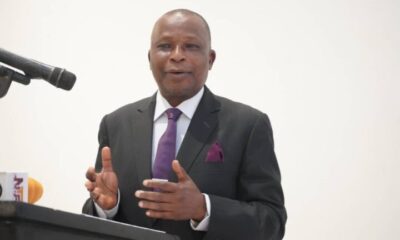
Engr. Dr. Bola J. Mudasiru, Acting National Chairman of the Nigerian Institution of Highway and Transportation Engineers (NIHTE), raised the concerns as Keynote Speaker in a paper titled “Climate Adaptive Cities: Engineering Solutions for Resilient Urban Futures,” presented under the American Society of Civil Engineers (ASCE) Conference held at the Radisson Blu Hotel, Ikeja, Lagos recently.
Mudasiru said the overlapping challenges of inadequate infrastructure investment, rapid urban growth, flooding, coastal erosion, extreme heat and ageing infrastructure had created a “compound emergency” for Nigeria.
He noted that Nigeria’s infrastructure financing gap stood at about $100 billion annually, while the National Integrated Infrastructure Master Plan projected $2.3 trillion in investment needs.
The engineer warned that infrastructure designed for past climatic conditions was increasingly unable to cope with current and projected climate hazards.
He said flooding, erratic rainfall, coastal erosion and extreme heat were already affecting the operational performance of roads, bridges, drainage systems, power infrastructure, buildings and other critical assets.
Mudasiru called for a shift from reactive disaster spending to proactive resilience budgeting, stressing that climate considerations must be incorporated into infrastructure planning, design, construction, operation and maintenance.
The engineer identified poor maintenance as another major threat to Nigeria’s infrastructure sustainability, putting the country’s infrastructure maintenance deficit at more than ₦5 trillion annually.
He warned that deferred maintenance under changing climate conditions would compound infrastructure deterioration and increase future costs.
Mudasiru therefore advocated a transition from the prevailing “break-fix” culture to preventive, predictive and proactive maintenance, with inspection and maintenance schedules adjusted to reflect increasing climate hazards.
The NIHTE Boss urged government to abandon the practice of judging infrastructure projects primarily by their initial construction cost.
Using a 20-year highway scenario, the presentation showed that a ₦2 billion low-bid project could ultimately cost ₦7.6 billion, because of higher annual maintenance and more frequent rehabilitation.
Engr. Mudasiru said the additional ₦800 million initial investment would therefore produce a net saving of ₦3.4 billion over 20 years.
He called for public procurement rules to incorporate total cost of ownership and predicted maintenance costs in contract evaluation.
The expert further argued that climate resilience should be treated as an economic investment rather than an environmental expense.
According to the presentation, every $1 invested in climate-resilient infrastructure could generate an estimated $4-$6 in avoided disaster losses, reduced insurance costs and preserved productivity.
He urged government to build resilience into new infrastructure from the outset, arguing that constructing resilient systems from scratch was cheaper than retrofitting infrastructure after climate-related failures.
The presentation also highlighted Nigeria’s weak climate adaptation capacity, citing its 157th position out of 192 countries on the 2024 ND-GAIN ranking.
It gave Nigeria a score of 37.6, with a vulnerability score of 0.490 and readiness score of 0.242, indicating high vulnerability and very low readiness to implement adaptation strategies.
Mudasiru said the figures should prompt urgent action by policymakers, engineers and urban planners to incorporate climate risks into infrastructure investment decisions.
The engineer advocated greater use of nature-based solutions, including wetlands, urban forests, green corridors, permeable pavements, bioswales, rain gardens and sustainable urban drainage systems.
He said Nigerian cities should adopt the “Sponge City” concept, which enables urban areas to absorb, store, filter and gradually release rainwater instead of relying exclusively on concrete drainage channels.
He also called for stricter enforcement of floodplain regulations, removal of illegal structures on waterways, mandatory flood-risk disclosure and stronger penalties for developments in designated flood-risk areas.
Mudasiru urged engineers to apply climate-risk screening at the project-identification stage and ensure that resilience requirements become binding elements of design specifications and operational standards.
He said the decisions made in the next decade would determine Nigeria’s infrastructure resilience for the next 50 years, urging professionals to “choose wisely, design boldly, and build to last.”