Engineers have called for an urgent shift in Nigeria’s infrastructure development approach from short-term capital expenditure to long-term, climate-resilient planning, warning that the country’s infrastructure deficit and growing climate vulnerability are creating a “compound emergency.”
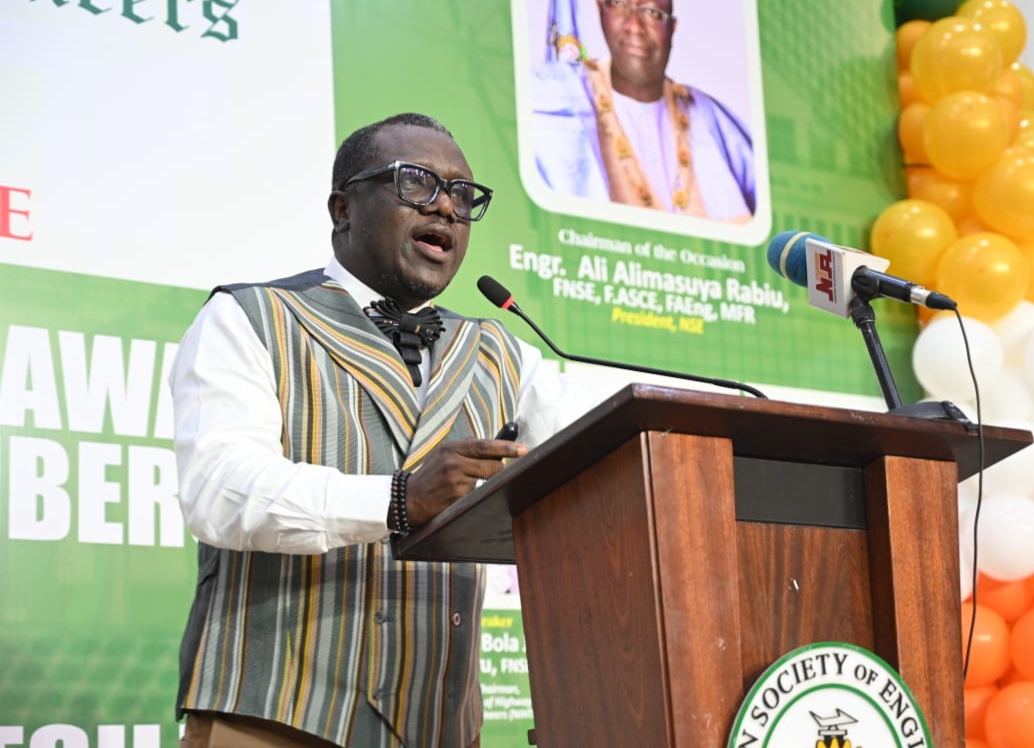
The call was made by the Acting National Chairman of the Nigerian Institution of Highway and Transportation Engineers (NIHTE), Engr. Dr. Bola J. Mudasiru, while delivering a paper titled “Sustainable Infrastructure, Resilient Nation: Engineering Solutions for Growth and Climate Action” at the 2026 Annual Conference of the Nigeria Society of Engineers (NSE), Bwari Branch, Abuja.
Mudasiru said Nigeria currently faces an estimated $100 billion annual infrastructure financing gap, a situation compounded by rapid urbanisation, population growth and increasing exposure to climate hazards such as flooding, coastal erosion and extreme heat.
According to him, more than 123 million Nigerians now live in urban areas, with urban populations growing by about 4.1 per cent annually, placing enormous pressure on existing infrastructure systems.
He noted that the 2020 National Integrated Infrastructure Master Plan (NIIMP) projected about $2.3 trillion in infrastructure investment needs by 2043 to raise the country’s infrastructure stock to 70 per cent of GDP.
“These are not abstract figures. They represent roads left unbuilt, households disconnected, and industries deprived of power — vulnerabilities that magnify Nigeria’s exposure to climate shocks and constrain its economic future,” he said.
The NIHTE acting chairman said the traditional approach to infrastructure design, which relied heavily on historical weather patterns and fixed flood-return periods, was no longer adequate.
He explained that increasingly severe flooding, erratic rainfall, coastal erosion and extreme temperatures were exposing infrastructure designed under past climatic conditions to unprecedented risks.
“Engineers who treat climate as a secondary concern are building in failure by default. The construction problem is now a climate risk problem first,” Mudasiru warned.
He said the challenge before the engineering profession was to determine whether Nigerian cities would adapt and thrive or “bend and break” under the pressure of climate change and rapid urbanisation.
Mudasiru further warned that Nigeria’s demographic trajectory was placing unprecedented pressure on urban infrastructure, noting that the country’s population has exceeded 220 million and is projected to approach 400 million by 2050.
He identified Lagos, Abuja, Kano, Port Harcourt and Ibadan among cities facing mounting pressure on transport, drainage, housing, water and other critical infrastructure systems.
He cited projections that Lagos could reach a population of 24 million by 2030, saying such growth would place extraordinary demands on infrastructure originally designed for a much smaller population.
The engineer said Nigeria could no longer afford to focus predominantly on the initial cost of infrastructure projects while ignoring maintenance, climate exposure and long-term operational costs.
He called for a transition from short-term Capital Expenditure (CAPEX) optimisation to Whole-Life Costing (WLC), describing the shift as one of the defining professional challenges facing Nigerian engineers.
According to him, whole-life costing would help prevent stranded assets, reduce maintenance costs and avoid imposing unnecessary financial and environmental burdens on future generations.
He also advocated a transition from reactive disaster spending to proactive resilience budgeting, with climate-risk considerations embedded in federal, state and local government infrastructure budgets.
“Nigeria cannot afford the luxury of deferred action,” he said, stressing that investments made before disasters occur are more economically rational than repeatedly spending huge sums repairing damaged infrastructure.
Mudasiru stressed that resilient infrastructure should not be viewed merely as an additional cost to government but as an investment capable of protecting economic activity, creating jobs and attracting long-term capital.
He said resilient infrastructure helps maintain productive capacity during climate-related disasters, protects employment and provides greater certainty for investors.
“International capital follows predictable, manageable risk,” he said, adding that investors assess infrastructure projects based on operational reliability and the certainty of long-term cash flows.
He argued that climate resilience would therefore strengthen investor confidence and demonstrate Nigeria’s governance capacity to multilateral financial institutions and private investors.
Mudasiru also identified reliable data as a critical foundation for national infrastructure resilience.
He called for the establishment of geo-referenced asset registers covering federal and state infrastructure portfolios, harmonisation of floodplain mapping standards among relevant agencies, and integration of satellite-derived land-cover data into planning approval systems.
He further advocated the establishment of open-access national hazard-data portals that would allow engineers and other professionals to access reliable information for infrastructure planning and design.
According to him, Nigeria-specific regional climate models developed in partnership with relevant climate and meteorological institutions should be incorporated into national engineering codes as binding design references.
The NIHTE chief also identified poor urban planning and weak regulatory enforcement as major contributors to Nigeria’s flooding crisis.
He particularly condemned the construction of buildings directly on drainage paths, encroachment on floodplains, silting of waterways and uncontrolled development in flood-risk zones.
“These are institutional failures that engineering solutions alone cannot resolve. They require political will and regulatory enforcement,” he said.
Mudasiru called for strict enforcement of drainage setbacks and removal of illegal structures obstructing active waterways.
He also advocated stronger technical engineering oversight for relevant urban and environmental agencies, mandatory flood-risk disclosure in land and property transactions, and criminal penalties for developers who build on gazetted floodplains.
He proposed tax incentives and accelerated planning approvals for developers who exceed minimum green-building standards.
Engineers Must Lead Climate Adaptation
In his conclusion, Mudasiru urged Nigerian engineers to embrace innovation, adaptive design, nature-based solutions and integrated systems thinking as essential tools for building sustainable cities.
He said future infrastructure must be capable of adapting to changing conditions, restoring damaged ecosystems and serving communities across generations.
He called for a fundamental shift from static designs focused primarily on short-term cost minimisation to flexible and resilient systems capable of responding to uncertainty.
“We do not inherit infrastructure from our predecessors. We borrow it from our successors,” he said.
“Every design decision we make today is a gift or a burden to the engineers, communities, and economies of the next generation.”
Mudasiru said the question was no longer whether Nigerian cities could adapt to climate change, but whether the engineering profession would lead that adaptation “with boldness, rigour and equity.”