








Health
Three Years of Alia Administration: Benue-SEMA Charts New Course in Humanitarian Response
By Titus Atondu, Makurdi
Three years after Governor Rev. Fr. Hyacinth Alia assumed office, the Benue State Emergency Management Agency (Benue-SEMA) says it has undergone significant reforms aimed at improving disaster response, humanitarian coordination and the welfare of internally displaced persons (IDPs) across the state.
The agency, which has long been at the forefront of responding to displacement caused by violent attacks, communal conflicts and recurrent flooding, has shifted from an emergency relief-driven institution to one focused on long-term recovery, resilience and sustainable humanitarian interventions.
Since the appointment of Sir James Aondoakaa Iorpuu, PhD, as Executive Secretary on June 7, 2023, Benue-SEMA says its operations have been guided by a strategy that prioritises planning, accountability and restoring the dignity of displaced persons.
According to the agency, Benue currently hosts more than 600,000 internally displaced persons, with about 480,000 living in 15 officially recognised camps across Makurdi, Guma, Gwer West and Logo Local Government Areas, while the remaining displaced persons reside with host communities.
Managing one of Nigeria’s largest displaced populations, the agency noted, has required a departure from the traditional distribution of relief materials to more comprehensive humanitarian programming.

Among its early interventions was the rehabilitation of major IDP camps, including those at Abagena, Daudu and Ortese, where shelters were upgraded, drainage systems improved and solar-powered streetlights installed to provide safer and more dignified living conditions.
Smaller camps at Naka, NEPA Quarters and Ichwa were also consolidated into a mega camp at Mbayongo in Makurdi Local Government Area to improve coordination and service delivery.
Access to clean water has also improved through partnerships with UNICEF and the Benue State Rural Water Supply Agency, resulting in the construction of 30 solar-powered boreholes across IDP camps between 2023 and 2026.
The agency said the intervention significantly reduced the distance displaced persons travel to obtain water and contributed to lower incidences of water-borne diseases.
Recognising that humanitarian assistance extends beyond food distribution, Benue-SEMA introduced livelihood support programmes to help displaced families regain economic independence.
In 2024, more than 10,200 displaced households received improved seedlings, fertilisers and irrigation equipment to support farming activities where security conditions permitted.
The agency also established vocational training centres within camps, where over 4,500 women and youths have acquired skills in tailoring, carpentry, soap production and information technology.
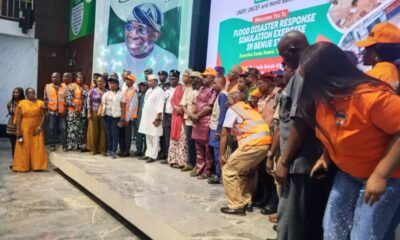
Flood disaster management has equally received renewed attention under the Alia administration.
Working with the National Emergency Management Agency (NEMA) and other stakeholders, Benue-SEMA installed 12 early warning sirens along flood-prone communities on the River Benue axis and trained community volunteers to coordinate evacuation efforts before flooding occurs.
The state government complemented these efforts by removing structures obstructing waterways and constructing major drainage channels in vulnerable communities as part of measures to reduce flood risks.
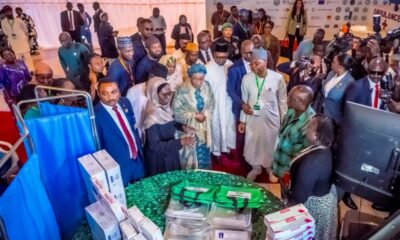
Benue-SEMA has also strengthened collaboration with national and international humanitarian organisations.
The International Organization for Migration (IOM) has supported the agency in profiling displaced persons and strengthening data management, while the World Food Programme (WFP), the United Nations High Commissioner for Refugees (UNHCR) and the International Committee of the Red Cross (ICRC) have provided support in nutrition, protection, family reunification and humanitarian services.
According to the agency, more than 1,300 families separated during attacks have been reunited through its partnership with the ICRC.
To improve transparency in relief distribution, Benue-SEMA introduced biometric registration for beneficiaries alongside a digital tracking system that enables relief materials to be monitored from distribution points to recipients.
Officials say the initiative has reduced cases of diversion and strengthened public confidence in the agency’s operations.
In pursuit of durable solutions, the agency adopted a voluntary return model that allows displaced persons to assess security conditions in their communities before deciding whether to return.
Through this approach, over 18,000 IDPs have reportedly returned to parts of Guma, Gwer West, Makurdi and Agatu Local Government Areas.
The agency has also prioritised education and healthcare by establishing 14 temporary learning centres for more than 7,000 displaced children and upgrading eight camp clinics in collaboration with the Benue State Primary Health Care Board and humanitarian partners.
Governor Alia has further strengthened the agency’s operational capacity through increased budgetary allocations and the procurement of four rapid-response vehicles to improve emergency response across the state.
While acknowledging that insecurity continues to pose significant humanitarian challenges, Benue-SEMA maintains that its focus remains on providing durable solutions through safe return, local integration and sustainable recovery.
Three years into the Alia administration, the agency says its transformation reflects a broader commitment to institutional reforms, accountability and people-centred humanitarian service delivery.
Although the displacement crisis in Benue has yet to be fully resolved, Benue-SEMA argues that the adoption of technology, stronger partnerships, improved planning and data-driven interventions has laid a solid foundation for a more effective and responsive humanitarian system capable of meeting the needs of vulnerable populations across the state.