

By Matthew Otabe
Nigeria’s latest inflation figures have sparked cautious optimism among policymakers and business leaders, but experts warn that the real test lies not in a temporary decline in headline numbers, but in whether ordinary Nigerians begin to feel genuine relief in their daily lives.
While official data from the National Bureau of Statistics (NBS) points to a moderation in inflation, the reality in markets across the country continues to tell a more complex story.
Food prices remain elevated, businesses are struggling with high production costs, and many households are still grappling with the rising cost of living.
For manufacturers and entrepreneurs, inflation is more than an economic statistic. It directly affects production costs, consumer demand, and business survival.
The President of the Association of Small Business Owners of Nigeria (ASBON), Dr. Femi Egbesola, believes the current moderation in inflation offers a window of opportunity for government to strengthen local production and reduce dependence on imports.
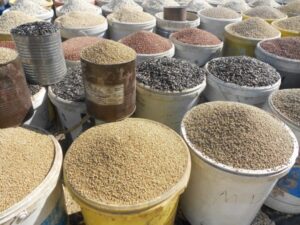
According to him, Nigeria must take advantage of the situation by encouraging manufacturers to source more raw materials locally, a move that would reduce exposure to exchange rate fluctuations while creating jobs and boosting domestic industries.
However, Egbesola warned that any gains could quickly disappear if the current decline in inflation is driven mainly by seasonal factors rather than deliberate economic reforms.
He argued that sustainable price stability would require year-round investment in agriculture, expansion of irrigation systems, reliable electricity supply, and consistent policies that support farmers and manufacturers beyond the rainy season.
“If the reason for the drop in inflation is not strategic but seasonal or based on unstructured indices, then it will not be sustainable,” he said, urging government to focus on long-term measures that would keep food production stable throughout the year.
His concerns reflect a broader challenge facing Nigeria’s economy, where seasonal harvests often bring temporary reductions in food prices before costs begin climbing again during the dry season.Not everyone shares the optimism surrounding the latest inflation report.
The Director-General of the Nigerian Association of Small and Medium Enterprises (NASME), Eke Ubiji, insists that the lived experience of Nigerians paints a different picture from the official statistics.
According to him, businesses and consumers continue to face severe price pressures, with food remaining one of the biggest burdens on household incomes.
“Things are not stabilising. Inflation remains very high. We use market intelligence to know what is happening, not theories. People who go to buy things will tell you the truth,” Ubiji said.
He noted that if prices had genuinely begun to stabilise, consumers and business operators would already be experiencing noticeable relief.
Official figures appear to support some of these concerns.
According to the NBS, food inflation stood at 17.52 per cent year-on-year in June, while month-on-month food inflation rose to 3.75 per cent from 2.98 per cent in May. The increase was attributed to rising prices of fresh pepper, tomatoes, crayfish, beef, garri, yams and other staple food items.
The figures suggest that although overall inflation may be slowing, food—the largest component of household spending for millions of Nigerians—continues to become more expensive.
For small businesses, especially those involved in food processing, catering, retail and manufacturing, persistent food inflation translates into higher operating costs, shrinking profit margins and weaker consumer purchasing power.
Economists say Nigeria’s fight against inflation will ultimately be judged not by statistical improvements alone, but by whether citizens can once again afford basic necessities without sacrificing other essential needs.
The debate highlights an important lesson: inflation control requires more than favourable weather or temporary market conditions. It demands structural reforms that expand agricultural productivity, improve infrastructure, strengthen energy supply, stabilise the exchange rate and encourage local manufacturing.
Until these fundamentals are firmly in place, many analysts believe Nigeria’s battle against inflation will remain fragile, with temporary improvements offering hope but not yet guaranteeing lasting economic relief.
For millions of Nigerians, the true measure of success will not be the percentage points announced in economic reports, but the prices they encounter every day in neighbourhood markets across the country.
Otabe is the CEO/Publisher of FirmNews Media, he can be reached via Firmnews@gmal.com




Good morning sir, the above writeup is apt, the rate of inflation in the country in increasing daily, cost of production is rising,purchasing power of Nigerians is decreasing daily. The government needs to come out with better policies that will bring down inflation and lower the prices of item in the market