



News
Beyond Uniforms: How Customs Is Rebranding Through Professional Communication
For decades, the Nigeria Customs Service (NCS) was largely defined in the public imagination by border enforcement, revenue collection and anti-smuggling operations.
Today, however, the agency is increasingly recognising that modern customs administration is not only about what officers do, but also about how those actions are communicated to the public.
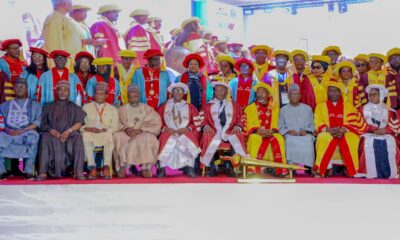
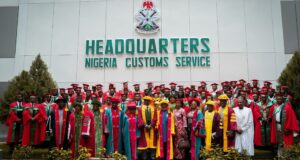
This shift was underscored on Monday in Abuja when the Nigerian Institute of Public Relations (NIPR) inducted 70 Public Relations officers of the Nigeria Customs Service, the first mass induction of Customs communication personnel into the institute since 2013. More than a ceremonial event, the induction signals a deliberate effort by the Service to strengthen its communication capacity as part of its broader institutional reform agenda.

The move reflects a growing reality in public administration: reforms can easily lose public trust if they are poorly communicated. In an era dominated by social media, misinformation and instant public scrutiny, government agencies are increasingly expected to explain their actions promptly, accurately and transparently.
Speaking at the ceremony, Comptroller-General of Customs Adewale Adeniyi described the induction as a strategic investment in the future of the Service’s communication architecture.
According to him, the transformation of the Nigeria Customs Service, including its recognition as one of the best-performing government agencies in Ease of Doing Business, has been driven by deliberate reforms that require equally competent professionals to tell the Service’s story.
His remarks highlighted an important reality facing public institutions. Effective communication has become an essential operational tool rather than a supporting function.
As Customs embraces technology-driven operations, digital trade facilitation and modern border management, the demand for skilled communicators capable of managing public perception and combating misinformation continues to grow.
Adeniyi warned the newly inducted officers that rumours and false narratives are inevitable in today’s information environment, urging them to respond with speed, professionalism and factual communication capable of sustaining public confidence.
The emphasis on communication is also closely tied to the Service’s expanding public engagement initiatives. The Comptroller-General disclosed that the Customs Cares Corporate Social Responsibility programme is set to receive recognition at the forthcoming Commonwealth Games, describing it as a legacy project whose impact deserves wider visibility through ethical and strategic storytelling.
Observers say this represents a broader shift in how government agencies now approach public relations. Rather than simply issuing press statements, communication professionals are increasingly expected to build relationships with stakeholders, explain policy reforms and promote institutional accountability.
The Nigerian Institute of Public Relations believes such professionalism is critical. NIPR President and Chairman of Council, Dr. Ike Neliaku, commended Customs for investing in certified communication practitioners, noting that the Service has evolved into an institution widely recognised for reforms, corporate excellence and growing international relevance.
His remarks suggest that effective reputation management is no longer reserved for private organisations. Public institutions are equally judged by the quality of their engagement with citizens, businesses and international partners.
Former National Public Relations Officer of Customs, retired Comptroller Joseph Attah, reinforced this message by reminding the newly inducted officers that credibility remains the foundation of professional communication.
He urged them to remain truthful, accurate and responsible while continually improving their skills through professional development.
His advice reflects one of the greatest challenges facing communicators today: balancing speed with accuracy during crises. In an age where misinformation spreads rapidly, public relations officers often serve as the first line of defence against speculation and public distrust.
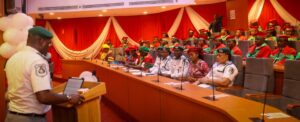
The National Public Relations Officer of Customs, Deputy Comptroller Aliyu Maiwada, acknowledged that the achievement was the product of sustained institutional support, crediting the Comptroller-General and former spokespersons for nurturing the Public Relations Unit into one capable of producing certified professionals.
Ultimately, the induction of 70 Public Relations officers represents more than professional certification. It reflects the Nigeria Customs Service’s recognition that institutional reforms require effective communication to gain public acceptance.
As government agencies become increasingly technology-driven and citizen-focused, strategic communication is emerging as a core component of governance. For the Nigeria Customs Service, investing in professional communicators may prove just as important as investing in scanners, digital platforms and border infrastructure.
The message from Abuja was clear: in modern public service, protecting an institution’s reputation is no longer an afterthought—it is part of delivering its mandate.