By Matthew Otabe
For years, one of the greatest barriers to healthcare in Nigeria has not been the absence of hospitals or medical professionals alone—it has been the cost of treatment. Countless families have been forced to choose between paying hospital bills and meeting basic household needs, while many delayed seeking medical attention until illnesses became life-threatening.
Health insurance has long been regarded as the most sustainable solution to this challenge. Yet, across many states, expanding coverage has remained a difficult task, requiring political will, strong institutions and sustained public confidence.
Akwa Ibom State’s recent double national recognition suggests that the state may have found a winning formula.
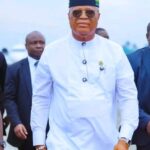
At the 2026 Health Insurance and Managed Care National Leadership Award of Excellence organised by the Institute of Health Insurance and Managed Care of Nigeria (IHIMN) in Abuja, Governor Umo Eno received the Outstanding Contribution to Health Insurance Development in Nigeria Award 2026, while the Akwa Ibom State Health Insurance Agency (AKSHIA) emerged as the Fastest Growing Agency in Healthcare Coverage Award 2026.
The honours go beyond plaques and commendations. They reflect how deliberate political leadership, strategic investments and institutional reforms can rapidly transform healthcare delivery.
Leadership Driving Reform
For the Chairman of AKSHIA and Senior Special Assistant to the Governor on Health Insurance, Dr. Edikan Ekwere, the awards are a direct reflection of Governor Umo Eno’s commitment to healthcare.
According to him, the administration’s declaration of a state of emergency in healthcare marked the beginning of a series of reforms that have reshaped the sector.
These include the recruitment of more than 3,000 healthcare workers, expansion of health insurance coverage, improvements in emergency medical services and broader investments aimed at making healthcare both affordable and accessible.
Ekwere believes these interventions have significantly increased enrolment in the state’s health insurance scheme, enabling more residents to receive quality medical care without facing catastrophic medical bills.
He described the awards as validation that strategic investments in healthcare can produce measurable outcomes.
Turning a Late Start into Rapid Progress
Perhaps the most remarkable aspect of Akwa Ibom’s story is that it began from behind.
Executive Secretary of AKSHIA, Dr. Igbemi Arthur Igbemi, recalled that Akwa Ibom was the last state in Nigeria to establish a state health insurance agency.
When the agency was inaugurated on September 20, 2024, scepticism was widespread. Many doubted whether the state could catch up with others that had years of experience operating health insurance programmes.
Within less than two years, however, the narrative has changed dramatically.
Today, AKSHIA is being recognised nationally as one of the country’s fastest-growing health insurance agencies.

Dr. Igbemi attributes that turnaround to Governor Eno’s willingness to decentralise health insurance in line with national policy and provide the legislative backing needed to establish the agency.
The transformation demonstrates that late entry into a reform programme does not necessarily translate into poor performance when there is strong political commitment.
Health Insurance as Financial Protection
Beyond awards, Dr. Igbemi insists that the real achievement lies in what health insurance means for ordinary citizens.
He explained that health insurance provides financial protection by reducing out-of-pocket spending on medical treatment—a major cause of poverty for many Nigerian families.
Instead of paying huge sums each time illness strikes, enrolled residents gain access to healthcare through pooled financing, allowing them to seek treatment without exhausting their savings.
In a country where healthcare financing remains one of the biggest development challenges, expanding insurance coverage represents an important step toward protecting vulnerable households.
Building Confidence Through Results
One of the biggest obstacles facing health insurance schemes is public trust.
Many people remain uncertain about whether insurance will actually deliver quality healthcare when needed.
Dr. Igbemi believes national recognition from independent professional bodies helps address that challenge.
According to him, public confidence grows when people see that an agency is being recognised for measurable achievements rather than political rhetoric.
Greater confidence, he noted, is expected to encourage more residents to enrol while also motivating Akwa Ibom indigenes living outside the state to pay insurance premiums on behalf of relatives at home. For a programme built largely on public participation, trust is as valuable as funding.
Infrastructure Meets Insurance
Healthcare experts often argue that expanding insurance without improving healthcare infrastructure creates imbalance.
Akwa Ibom appears to be pursuing both simultaneously.
Governor Eno’s administration has invested in healthcare infrastructure, including the construction of an international hospital, while also improving welfare packages for doctors, nurses and other health professionals.
Better salaries and incentives are helping retain skilled personnel, particularly in rural communities where shortages have traditionally been severe.
The expansion of health insurance ensures that when these facilities become fully operational, residents will be better positioned to access their services without facing crippling medical costs.
Awards as Motivation, Not Destination
Interestingly, officials say the awards have not produced complacency.
Dr. Igbemi recalled that when AKSHIA received an earlier national recognition, Governor Eno’s response was not celebration but a challenge.
Rather than relaxing, he instructed the agency to work even harder to sustain its position.
That approach, according to the Executive Secretary, has helped maintain momentum and contributed to the agency’s latest national recognition.
Similarly, Dr. Ekwere described the latest award as motivation to deepen enrolment, particularly among vulnerable populations, while strengthening partnerships with healthcare providers across the state.
A Broader National Lesson
The theme of this year’s conference—”Building a Robust Capacity for Universal Health Coverage”—reflects a national aspiration shared by governments across Nigeria.
Other states, including Bayelsa, Cross River, Delta, the Federal Capital Territory, Imo, Ondo and Sokoto, were also recognised for contributions to health insurance development.
Yet Akwa Ibom’s experience offers a particularly instructive lesson.
It illustrates that expanding healthcare access requires more than policy announcements. It demands sustained political leadership, adequate funding, institutional reforms, professional management and continuous public engagement.
Universal health coverage remains one of Nigeria’s most ambitious development goals. Achieving it will require every state to build systems that protect citizens from financial hardship while guaranteeing access to quality medical care.
For Akwa Ibom, the latest national honours represent more than recognition of past achievements—they signal growing confidence that the state is steadily building a healthcare system where quality medical services are increasingly determined not by a person’s ability to pay, but by a government’s commitment to protecting the health of its people.