

By Bashir Hassan, Bauchi
A menstrual health intervention implemented by Population Services International (PSI) Nigeria has improved access to menstrual health information and strengthened the economic livelihoods of women and girls in three local government areas of Bauchi State.
The Menstrual Health and Hygiene Management Project (MH-NoW) recorded significant achievements in awareness creation, community engagement and economic empowerment, with stakeholders calling on the state government to sustain the gains through increased funding and stronger institutional support.
At the project’s cycle close-out event in Bauchi, stakeholders urged the government to integrate menstrual health interventions into development plans, strengthen existing structures and provide adequate budgetary support for continued implementation.
Presenting an overview of the intervention, PSI State Programme Officer, Jerry Panshak, said the project reached more than 54,600 women, girls, men and boys through engagements in schools, communities and healthcare facilities.
He disclosed that 1,578 peer educators were trained to provide menstrual health information to 28,137 girls, while 10,220 women and girls received community-based education.
According to him, the intervention also engaged 2,627 men and boys as allies in promoting menstrual health awareness, while 13,669 women and girls received menstrual health counselling at healthcare facilities.
Beyond awareness creation, Panshak said the project supported the economic empowerment of 32 women involved in producing and distributing locally made menstrual health products.
He explained that the beneficiaries collectively generated ₦6.6 million from the distribution of 5,500 menstrual health products across the state.
The Minister of Women Affairs and Social Development, Imaan Sulaiman-Ibrahim, represented by Dr Gloria Teju Michael, urged the Bauchi State Government to consolidate the achievements through stronger government ownership and collaboration among relevant ministries.
The state Commissioner for Women Affairs and Social Development, Dr Lydia Tsammani, assured stakeholders that the government would sustain the project’s achievements.
PSI Senior Programme Officer, Winifred Kwakmat, disclosed that the procurement of menstrual health products had been proposed for inclusion in the state’s 2027 budget and Annual Operational Plan.
She called on the state government to approve and fund the proposal to ensure the continued availability of menstrual health products and services.
Kwakmat further noted that the project had established 18 menstrual health advocates across the state, providing a foundation for sustained community engagement and continued awareness creation.
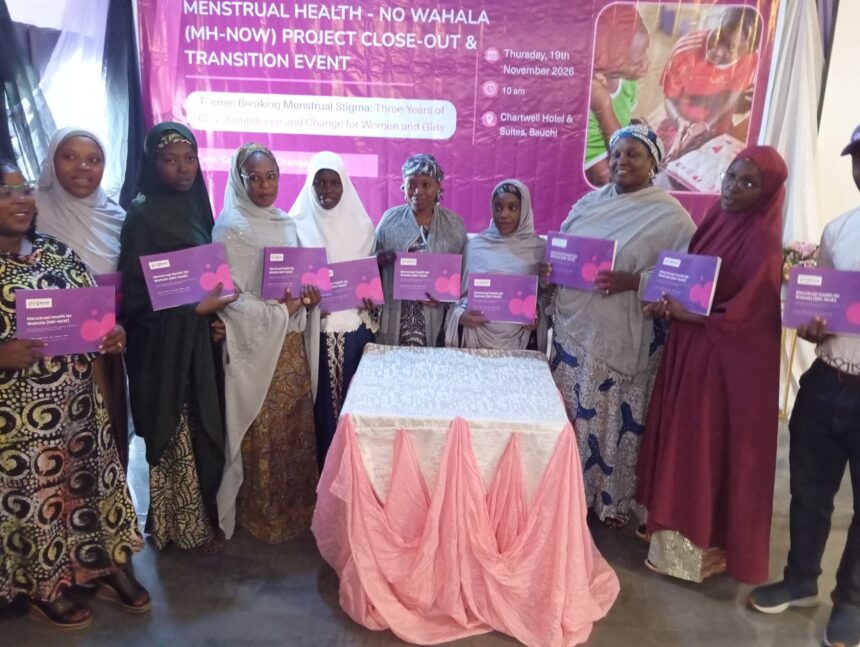
The close-out event also featured the unveiling of a policy brief and the presentation of awards to stakeholders in recognition of their contributions to the successful implementation of the project.