

By Ibrahim Nasiru
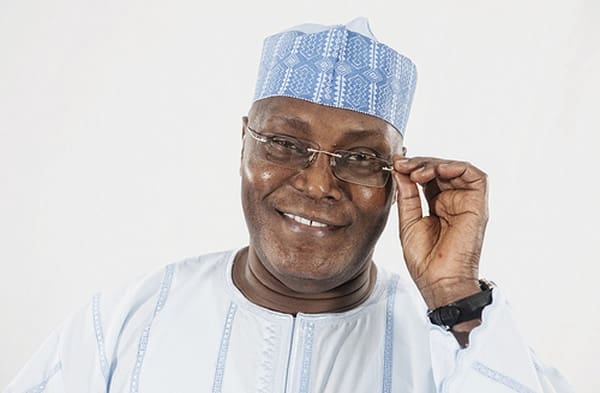
Tomorrow, Wednesday , November 25, former Vice President Atiku Abubakar, GCON, joins the rare club of Nigerian statesmen who have reached the milestone age of 80.
In a country where political debates are often heated and deeply divided, an 80th birthday invites us to step back from daily campaign noise and examine the full arc of a remarkable public life.
Whether one agrees with every political choice Atiku Abubakar has made over the last four decades or not, few figures have shaped Nigeria’s Fourth Republic or tested its democratic institutions as consistently as the Wazirin Adamawa.
1. From Jada to National Prominence
Atiku’s story begins far from the corridors of power. Born in Jada in present-day Adamawa State and raised after losing his father early in life, his journey through the Nigeria Customs Service—where he rose to Deputy Director—taught him early lessons in national administration, commerce, and bridge-building across Nigeria’s regions.
Long before 1999, under the mentorship of the late Shehu Musa Yar’Adua, Atiku became a central organizer in the People’s Democratic Movement (PDM), helping build one of the most durable cross-regional political networks in modern Nigerian history.
2.The 1999–2007 Reform Years
When Nigeria returned to civil rule in 1999, Atiku—having just won the Adamawa State governorship—stepped onto the national stage as Vice President alongside President Olusegun Obasanjo.
History remembers the sharp political friction of their second term, yet any honest assessment of that era must also acknowledge the structural reforms overseen by the economic team Atiku chaired: the telecommunications revolution that put mobile phones in the hands of millions of ordinary Nigerians, banking sector consolidation, pension reform, and the historic Paris Club debt exit that freed Nigeria from crippling foreign debt obligations.
3.Betting on Education and Private Enterprise
Unlike politicians whose influence exists only when they hold public office, Atiku invested heavily in institutions that outlive election cycles. Through his private businesses across logistics, agriculture, media, and manufacturing and most notably through the American University of Nigeria (AUN) in Yola—he built platforms that have educated thousands of young Africans and sustained thousands of livelihoods in the North-East, even through the darkest years of insurgency.
4.Fighting Battles in Courtrooms, Not on the Streets
Perhaps Atiku’s most enduring contribution to Nigeria’s democracy is how he has handled political defeat.
Having contested the presidency multiple times over two decades, he has repeatedly chosen constitutional litigation and peaceful opposition over street violence or ethnic mobilization—helping establish landmark Supreme Court precedents on electoral law, tenure limits, and executive power.
The Bottom Line
At 80, Atiku Abubakar remains one of the most consequential actors in Nigerian politics—still energetic, still vocal on restructuring, fiscal accountability, and national unity, and still at the centre of the conversation ahead of 2027.
On this milestone birthday, Nigerians across party lines can wish the Wazirin Adamawa good health, peace of mind, and continued strength as he enters his ninth decade.
Ibrahim Nasiru
Public Affairs Analyst Abuja based