

By Ibrahim Nasiru
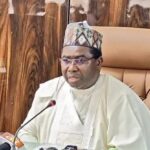
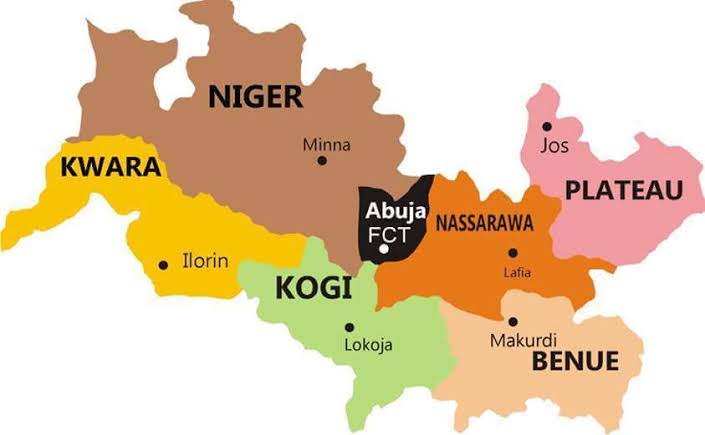
Public Affairs Analyst, Ibrahim Nasiru, has questioned the inclusiveness and political relevance of the Middle Belt Forum (MBF), arguing that the North Central geopolitical zone remains the most appropriate identity for the region because of its constitutional recognition and diverse population.
Nasiru made the submission in an article titled “The Middle Belt Debate: Why We Must Stick to North Central,” in which he examined the ongoing debate over the identity, political direction and developmental priorities of the Middle Belt.
He acknowledged that concerns raised in the recent essay, “The North and the Middle Belt: The Divide in Our House,” about the absence of a coherent development agenda and the perceived political inconsistencies of the Middle Belt Forum were legitimate.
However, he argued that the debate must go beyond sentiment and address what he described as the contradiction between the Forum’s claim of representing a diverse geographical region and the composition of its leadership and public engagements.
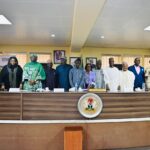
Citing the Forum’s recent courtesy visit to President Bola Tinubu in Abuja, Nasiru questioned the absence of Muslim leaders, traditional rulers, intellectuals and other stakeholders from the delegation.
He argued that if the Middle Belt genuinely represents a heterogeneous geographical area covering the North Central and parts of the North West and North East, its leadership and public representation should reflect the religious, ethnic and cultural diversity of those areas.
According to him, the perceived lack of religious diversity in the Forum’s frontline representation raises questions about its claim to speak for the entire population of the region.
Nasiru maintained that the Middle Belt identity, as currently promoted by the Forum, risks being perceived as an exclusive religious pressure group rather than a broad-based regional platform.
He further argued that the North Central geopolitical zone offers a more clearly defined constitutional and administrative identity, accommodating Christians, Muslims and people from different ethnic backgrounds.
“The North Central zone is a solid, gazetted reality that houses millions of Muslims, Christians, and diverse ethnic groups living in a shared civic reality,” he stated.
The public affairs analyst cautioned against replacing Nigeria’s constitutionally recognised geopolitical structure with what he described as an undefined and emotionally driven regional identity.
He also questioned what he considered the Forum’s inconsistent political position ahead of the 2027 general elections.
Nasiru recalled that in 2023, prominent voices within the Middle Belt political movement criticised the All Progressives Congress (APC) over its Muslim-Muslim presidential ticket, arguing that the arrangement undermined religious inclusion.
He, however, observed that the Forum’s recent political posture appeared to indicate a shift towards supporting the same political establishment.
He questioned the rationale behind the perceived change, asking whether the religious concerns expressed during the 2023 elections had been abandoned or whether political interests had taken precedence over the principles previously advocated.
Beyond the political disagreements, Nasiru called for a renewed focus on the region’s economic and developmental potential.
He noted that the North Central region is endowed with significant economic assets, including the Ajaokuta Steel Complex, extensive solid mineral deposits and major agricultural production areas capable of strengthening Nigeria’s food security.
He argued that the region’s political relevance should be measured by its ability to attract industrial investments, infrastructure development, agricultural transformation and human capital advancement rather than its opposition to other sections of Northern Nigeria.
According to him, genuine regional advocacy should prioritise industrialisation, infrastructural funding, capital dredging and investments in education and human capital development.
He maintained that organisations claiming to represent the interests of the people must demonstrate their commitment through practical development initiatives rather than political endorsements, courtesy visits and internal religious alignments.
Nasiru further warned that a movement seeking to address marginalisation must not reproduce the same exclusionary practices it criticises.
He insisted that the Middle Belt Forum must demonstrate genuine inclusiveness if it intends to retain the moral authority to speak for the diverse communities within the region.
He concluded that the time had come for stakeholders to move beyond what he described as emotional political identities and embrace the North Central geopolitical framework.
According to him, the priority should be securing measurable development outcomes that improve the living conditions of all residents, irrespective of their ethnic, religious or cultural backgrounds.