By Matthew Otabe
Médecins Sans Frontières (MSF) has called for stronger community-based surveillance, early detection and increased government funding to tackle noma, a preventable and treatable disease that continues to affect vulnerable children in Nigeria.
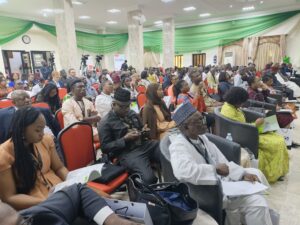
The Country Representative of MSF Nigeria-Intersectional Country Office, Ahmed Aldikhari made the call during the commemoration of the 2026 National Noma Day in Abuja on Monday, where it urged the Federal Government and relevant stakeholders to intensify efforts towards preventing the disease, improving access to treatment and strengthening healthcare delivery.
He commended the Federal Government, the Ministry of Health, the Nigerian Association of Noma and other stakeholders for the progress recorded in strengthening Nigeria’s response to noma.
He particularly welcomed efforts towards integrating noma into primary healthcare guidelines and its inclusion in the Surveillance Outbreak Response Management and Analysis System (SORMAS), describing the developments as important steps towards improving disease identification, reporting and referral.

Aldikhari also congratulated the Ministry of Health on the launch of the National Strategic Plan on Oral Health 2026–2031, noting that the initiative provides an opportunity to incorporate noma into the country’s broader oral health priorities.
According to him implementing the plan effectively will require coordinated action across federal, state and local government levels, as well as active community participation.
Highlighting its longstanding partnership with the Federal Ministry of Health and the Sokoto State Ministry of Health at the Noma Children’s Hospital, MSF said it had continued to provide comprehensive treatment and rehabilitation services to people affected by the disease since 2014.
The services include inpatient treatment for acute noma, major facial reconstructive surgeries, oral physiotherapy, health promotion, community engagement, nutritional support and mental health and psychosocial care.
The organisation disclosed that the partnership had facilitated more than 1,759 major reconstructive surgeries for 1,174 patients through 35 surgical missions over the past decade.
It added that 114 surgeries were performed on 96 patients in 2026 alone.
MSF further revealed that capacity development remained a major component of its collaboration with Nigerian health authorities, noting that 28 Nigerian surgeons and 14 anaesthetists had been trained by international specialists to strengthen local capacity for quality noma treatment.
Despite the progress, the organisation stressed that early detection remained critical to preventing severe complications and saving lives, given the rapid progression of the disease.
He therefore called for stronger community-based surveillance systems to ensure suspected cases were identified and referred for treatment at the earliest possible stage.
MSF emphasised the important roles of community health workers, traditional and religious leaders, teachers, caregivers and other trusted community actors in identifying early symptoms and encouraging affected families to seek medical attention.
It also urged authorities to equip frontline health workers with adequate training and tools to recognise the early signs of noma, provide appropriate initial care and ensure timely referrals.
The organisation further advocated the integration of noma screening into routine primary healthcare services, stressing that primary healthcare facilities must be adequately equipped to identify, document and refer suspected cases without delay.
On the inclusion of noma in SORMAS, MSF said the development must be supported by effective implementation, sustained training, consistent reporting, reliable data management and regular supervision.
It noted that a properly functioning surveillance system would enable Nigeria to determine the actual burden of the disease, identify high-risk communities and deploy interventions more effectively.
The organisation also called for deliberate and sustained financial investment by government institutions and development partners to support the implementation of the National Strategic Plan on Oral Health, strengthen surveillance and referral mechanisms, and expand access to comprehensive treatment.
MSF urged stakeholders to renew their collective commitment to ensuring that no child suffers or dies from a disease that is both preventable and treatable.
It maintained that sustained collaboration, early intervention and adequate investment were essential to bringing noma out of obscurity and ensuring that every child had the opportunity to live a healthy life.