
The Federal Government has appealed to the leadership and members of the National Assembly to suspend consideration and passage of bills seeking to establish new federal universities, polytechnics and colleges of education in line with its seven-year moratorium on the creation of additional tertiary institutions.
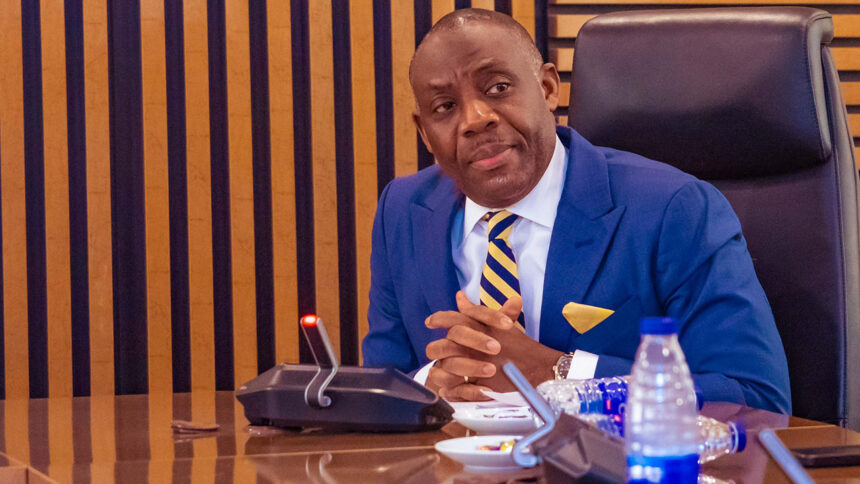
The Minister of Education, Dr. Tunji Alausa, made the appeal in a letter dated November 2, 2026, addressed to the President of the Senate, Senator Godswill Akpabio, urging lawmakers to support the Federal Government’s policy aimed at improving educational quality, ensuring fiscal sustainability and promoting efficient utilisation of public resources.
Alausa warned that continued legislative approval of new tertiary institutions would run contrary to the moratorium adopted by the Federal Executive Council (FEC) at its meeting on August 13, 2025.
According to the Minister, the decision followed growing concerns over the proliferation of tertiary institutions, duplication of academic programmes, underutilisation of existing facilities and the government’s declining capacity to adequately finance and sustain the increasing number of public institutions.
He observed that despite the policy direction, legislative proposals for the establishment of new institutions were still receiving attention at the National Assembly.
While acknowledging the constitutional powers of the legislature to initiate and enact laws, Alausa stressed that proposals for new institutions must align with national education policies, established needs and the financial implications of their creation.
The Minister maintained that Nigeria’s major challenge in the tertiary education sector was no longer simply expanding access but strengthening existing institutions through improved infrastructure, adequate funding, recruitment of qualified academic and non-academic personnel, modern teaching and research facilities, and enhanced administrative efficiency.
He identified inadequate lecture halls, overcrowded classrooms, insufficient laboratories, shortages of qualified personnel, accommodation deficits and deteriorating infrastructure as some of the major challenges confronting existing federal institutions.
He warned that distributing limited resources among additional institutions without first addressing these shortcomings would further undermine the capacity of existing universities and other tertiary institutions to provide quality education.
Citing outstanding government funding commitments as evidence of the financial difficulties facing the sector, Alausa recalled that under the 2013–2018 revitalisation agreement with the Academic Staff Union of Universities (ASUU), valued at ₦1.3 trillion, only ₦250 billion was reportedly released between 2013 and 2021.
He also disclosed that out of the additional ₦150 billion approved in 2025 for the Needs Assessment Intervention, only ₦50 billion was initially released.
According to him, the funding gaps raise serious questions about the government’s ability to sustain additional institutions without guaranteed and corresponding budgetary provisions.
The Minister further highlighted existing government commitments, including infrastructure projects funded through the Tertiary Education Trust Fund (TETFund), the Nigerian Education Loan Fund (NELFUND), vocational and skills development programmes, as well as the Consolidated Academic Tools Allowance and Consolidated Tertiary Institutions Tools Allowance for academic and non-academic staff.
He argued that these ongoing interventions must be adequately funded and protected rather than weakened by the establishment of additional institutions without clearly identified sources of financing.
Alausa also cited examples of state governments that had adopted institutional consolidation to address funding challenges and improve efficiency.
He recalled that Ekiti State merged three state-owned universities in 2011 to establish Ekiti State University, Ado-Ekiti, while Imo State also reviewed and integrated several tertiary institutions established by previous administrations.
He added that some state governments had approached the Federal Government to take over universities they could no longer sustainably finance.
Drawing lessons from Australia, Finland, Japan, the United States and South Africa, where institutional mergers and consolidations have been adopted to address financial constraints, duplicated programmes and administrative inefficiencies, the Minister called on Nigeria to prioritise institutional viability and educational quality over the continuous expansion of tertiary institutions.
He emphasised that establishing a tertiary institution goes beyond enacting an enabling law, explaining that it requires substantial commitments, including take-off grants, land, infrastructure, personnel, equipment, utilities and recurrent expenditure.
Such obligations, he noted, become long-term financial liabilities for successive governments.
The Minister cautioned that approving establishment bills without feasibility studies, demonstrable needs and credible long-term funding arrangements could result in institutions that exist only in law but lack the resources and capacity to function effectively.
However, he clarified that the seven-year moratorium was not intended to permanently deny Nigerians access to tertiary education or prevent future expansion where compelling national needs arise.
Rather, he explained that the policy would provide an opportunity for the government to consolidate existing investments, address institutional deficiencies, improve educational standards and ensure that any future expansion is properly planned and financially sustainable.
Expressing confidence in cooperation between the Executive and Legislature to reposition the education sector, Alausa maintained that the success of Nigeria’s education system should not be determined merely by the number of institutions established.
He stressed that greater emphasis should be placed on the ability of existing institutions to deliver quality education, produce competent graduates and contribute meaningfully to national development.