
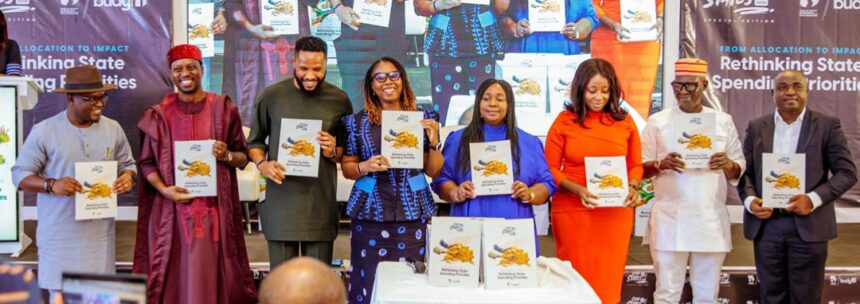
The Country Director of BudgIT Nigeria, Vahyala Kwaga, has called on state governments to ensure that increased revenue allocations translate into improved public services, stronger infrastructure and better living conditions for citizens.
Kwaga made the call on Tuesday in Abuja during the launch of the independent edition of BudgIT’s flagship State of States Report, which assesses the fiscal performance and financial management practices of Nigeria’s 36 states.
He said the report had evolved beyond conventional assessments of government revenue, expenditure and debt to examine how public resources are deployed and the extent to which they translate into tangible development outcomes.
According to him, BudgIT evaluates states using more than 500 indicators covering key areas of fiscal performance, including internally generated revenue, debt disclosure, debt servicing, personnel costs, capital expenditure and the capacity of state governments to meet their financial obligations.
He explained that while previous editions focused largely on the financial health of states, the latest edition places greater emphasis on the relationship between public spending and development outcomes.
“This is a significant shift in how we assess the fiscal performance of our states. We are moving beyond revenue figures, expenditure and debt profiles to examine what public resources are actually achieving,” he said.
Kwaga noted that the changing fiscal realities of the country, particularly the increase in resources available to state governments, made it necessary to expand the scope of the assessment.
He said BudgIT’s analysis of state finances between 2020 and 2025 showed a significant increase in resources available to state governments, presenting an opportunity to address longstanding development challenges.
However, he stressed that increased revenue alone was insufficient to guarantee development, adding that governments must demonstrate how additional resources were being channelled into critical sectors.
He said the report examined the allocation and utilisation of public funds in sectors such as healthcare, education, agriculture, water and sanitation, as well as the implementation of capital projects.
Kwaga also emphasised the importance of examining actual expenditure and budget implementation to determine whether government commitments were translating into meaningful benefits for citizens.
He said the objective was to strengthen fiscal accountability by making information about how state governments raise, allocate and spend public resources accessible to citizens, journalists, researchers, civil society organisations and policymakers.
The BudgIT director urged the media and civil society organisations to use the findings of the report to engage governments, demand accountability and promote evidence-based discussions on governance.
He added that the organisation hoped to make fiscal accountability a regular part of political discourse, campaign evaluations and citizens’ assessment of government performance.
World Bank Seeks Improved Management of State Resources
In her remarks, the World Bank Country Director, Matthew Verghis, represented by Gloria Joseph, commended BudgIT for its sustained efforts in promoting transparency and accountability in public finance management through the State of States Report.
She said state governments controlled substantial public resources and therefore had an important responsibility to ensure that increased revenue translated into improved development outcomes.
According to her, state governments receive significant allocations from the Federation Account, alongside revenues from Value Added Tax, internally generated revenue and other grants and intervention funds.
She noted that the increase in resources available to states following recent economic and fiscal reforms presented an opportunity for governments to address critical development needs.
Joseph said that while many states previously struggled to meet basic expenditure obligations, including salary payments, the increased revenue had strengthened their fiscal capacity.
She, however, cautioned that the availability of additional funds must be matched with effective planning, transparent budgeting and prudent expenditure management.
She said state governments remained central to Nigeria’s development because of their responsibilities in education, healthcare, infrastructure and other essential services that directly affect citizens.
“These are services that directly shape development outcomes. The fiscal capacity of states and the effectiveness with which they manage public resources therefore have important implications for Nigeria’s development trajectory,” she said.
Joseph disclosed that a World Bank analysis of budget implementation reports from state governments showed that spending on transportation and infrastructure had expanded significantly as state revenues increased.
She added that expenditure on education, healthcare and social protection had also increased, although not at the same pace as spending on infrastructure and other sectors.
According to her, the trend underscores the need for states to maintain a better balance in their spending priorities to ensure that investments in infrastructure are complemented by adequate funding for human capital development.
She further observed that despite improvements in internally generated revenue, federal transfers remained a major source of funding for many states, exposing their finances to fluctuations in revenue from the federation.
The World Bank representative also acknowledged improvements in fiscal transparency across the states, noting that while only 45 states’ budget documents were publicly available in the past, all 36 states now publish key budget documents and related financial information.
She said the improvement in public access to budget documents, implementation reports and financial statements had strengthened transparency and accountability in state-level governance.
However, she identified budget credibility, cash management, public financial controls, debt management and comprehensive reporting as areas requiring further attention.
Joseph urged state governments to strengthen their public financial management systems and ensure that increased revenue resulted in measurable improvements in citizens’ welfare.
She reaffirmed the World Bank’s commitment to supporting the Nigerian government and its development partners in promoting inclusive growth, creating economic opportunities and improving the living conditions of vulnerable populations.
She also called for greater attention to local government finances, expressing hope that similar assessments would eventually extend to the local government level to strengthen accountability closer to the grassroots.
The World Bank representative said the partnership with BudgIT and other development stakeholders remained important in promoting evidence-based policymaking and ensuring that public resources were used to deliver sustainable development.
The 2026 edition of the State of States Report is expected to provide further insights into the fiscal capacity of Nigerian states, their spending priorities and the extent to which public resources are translating into development outcomes.