

By Matthew Otabe
The Minister of the Federal Capital Territory (FCT), Nyesom Wike, has commended the Dunamis International Gospel Centre for constructing a pedestrian bridge in Abuja, describing the initiative as a demonstration of responsible leadership and commitment to public service.
Wike said leadership should be measured by tangible contributions to society and improvements in people’s lives, rather than promises, declarations or political rhetoric.
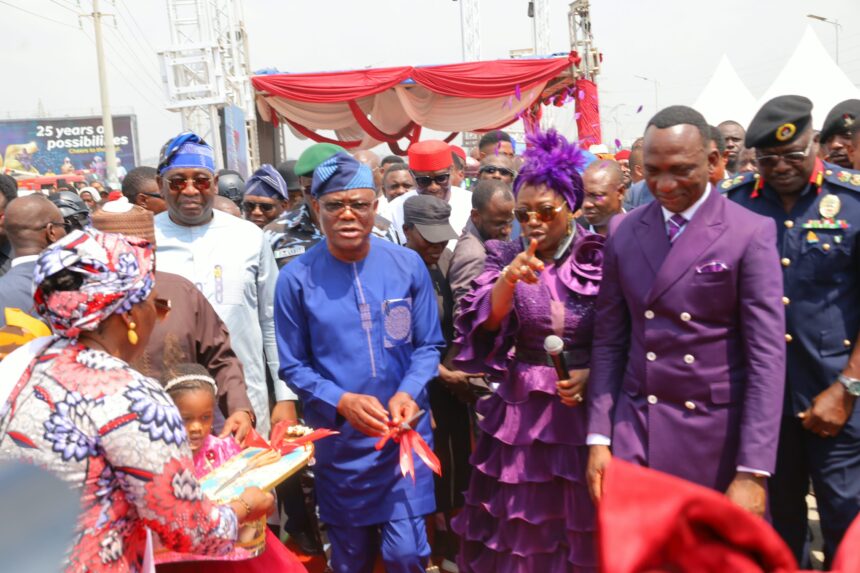
The minister made the remarks on Friday during the commissioning of the pedestrian bridge constructed by the church as part of its Corporate Social Responsibility (CSR) initiatives in the FCT.
He said he attended the event to recognise the church for translating its religious teachings into practical interventions that address societal needs and improve community welfare.
Commending the Senior Pastor of Dunamis International Gospel Centre, Dr Paul Enenche, and his wife, Wike said religious organisations had important roles to play in complementing government efforts beyond their spiritual responsibilities.
“Watching the documentary and seeing what you have done, touching lives, not only with your soul, but talking about the welfare of other people, that is leadership,” he said.
The minister observed that investing in public infrastructure required sacrifices, particularly for religious institutions with other financial commitments, noting that the church had demonstrated its willingness to prioritise projects that benefit the wider society.
According to him, genuine leadership involves making difficult decisions and deploying available resources towards addressing the needs of the people.
Wike also recalled the church’s previous engagements with the FCT Administration, disclosing that an application initially submitted in 2018 was brought to his attention following a renewed request in February 2026.
He said the administration granted approval within a short period, describing the development as evidence of its readiness to support initiatives that promote public welfare.
The minister urged Nigerians to acknowledge government achievements where necessary while offering constructive criticism in areas requiring improvement.
He maintained that governance should be evaluated based on measurable results and the actual impact of policies and projects on citizens.
Wike further challenged public office holders to demonstrate what they had accomplished with the responsibilities entrusted to them, stressing that political positions should translate into meaningful benefits for the people.
He said history would ultimately judge leaders by their actions, decisions and contributions to society rather than their public statements.
The FCT minister also called for courage and consistency in leadership, urging those in positions of authority to take necessary decisions even when such actions attract criticism.
He cautioned Nigerians against relying exclusively on social media narratives to assess public office holders, insisting that their competence and performance should be determined by verifiable achievements.
Wike assured the church of the FCT Administration’s continued support for initiatives promoting public safety and community development, indicating that the government would consider a 50 per cent contribution towards an associated project.
He also encouraged other religious organisations, corporate bodies and individuals to emulate Dunamis by investing in infrastructure and community-focused initiative.
According to him, partnerships between government and non-governmental institutions remain essential to addressing infrastructure gaps and improving the living conditions of residents.
Earlier, Enenche said love, which forms the foundation of Christianity, must be demonstrated through generosity, selflessness and practical contributions to humanity.
The cleric maintained that people should be remembered for the problems they solved and the positive difference they made in society rather than the wealth they accumulated.
He urged political, religious and other leaders to recognise their responsibility to account for how they utilised the positions, resources and opportunities entrusted to them.
Enenche stressed that the church’s mandate extended beyond preaching and spiritual activities to include practical interventions that improve people’s lives and contribute to societal development.
The commissioning of the pedestrian bridge highlights the role of faith-based organisations in supporting public infrastructure development and promoting safer communities through collaboration with government.