

The Federal Government has launched a digital public procurement training portal to equip micro, small and medium enterprises (MSMEs) with the knowledge and skills required to compete for government contracts.
The Minister of State for Industry, Trade and Investment, Senator John Owan Enoh, said the initiative would help address the barriers preventing small businesses from accessing public procurement opportunities, stressing that many lacked adequate information about procurement procedures rather than the capacity to deliver contracts.
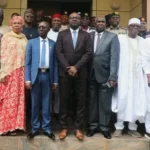
Enoh spoke at the official launch of the Bureau of Public Procurement (BPP) MSME Public Procurement Training Programme and Digital Learning Portal at Fraser Suites, Abuja.
He described the initiative as an important step towards opening up government procurement to small businesses and supporting their formalisation through access to information, training and economic opportunities.
The minister noted that MSMEs account for approximately 96 per cent of businesses in Nigeria and contribute about 50 per cent of the country’s Gross Domestic Product (GDP), making them critical to economic growth, job creation and national development.
According to him, despite their contributions, many small businesses remain excluded from government contracts because they lack the knowledge required to navigate procurement procedures, meet compliance requirements, prepare competitive bids and understand contract execution processes.
He said the new portal would help bridge these gaps by providing accessible training to business owners across the country.
Enoh explained that improving MSMEs’ participation in public procurement required more than policies favouring local businesses, noting that enterprises must also acquire the technical knowledge and skills needed to compete effectively.
He said: “The preference for local businesses means little if those businesses are not equipped to compete. Having the right information and the right skills is the best way to make this happen.”
The minister urged MSMEs to register on the platform, complete the training and work through their business associations to take advantage of available government procurement opportunities.
He also called on government agencies to make their procurement processes more inclusive by publicising contract opportunities widely, breaking large contracts into manageable sizes where appropriate and ensuring prompt payment for completed work.
Enoh maintained that timely payment was particularly important to small businesses, which often operate with limited financial resources and could struggle to remain afloat when payments for executed contracts are delayed.
He reaffirmed the Federal Government’s commitment to promoting local content through public procurement, explaining that increased patronage of Nigerian businesses could strengthen domestic industries, create employment and reduce pressure on foreign exchange.
The minister called on the BPP and other relevant agencies to ensure that the training portal translated into tangible benefits for Nigerian businesses.
“When it works, it works for all of us,” he said, urging stakeholders to move beyond the launch ceremony and ensure that the platform achieved its intended objectives.
Portal to provide free, practical training
Earlier, the Director-General and Chief Executive Officer of the BPP, Dr Adebowale Adedokun, said the digital learning portal was developed with support from the World Bank under the Sustainable Procurement, Environmental and Social Standards Enhancement Project.
Adedokun described public procurement as a strategic instrument for delivering public services, stimulating economic activity, creating jobs, encouraging innovation and promoting sustainable national development.
He said the initiative was designed to improve the capacity of MSMEs to understand and participate effectively in government procurement processes.
According to him, the portal provides free and practical learning resources tailored to Nigeria’s procurement environment, guiding participants through the procurement cycle, from identifying contract opportunities and preparing bids to contract delivery and performance.
.
He explained that the training comprises interactive modules, quizzes, practical examples and a certificate of completion.
The portal is also designed to be accessible through computers, tablets and smartphones, with features intended to accommodate users with limited internet bandwidth.
Adedokun said the programme would pay particular attention to women-owned businesses, youth entrepreneurs, persons with disabilities and veterans, who often face additional barriers in accessing public procurement opportunities.
He added that the bureau was reviewing existing obstacles to MSMEs’ participation in government contracts, with a view to creating a more inclusive and accessible procurement environment.
The BPP chief executive, however, clarified that completing the training would not guarantee the award of government contracts.
Rather, he said, the programme would equip businesses with the knowledge and skills required to compete more effectively under a procurement system guided by competition, transparency, accountability and value for money.
He also acknowledged the contributions of development partners, professional associations, government agencies, civil society organisations and anti-corruption institutions, including the Economic and Financial Crimes Commission and the Independent Corrupt Practices and Other Related Offences Commission, to efforts aimed at strengthening procurement transparency and accountability.
World Bank links portal to job creation
The World Bank Country Director, Matthew Verghis described the initiative as an important intervention capable of expanding economic opportunities, strengthening competition and supporting job creation.
Ferris said public procurement, when properly managed, could serve as a powerful instrument of development by creating markets for businesses, improving the use of public resources and supporting economic growth.
He noted that MSMEs remained important to employment generation, particularly for young people, and said improving their access to government procurement could strengthen private-sector development.
According to him, the World Bank’s support for the initiative reflects its broader priorities of creating jobs, building institutional capacity, promoting private-sector growth and improving the effectiveness of public spending.
He said the success of the portal would ultimately depend on the extent to which businesses used the platform and applied the knowledge gained to compete for public contracts.
Verghis encouraged MSMEs to take advantage of the training, provide feedback and continue improving their capacity to participate in the procurement system.
He reaffirmed the World Bank’s commitment to working with the Nigerian government to strengthen public institutions, improve procurement practices and translate reforms into employment and economic opportunities.
Youth Minister pledges support
The Minister of Youth Development, who also spoke at the event, pledged support for the initiative, describing it as an opportunity to expand digital learning and improve young Nigerians’ access to business opportunities.
He said many young entrepreneurs had the capacity to execute government contracts but lacked adequate knowledge of procurement procedures, access to finance and the practical training required to navigate the system.
The minister noted that the programme aligned with his ministry’s efforts to equip seven million Nigerian youths with skills under the One Youth, Two Skills initiative, which seeks to prepare young people for productive economic participation.
He urged young entrepreneurs to embrace the training and use the knowledge gained to strengthen their businesses and compete for government contracts.
The minister also emphasised the importance of collaboration among government institutions, development partners and the private sector in ensuring that empowerment initiatives produced measurable results.
He assured the BPP of his ministry’s readiness to work with relevant stakeholders to expand opportunities for young Nigerians through digital skills development, entrepreneurship and access to markets.
The launch brought together representatives of federal government agencies, the World Bank, the Bank of Industry, state public procurement regulatory bodies, business associations, civil society organisations and MSMEs.
The initiative is expected to strengthen business readiness, reduce information gaps and widen access to public procurement opportunities for Nigerian enterprises.