

By Matthew Otabe
Chairman of the Senate Committee on Capital Market, Senator Osita Izunaso, has called on the Securities and Exchange Commission (SEC) and other stakeholders to deepen Nigeria’s capital market by expanding investor participation, attracting more companies to the stock exchange and improving access to long-term financing.
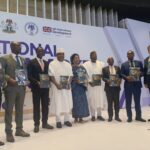
Izunaso made the call in his goodwill message at the 2026 National Capital Market Conference in Abuja on Monday, where the Nigeria Capital Market Master Plan 2.0 and the National Savings Scheme were unveiled.
He said although the capital market had recorded significant growth in market value, more needed to be done to ensure that ordinary Nigerians, businesses and government institutions benefited from the expansion.
According to him, the strength of any capital market depends on the savings and participation of its citizens, stressing that Nigeria must build a market that serves the entire nation rather than a limited number of investors.
“Our market is growing in value. It is not yet growing deep enough in people,” he said, highlighting the need to increase participation in collective investment schemes and create more opportunities for Nigerians to invest their savings productively.
The senator expressed concern that many Nigerians were yet to participate meaningfully in the capital market, while businesses, infrastructure projects and state governments continued to depend heavily on foreign sources of financing.
He said the situation underscored the need to mobilise domestic savings and channel them towards productive investments capable of stimulating economic growth and creating jobs.
Izunaso described the Nigeria Capital Market Master Plan 2.0, covering 2026 to 2036, as an important framework for addressing these challenges and strengthening the market’s contribution to national development.
The plan targets an increase in the size of Nigeria’s capital market from approximately $250 billion to between $700 billion and $750 billion by 2036, with the ambition of reaching $1 trillion.
He said the initiative aligned with the Federal Government’s broader ambition of building a $1 trillion economy, adding that its success would depend on effective implementation and sustained collaboration among stakeholders.
The lawmaker explained that the master plan was developed through consultations with market operators, investors, companies seeking capital, regulatory agencies and government institutions.
He identified broader market participation, diversified investment products, stronger regulatory institutions and improved market infrastructure as essential elements of the plan.
Izunaso stressed that the implementation process must be guided by clear responsibilities, measurable targets and regular assessments of progress.
He also called for accountability among the institutions responsible for delivering the plan, noting that stakeholders must be prepared to take responsibility for both successes and shortcomings.
The senator commended President Bola Tinubu’s administration for the reforms that had helped strengthen the capital market and improve the country’s investment environment.
He also acknowledged the contributions of the Minister of Finance and Coordinating Minister of the Economy, Prof. Taiwo Oyedele, and the SEC leadership towards advancing capital market development.
On the National Savings Scheme, Izunaso described the initiative as a major step towards promoting financial inclusion and encouraging Nigerians from different backgrounds to save and invest for the future.
He said the scheme would provide opportunities for young graduates, workers and other citizens to participate in regulated investment programmes through professionally managed funds.
According to him, strong governance and regulatory oversight would be critical to ensuring that the scheme operates transparently and protects investors.
He expressed appreciation to the United Kingdom government, the Foreign, Commonwealth and Development Office, and FSD Africa for their technical and financial support towards the development of the master plan and the savings initiative.
The senator also commended the SEC board, management and staff, as well as other capital market stakeholders, for their contributions to the development of the new framework.
He urged all stakeholders to move beyond policy announcements and focus on delivering practical results that would expand investment opportunities, support businesses and improve the welfare of Nigerians.
Izunaso maintained that the success of the capital market should not be measured solely by the performance of market indices or the growth of market capitalisation.
Rather, he said, its true value would be determined by the number of Nigerians it empowered, the businesses it helped finance and the opportunities it created for future generations.
He said the ultimate objective should be to transform Nigeria’s capital market from one serving a relatively small group of investors into a national platform for wealth creation, business expansion and sustainable economic development.