By Ibrahim Nasiru
A gathering of traditional rulers, political leaders and delegates in Abuja has brought renewed attention to the potential influence of the Kwararafa bloc in Nigeria’s political calculations ahead of the 2027 general elections.
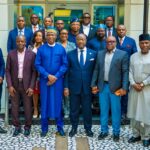
Held at the Transcorp Hilton under the theme, “The Splendour of the Kingdom: The Ancient Truths, The New Dawn,” the Kwararafa Peoples Assembly reportedly attracted more than 2,500 delegates, serving governors and 150 paramount traditional rulers.
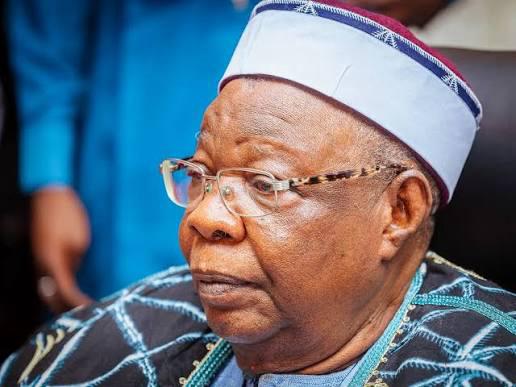
Led by the Aku Uka of Wukari, Dr. Ishaku Adda Ali, and co-convened by Taraba State Governor, Dr. Agbu Kefas, the gathering formally affirmed former Chief of Defence Intelligence, Air Vice Marshal Monday Morgan (Rtd.), as the functional President of the Kwararafa Development Forum (KDF).
Although the event was presented primarily as an initiative for cultural preservation and non-partisan advocacy, its broader political implications cannot be overlooked.
With Nigeria gradually moving towards another election cycle, the assembly raises important questions about the ability of historically connected ethnic nationalities to organise around shared interests, strengthen their bargaining power and influence national political conversations.
The gathering may therefore represent more than a celebration of cultural heritage. It could signal an emerging determination among the communities associated with the historic Kwararafa Confederacy to assert a stronger voice in Nigeria’s political and economic future.
Beyond Cultural Heritage: The Politics of Regional Identity
The historical Kwararafa Confederacy occupies an important place in the history of pre-colonial Nigeria. Its legacy continues to resonate among diverse communities across parts of the North-Central and North-Eastern regions and other areas of the country.
For decades, many of these communities have approached national politics through different political parties, state structures and competing local interests.
This fragmentation has often limited their ability to negotiate collectively on issues affecting their security, economic development, political representation and access to federal opportunities.
The renewed emphasis on a shared Kwararafa identity could provide a platform for addressing some of these challenges.
Rather than allowing their political interests to be determined exclusively by established power brokers, the communities could seek to build a common agenda capable of influencing national discussions.
However, cultural affinity alone does not automatically translate into political unity. The diverse ethnic nationalities associated with the Kwararafa identity have distinct histories, interests and political preferences.
The real test will be whether the assembly can transform its symbolic unity into sustained cooperation without undermining the autonomy of its constituent communities.
2027: A New Variable in Nigeria’s Political Calculations?
Nigeria’s electoral politics is shaped by several factors, including party structures, candidates, regional alliances, religious and ethnic considerations, economic conditions and the performance of the incumbent administration.
Against this backdrop, any initiative capable of encouraging traditionally fragmented communities to coordinate their demands deserves attention.
The Kwararafa Development Forum could become a platform through which participating communities articulate common positions on national issues and engage political actors across party lines.
Such coordination could strengthen their bargaining position during consultations over governance, appointments, infrastructure, security and development priorities.
Nevertheless, the emergence of a common cultural platform should not automatically be interpreted as the creation of a unified voting bloc.
Electoral influence depends not merely on population figures or historical connections but also on political organisation, voter mobilisation, credible leadership and the ability to translate collective demands into practical commitments.
For the Kwararafa initiative to influence the 2027 elections meaningfully, it must demonstrate that its agenda reflects the aspirations of ordinary citizens rather than the ambitions of a narrow political elite.
Its non-partisan posture will also be important.
By maintaining engagement with different political parties and government institutions, the forum could position itself as an advocate for regional development rather than an instrument of any particular political platform.
Economic Potential Beyond Political Influence
While political representation may dominate discussions surrounding the assembly, the economic potential of the communities associated with the Kwararafa heritage arguably presents an even more compelling reason for regional cooperation.
The areas linked to this historical identity include communities with significant agricultural resources, commercial opportunities and solid mineral potential.
States and localities across parts of the North-Central and North-Eastern regions possess considerable opportunities in crop production, livestock development, mineral exploration and agro-industrial processing.
Yet these opportunities are often constrained by inadequate infrastructure, insecurity, limited access to finance, weak processing capacity and difficulties connecting rural producers to larger markets.
A coordinated regional development strategy could help address these obstacles.
For instance, participating communities and relevant state governments could explore joint agricultural processing facilities, cross-border trade corridors, improved transport infrastructure and investment partnerships designed to support local industries.
Such initiatives could increase the value of agricultural produce, create employment for young people, improve rural incomes and attract private investment.
The region’s mineral resources could also support industrial development if exploration and processing are pursued transparently, responsibly and in accordance with environmental and community-protection standards.
The central question is whether the Kwararafa Development Forum can move beyond declarations of shared identity to develop an actionable economic programme with measurable targets.
Without such a transition, the economic promise of the gathering may remain largely rhetorical.
Security Must Become a Regional Priority
Insecurity remains one of the most pressing concerns affecting communities across several parts of the country.
Violent attacks, banditry, communal conflicts, kidnappings and other security challenges have disrupted farming activities, displaced residents and weakened local economies in affected areas.
For rural communities whose livelihoods depend heavily on agriculture and local trade, insecurity can undermine years of economic progress within a short period.
A regional platform such as the Kwararafa Development Forum could provide an avenue for traditional rulers, community leaders, security agencies and relevant governments to strengthen cooperation on early-warning systems, conflict prevention and community engagement.
Traditional institutions are particularly important because of their knowledge of local histories, relationships and emerging tensions.
However, such cooperation must complement, rather than replace, the constitutional responsibilities of security agencies and the relevant levels of government.
The forum could also advocate for improved security infrastructure, effective prosecution of offenders, support for displaced communities and programmes addressing the economic conditions that make vulnerable populations susceptible to criminal recruitment.
Ultimately, the value of regional cooperation will be measured by whether farmers can return safely to their fields, traders can conduct business without fear and communities can pursue their livelihoods in peace.
The Danger of Elite Capture
Despite its promise, the Kwararafa reawakening faces a familiar challenge in Nigerian politics: the possibility that collective aspirations could be subordinated to elite interests.
Historically, appeals to regional identity have sometimes generated impressive gatherings and political declarations without producing corresponding improvements in the living conditions of ordinary people.
Political appointments, contracts and access to government officials can become the dominant measures of success, while poverty, unemployment, insecurity and infrastructure deficits remain unresolved.
The Kwararafa initiative must guard against this possibility.
Its credibility will depend on transparency, accountability and the extent to which ordinary citizens have a voice in determining its priorities.
Traditional rulers, political leaders and other influential stakeholders must demonstrate that the forum exists to advance the interests of the communities it represents, not simply to negotiate advantages for a privileged few.
Regular public reporting, clearly defined development targets and measurable outcomes could help establish confidence in the initiative.
The forum should also create opportunities for young people, women, farmers, entrepreneurs and professionals to participate meaningfully in shaping its agenda.
Without broad-based participation, the idea of a regional awakening risks becoming another elite-driven political project.
From Abuja to the Communities: The Real Test
The significance of the Kwararafa Peoples Assembly will ultimately be determined by what happens after the delegates leave Abuja.
Communities across the historical and administrative areas associated with the Kwararafa heritage, including Wukari, Doma, Ibi, Keana, Takum, Idah and Lafia, will need to see tangible benefits from the renewed emphasis on regional cooperation.
These benefits should include improved security, stronger agricultural value chains, better infrastructure, expanded educational and economic opportunities, and greater access to government programmes.
The forum must also establish mechanisms for engaging relevant state and federal institutions, monitoring commitments and ensuring that development initiatives reach the intended beneficiaries.
Its leadership will need to balance the pursuit of political relevance with the responsibility to deliver practical outcomes.
A cultural identity becomes a powerful instrument of development when it inspires collective action, encourages accountability and creates opportunities for people who have historically struggled to access the benefits of national growth.
A New Dawn or Another Political Declaration?
As the 2027 elections approach, political actors will continue to seek alliances, negotiate support and develop strategies for securing electoral advantages.
The Kwararafa Peoples Assembly has created an opportunity for its constituent communities to reconsider how they engage with this political process.
But the forum’s long-term significance will not be determined by the number of dignitaries who attended its Abuja gathering, the prominence of its traditional rulers or the political attention it attracts.
It will depend on whether its leadership can sustain unity among diverse communities, formulate a credible development agenda and secure commitments that improve people’s lives.
The historical legacy of Kwararafa may provide a common foundation, but the future of the initiative will require practical leadership, inclusive decision-making and a clear understanding of contemporary political and economic realities.
If the forum succeeds, it could strengthen regional cooperation and give participating communities a more effective platform for engaging Nigeria’s political leadership.
If it fails to translate its promises into action, however, the gathering may be remembered as another occasion when cultural pride generated headlines without delivering meaningful change.
The real meaning of a new dawn is not how brightly it shines in Abuja, but how effectively it illuminates the lives of ordinary people across the communities it claims to represent.
Ibrahim Nasiru is a Public Affairs Analyst.