



The Association of Nigeria Public Administrators (ANPA) has called on the Federal Government and other tiers of government to embrace artificial intelligence (AI), strengthen digital infrastructure and improve data governance to enhance public administration and service delivery.
The association made the call at its 6th International Annual Conference held in Abuja on Thursday, October 15, 2026, with the theme, “Artificial Intelligence, Digital Governance, and the Future of Public Administration in Nigeria.”
Delivering the keynote address, the immediate past Chief Executive of the Presidential Compressed Natural Gas Initiative and Chairman of LoftyInc Group, Engr. Michael Oluwagbemi, said Nigeria must move beyond traditional bureaucratic practices and adopt technology-driven approaches to governance.
He stressed that the adoption of artificial intelligence should not be treated merely as a technological achievement but as a practical means of addressing societal challenges, improving public services and promoting national development.
According to him, the success of public administration should be measured by its impact on citizens rather than administrative procedures, political positions or institutional structures.
“AI will not replace you,” Oluwagbemi said, urging public administrators to acquire the knowledge and skills required to deploy emerging technologies to improve government operations and respond more effectively to citizens’ needs.
He outlined five strategic transitions Nigeria must undertake to move from conventional bureaucracy to intelligent governance.
The first, he said, is a shift from data collection to intelligent decision-making, involving the use of reliable information to formulate public policies, allocate resources and improve service delivery.
The second transition is from reactive to anticipatory government, where public institutions use data and emerging technologies to identify potential challenges and address them before they develop into crises.
He identified the third transition as a shift from AI adoption to trusted data governance, emphasising the need for reliable information, strong privacy protections, cybersecurity, transparency and accountability.
The fourth transition, according to him, is from bureaucratic capacity to intelligent state capacity, requiring stronger collaboration and interoperability among federal, state and local government institutions.
He explained that government systems must be capable of communicating and sharing information securely to improve coordination and make public services more accessible.
Oluwagbemi identified the fifth transition as a move from administrative efficiency to national competitiveness, noting that technology and effective public administration could boost productivity, attract investment and strengthen Nigeria’s economic position.
Five-Point Agenda for Intelligent Governance
The keynote speaker also proposed a five-point agenda for transforming Nigeria’s public administration through digital technology and institutional reforms.
The agenda comprises investment in digital public infrastructure, trusted data governance, artificial intelligence capacity development, multi-sector partnerships and outcome-based performance measurement.
On digital public infrastructure, he advocated sustained investment in broadband connectivity, digital identity systems, cloud services and data infrastructure to support technology-driven governance.
He also called for stronger data protection mechanisms, effective enforcement of data standards and improved interoperability among government information systems.
Oluwagbemi stressed the need to build AI capacity across the public service through training programmes for civil servants, improved digital and AI literacy, and the deployment of data scientists in key ministries, departments and agencies.
He further advocated partnerships among government institutions, universities, innovators and development partners to develop practical solutions to public-sector challenges.
According to him, academic institutions have important roles to play in developing local expertise, while innovators and development partners can help accelerate the deployment of digital solutions.
He maintained that Nigeria’s ability to harness emerging technologies would influence its competitiveness in the 21st century, warning against merely adopting digital solutions developed elsewhere without adapting them to the country’s realities.
ANPA President Calls for Inclusive Digital Governance

Earlier, the President of ANPA, Imoh Imoh-Ita, represented by the Vice President, Dr. Charity Ndidiamaka Nwigwe, said the conference provided an opportunity to examine the changing demands of public administration and develop practical responses to emerging governance challenges.
She described the conference as a demonstration of the association’s commitment to strengthening public administration as an intellectual, professional and policy-driven pillar of national development.
Nwigwe noted that the demands of contemporary governance had made it necessary for public administrators to rethink how policies were formulated, public resources managed and citizens’ trust sustained in an increasingly digital environment.
She said the growing influence of artificial intelligence, digital platforms and data analytics required public institutions to embrace innovation while maintaining ethical standards and protecting citizens’ privacy.
The ANPA vice president identified the digital divide among federal, state and local government institutions as a major challenge that must be addressed to ensure inclusive digital transformation.
She observed that while some institutions had made progress in adopting digital technologies, others continued to face infrastructure and capacity constraints.
According to her, local governments, which are closest to ordinary citizens, must not be left behind in the transition to digital governance.
She called for the development of inclusive digital systems that would extend services to rural communities and underserved populations.
Nwigwe also urged participants to develop practical policy recommendations that government ministries, departments, agencies and public institutions could implement to improve administrative efficiency and accountability.
She expressed appreciation to the National Open University of Nigeria for providing institutional support for the conference, as well as the organising committee, partners, delegates and other stakeholders who contributed to its success.
Public Administrators Must Have Professional Training — Bello
In his remarks, the Chairman of ANPA’s Board of Trustees and Dean of the Faculty of Social Sciences at the National Open University of Nigeria, Prof. Kamal Bello, emphasised the importance of professional training in public administration.
Bello explained that while politics determines what government intends to do, public administration provides the framework for implementing policies and achieving government objectives.
He described public administration as an interdisciplinary field that draws from political science, economics, accounting, statistics and management sciences.
According to him, the discipline has evolved over time and must be recognised as a distinct professional field with its own body of knowledge and specialised competencies.
He expressed concern about the practice of public administration without adequate professional training, calling on federal and state governments to prioritise the recruitment and development of qualified public administrators.
Bello said strengthening professional standards in the public service would improve institutional performance, policy implementation and governance outcomes.
He urged stakeholders to promote greater recognition of public administration as an essential discipline for effective government and sustainable national development.
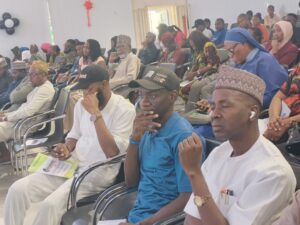
The conference brought together public administrators, academics, government officials and other stakeholders to deliberate on the role of artificial intelligence, digital governance and institutional reforms in shaping the future of public administration in Nigeria.