
By Matthew Otabe
Immediate Past Chief Executive of the President Presidential CNG Initiative and Keynote speaker at the 6th International Annual Conference, Engr. Michael Oluwagbemi, has called on Nigeria to embrace artificial intelligence (AI), strengthen digital infrastructure and improve data governance to transform public administration and enhance service delivery.
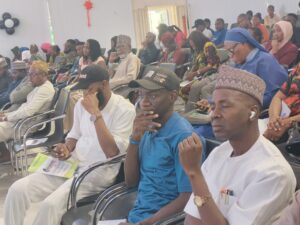
Oluwagbemi made the call on Thursday in Abuja while delivering the keynote address at the conference, themed “Artificial Intelligence, Digital Governance, and the Future of Public Administration in Nigeria.”
He outlined five strategic transitions Nigeria must undertake to move from traditional bureaucracy to intelligence-driven governance, stressing that technology must ultimately improve the lives of citizens.
According to him, the adoption of AI and other digital technologies should not be pursued merely as technological achievements but as practical tools for addressing societal challenges, improving public services and promoting national development.
He stressed that governance should be measured by its impact on people’s lives rather than administrative procedures, political titles or institutional structures.
“AI will not replace you,” Oluwagbemi said, urging public administrators to understand and deploy emerging technologies to improve government operations and respond more effectively to citizens’ needs.
Five Strategic Transitions

The keynote speaker identified five strategic transitions required to build what he described as an intelligent state.
The first is a shift from data collection to intelligent decision-making, which involves using reliable data to inform public policies, allocate resources and improve the delivery of government services.
The second transition is from reactive government to anticipatory government, encouraging public institutions to use available information to identify emerging challenges and address them before they develop into crises.
He said governments should move beyond responding to problems after they occur and develop the capacity to anticipate risks through data-driven planning.
The third transition is from AI adoption to trusted data governance, which requires reliable information, strong privacy protections, cybersecurity, transparency and accountability.
Oluwagbemi emphasised that intelligent governance depends not simply on collecting more data but on ensuring that the information is trustworthy, secure and properly managed.
He also advocated a shift from bureaucratic capacity to intelligent state capacity, calling for stronger collaboration and interoperability among local, state and federal government institutions.
According to him, government systems must be able to communicate and share information securely to improve coordination and make public services more accessible.
The fifth transition, from administrative efficiency to national competitiveness, focuses on using technology and efficient public administration to improve productivity, attract investment and strengthen Nigeria’s economic position.
Five-Point Agenda for Intelligent Governance
Beyond the five strategic transitions,
Oluwagbemi presented a five-point agenda for transforming Nigeria’s public administration through digital technology and institutional reforms.
The agenda identifies investment in digital public infrastructure, trusted data governance, artificial intelligence capacity, multi-sector partnerships and outcome-based performance measurement as essential pillars of an intelligent state.
Under digital public infrastructure, he advocated sustained investment in broadband connectivity, digital identity systems, cloud services and data infrastructure to support technology-driven governance.
On data governance, he stressed the importance of strengthening the Nigeria Data Protection Commission, enforcing data standards and ensuring interoperability among government information systems.
He also called for deliberate efforts to build AI capacity across the public service through training programmes for civil servants, improved AI literacy and the deployment of data scientists in key ministries, departments and agencies.
Oluwagbemi further highlighted the importance of partnerships among government institutions, universities, innovators and development partners in developing practical solutions to public-sector challenges.
He said universities and other academic institutions could play important roles in developing local expertise, while innovators and development partners could help accelerate the deployment of digital solutions.
Calls for Outcome-Based Governance
The keynote speaker also urged public administrators to move away from measuring government performance primarily through compliance with administrative procedures.
Instead, he advocated a system that assesses public institutions based on measurable outcomes, including service delivery speed, citizen satisfaction and the impact of government policies.
He illustrated the importance of this approach with examples of how data and technology could help governments identify infrastructure gaps, improve the management of public assets and explore opportunities to generate revenue from existing resources.
.
According to him, the effective application of digital tools can help public institutions make better use of available resources, improve accountability and develop services around citizens’ needs.
He also underscored the need to strengthen cybersecurity, warning that the growing importance of digital systems makes the protection of public data and critical infrastructure increasingly essential.
Connecting Existing Digital Reforms
Oluwagbemi acknowledged that Nigeria had already made progress in some areas of digital transformation but said the challenge was to connect existing initiatives into a coherent national framework for intelligent governance.
He called for closer coordination among government institutions to ensure that investments in technology produce measurable improvements in public administration.
The speaker maintained that the ultimate purpose of digital transformation should be to make government more responsive, efficient and accountable.
He urged public administrators to view artificial intelligence as a tool for strengthening human capacity rather than simply as a technological replacement for existing processes.
The proposed five-point agenda, he said, provides a framework for integrating digital infrastructure, trusted data, institutional capacity, partnerships and measurable results into Nigeria’s governance system.
He concluded that Nigeria’s transition to intelligent governance would depend on its ability to build on existing achievements and connect them through a coordinated national architecture that delivers tangible benefits to citizens.