


By Matthew Otabe
The Economic Community of West African States (ECOWAS) Commission, in collaboration with the German Agency for International Cooperation (GIZ), has commenced efforts to implement its Inter-Institutional Communication Strategy and Information and Communication Policy for 2026–2031.
The initiative is aimed at strengthening communication coordination among ECOWAS institutions and specialised agencies, harmonising institutional messaging and improving public engagement to advance regional integration.
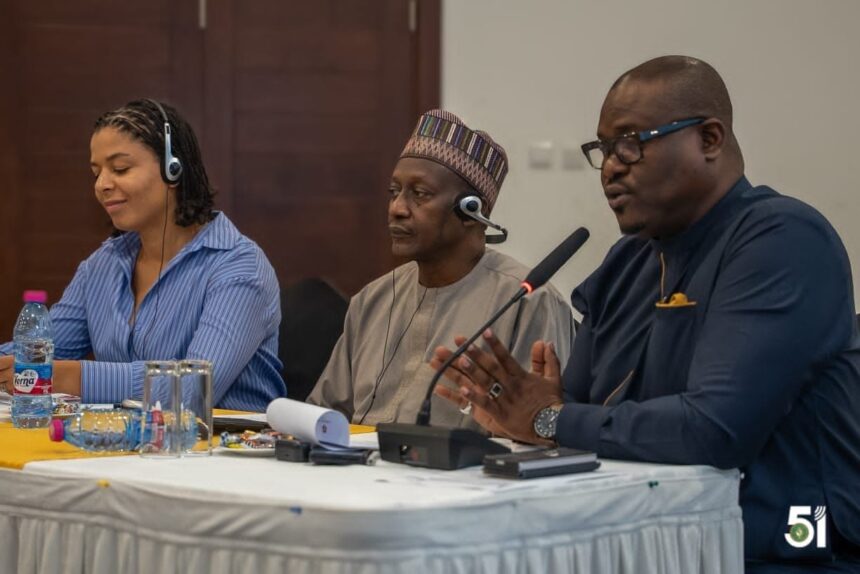
The implementation process began with a workshop in Accra, Ghana, on October 12, 2026, bringing together communication officers from ECOWAS institutions and specialised agencies to translate the new framework into practical actions.
The strategy is also expected to support the realisation of ECOWAS Vision 2050, particularly the transition from an ECOWAS of States to an ECOWAS of Peoples.
Speaking at the workshop, ECOWAS Resident Representative in Ghana, Ambassador Mohammed Lawan Gana, stressed the importance of measurable outcomes and coordinated regional action in assessing the success of the initiative.
He said the effectiveness of the working group should be determined by the tangible improvements achieved rather than the number of meetings held.
“Our measure of success should not be the number of meetings we hold, but the concrete improvements we achieve. If we can answer these questions, we would have transformed this Working Group from a forum for discussion into a mechanism for coordinated regional action,” Gana said.
He underscored the need for the working group to move beyond deliberations and deliver practical results capable of strengthening cooperation among ECOWAS institutions.
The initiative seeks to establish a more coordinated communication system across the regional bloc, ensuring consistency in institutional messaging and improving how ECOWAS communicates its programmes, policies and achievements to citizens.
Through the implementation of the 2026–2031 framework, ECOWAS aims to enhance collaboration among its institutions, promote effective public engagement and strengthen citizens’ understanding of the organisation’s activities and regional integration agenda.
The strategy forms part of broader efforts to bring ECOWAS closer to the people of West Africa by making its institutions more responsive, accessible and effective in communicating their roles in regional development.