


Featured By Ibrahim Nasiru
The first 100 days of an administration are often viewed as a period for settling into office, reviewing inherited challenges and laying the groundwork for future programmes. But in Bwari Area Council of the Federal Capital Territory, the leadership of Chairman Joshua Ishaku Musa has used the period to pursue projects designed to deliver immediate and visible benefits to residents.
As the council marks its 100 days in office today, Wednesday, September 30, 2026, the commissioning of a number of completed and ongoing projects provides an opportunity to assess the administration’s early priorities, particularly in infrastructure, education, sanitation, security and youth development.
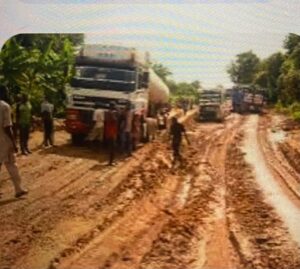
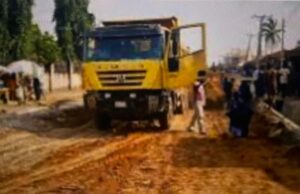
At the centre of the council’s infrastructure programme is the expansion of its rural and peri-urban road network, an area that has remained a major concern for residents, farmers and traders.
The completion of the strategic Zango Road in Kuduru Ward and the new Sokale Road in Dutse-Pe, Dutse Ward, is expected to improve access between residential communities, farming areas and major economic routes.

Another major project is the bridge linking the old Ushafa Road around the Mechanic Village Junction to the SCC Expressway. The project is designed to provide an alternative route for motorists and traders while improving connectivity within the area.
Beyond roads and bridges, the administration has also focused attention on security and public health infrastructure.
The police outpost in Kawu Ward has undergone a major rehabilitation aimed at improving the working environment and operational capacity of security personnel serving the community.
Similarly, the remodelling of the Bwari Abattoir is part of efforts to improve meat processing and public health standards within the area council.
The council has also embarked on a sustained refuse evacuation exercise across communities, with the objective of improving environmental sanitation and addressing accumulated waste in urban and rural settlements.
Alongside physical infrastructure, the administration has incorporated education and skills development into its 100-day interventions. It funded WAEC and NECO registration fees for 200 students in public schools across the area council, a measure aimed at easing the financial burden on low-income families.
The council also sponsored an initial batch of 50 youths for vocational training in tailoring, providing beneficiaries with skills that could support self-employment and income generation.
In the area of youth inclusion, Chairman Musa is also credited with securing recruitment opportunities for qualified indigenes of Bwari into national military and paramilitary institutions.
The administration has further sought to address concerns within the council’s workforce. According to the scorecard, 15

months of outstanding peculiar allowances owed to workers have been cleared, a development expected to improve staff morale and productivity.
Taken together, the projects and interventions commissioned or initiated within the first 100 days reflect an administration placing emphasis on roads and connectivity, security infrastructure, sanitation, education, skills acquisition and workers’ welfare.
As Chairman Joshua Ishaku Musa leads stakeholders in the commissioning of the projects today, the Bwari administration says its early performance demonstrates the capacity of local government to deliver tangible development when resources are directed towards projects with direct impact on residents.
Ibrahim Nasiru is a Public Affairs Analyst and Political Commentator.