

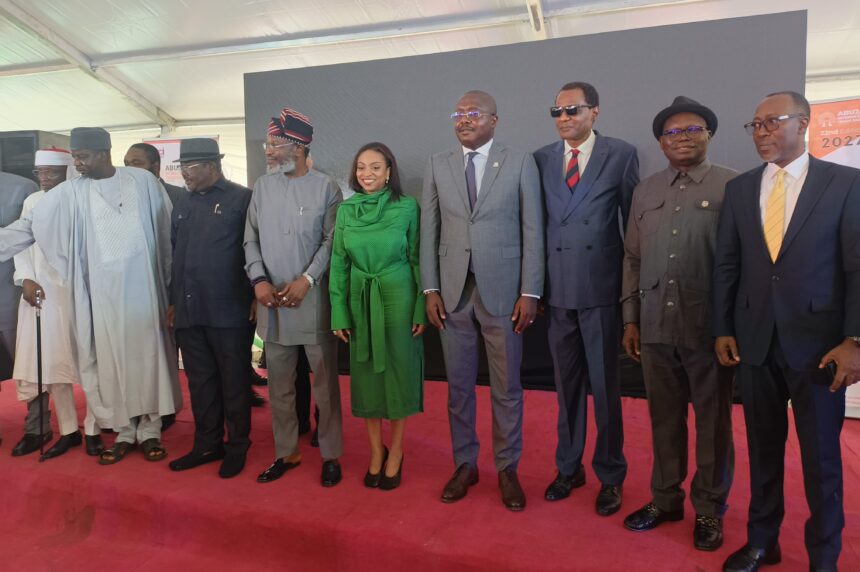
The Abuja Chamber of Commerce and Industry (ACCI) has called for stronger government support for businesses through policies that reduce multiple taxation, improve infrastructure, expand access to affordable finance and promote local manufacturing.
President of ACCI, Chief Emeka Obegolu, made the call on Tuesday in Abuja at the opening of the 21st Abuja International Trade Fair (AITF), themed “Resilience: Trade, Taxation and the Economy.”
The 12-day fair, scheduled for September 25 to October 6, is expected to feature more than 500 exhibitors, over 10,000 products and services and about 100,000 visitors.
Obegolu described the trade fair as a celebration of enterprise, innovation, productivity and the resilience of Nigerian businesses, saying it had evolved into a platform where businesses connect with markets, consumers, investors and strategic partners.
He said the theme reflected the realities confronting businesses, including inflation, exchange-rate volatility, infrastructure deficits, changing consumer behaviour, high operating costs and evolving regulatory requirements.
According to him, despite the difficult operating environment, Nigerian entrepreneurs, manufacturers, farmers, service providers and innovators have continued to adapt, invest, create jobs and seek new markets.
“Resilience should not mean that businesses are left alone to pay every bill. It must be supported by policies that encourage production, reward innovation, simplify compliance and make enterprise more competitive,” he said.
Obegolu urged continued consultation between government and the organised private sector, stressing the need to reduce multiple taxation, improve infrastructure, provide affordable finance, simplify regulatory procedures and strengthen support for local manufacturing and export-oriented businesses.
He said stronger business activity would translate into improved government revenue, increased employment and a more resilient economy.
The ACCI president also encouraged exhibitors to use the fair not merely to display their products but to build relationships, secure customers, explore partnerships, meet investors and pursue opportunities within Nigeria, Africa and the global market.
He called on international partners and members of the diplomatic community to see Nigeria not only as a large consumer market but also as a destination for production, investment and regional trade.
Obegolu said the African Continental Free Trade Area (AfCFTA) presented opportunities for Nigerian businesses to expand their markets, adding that increased production capacity would strengthen Nigeria’s role in African commerce.
Government will remove barriers to business — Oduwole
Minister of Industry, Trade and Investment, Dr Jumoke Oduwole, said the Federal Government was committed to creating an enabling environment in which businesses could thrive, invest, expand and compete in domestic and international markets.
Oduwole, who congratulated ACCI for sustaining the annual trade fair, said resilience should mean more than surviving difficult economic conditions.
“For businesses, resilience means having the capacity to compete, adapt, invest, expand into new markets and create jobs even as the operating environment changes,” she said.
She said the success of a trade fair should ultimately be measured by the partnerships formed, contracts signed, investments unlocked, markets opened and jobs created after the exhibition.
The minister said government was working to improve the business environment, strengthen infrastructure and reduce unnecessary barriers to trade, investment and industrial development.
She added that Micro, Small and Medium Enterprises (MSMEs) remained central to the government’s economic agenda, noting that efforts were being made to improve access to finance, standards, technology, information and markets.
Oduwole also urged Nigerian businesses to take advantage of AfCFTA by improving competitiveness, meeting required standards and developing the capacity to move goods and services efficiently across borders.
She said platforms such as the Abuja International Trade Fair were important because they brought government, industry, investors, entrepreneurs and consumers together in one place.
The minister also invited businesses, investors and creative-sector players to participate in the upcoming CANEX WKND 2026 in Lagos, which she said would provide opportunities for investment, trade, finance and market access.
NACCIMA calls for tax system that supports businesses
President of the Nigerian Association of Chambers of Commerce, Industry, Mines and Agriculture (NACCIMA), Engr. Jani Ibrahim, represented by the Director-General, Dr Emmanuel Akeh, said the association was proud of his emergence as President of the West African Chamber of Commerce and Industry.
Akeh commended ACCI for sustaining the Abuja International Trade Fair, describing it as an important platform for businesses to showcase products, develop partnerships, assess markets and engage policymakers.
He said the theme of the fair was particularly relevant to businesses facing changing market conditions, evolving tax obligations, rising costs, technological disruption and increasing global competition.
Akeh cited National Bureau of Statistics (NBS) data showing that Nigeria’s real GDP grew by 3.89 per cent year-on-year in the first quarter of 2026, with the non-oil sector accounting for 96.08 per cent of real GDP. Manufacturing grew by 3.29 per cent, while trade grew by 2.08 per cent during the quarter.
He said the figures provided important context but stressed that economic resilience should also be assessed by how effectively businesses were able to survive, grow, invest and compete.
On taxation, Akeh said government needed sustainable domestic revenue to fund infrastructure and public services, while the tax system should remain predictable, transparent, efficient and supportive of investment.
He called for measures to address administrative complexities, multiple taxation and other burdens affecting businesses.
“The objective should be to grow the tax base through productive economic activity while creating an environment where businesses are encouraged to formalise, invest and grow,” he said.
Akeh further called for deliberate measures to strengthen MSMEs through improved access to affordable finance, infrastructure, technology, skills development, business development services and market information.
He said stronger collaboration between government and the private sector was essential to building an economy capable of supporting sustainable enterprise growth and job creation.
The 21st Abuja International Trade Fair is officially being held from September 25 to October 6, 2026, with the organisers positioning it as a platform for trade promotion, investment networking, business-to-business and business-to-government engagement