

Energy
From Nigeria to UNESCO: Bola Champions AI Solutions for Future-Ready Infrastructure
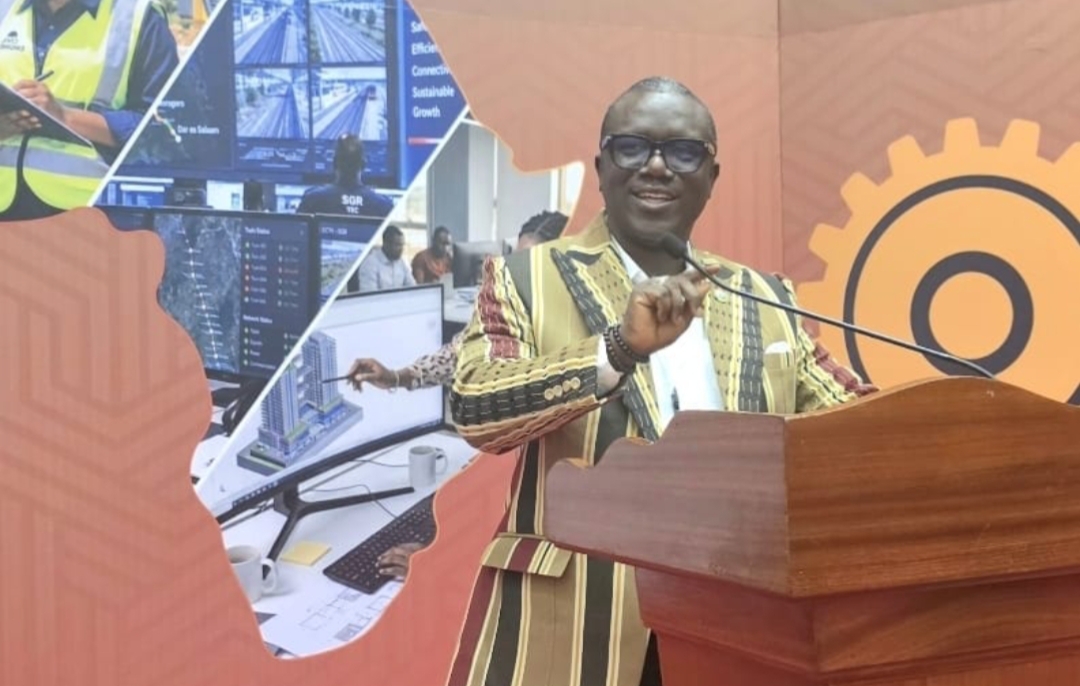
Engr. Dr. Bola J. Mudasiru, FNSE, Acting National Chairman of the Nigerian Institution of Highway and Transportation Engineers (NIHTE) and Vice President-Elect of the West African Federation of Engineering Organisations (WAFEO), has represented Nigeria at the 12th UNESCO Africa Engineering Week and 10th African Engineering Conference in Dar es Salaam, Tanzania.
The five-day continental engineering gathering, held from September 13 to 17, 2026, brought together engineers, policymakers, academics, industry leaders and professional institutions from across Africa and beyond to deliberate on critical issues shaping the continent’s infrastructure and technological future.
Mudasiru, a Chartered Civil Engineer and infrastructure professional with more than two decades of experience in major civil and steel infrastructure projects, contributed to the conference in two key capacities — as a panelist and technical paper presenter.
On Tuesday, September 15, he served as a panelist at Plenary 2, titled “Climate-Resilient Infrastructure – Sustainable Cities & Adaptive Infrastructure for Africa’s Urban Future.”
The session, moderated by Eng. Eric Ohaga of Kenya, featured discussions around climate-resilient transport, infrastructure financing, green buildings, resilient cities, nature-based solutions and resilient water infrastructure.
Mudasiru’s participation brought the Nigerian perspective to the continental conversation on developing infrastructure capable of responding to climate pressures, rapid urbanisation and growing demands for essential services.
The discussions were particularly relevant to Nigeria, where flooding, erosion, pressure on transportation networks and inadequate drainage and water infrastructure continue to pose challenges to communities and public assets.
The conference also emphasised the need for integrated approaches to urban development, with roads, drainage, water, buildings, energy and other infrastructure systems increasingly viewed as interconnected components of sustainable cities.

On Wednesday, September 16, Mudasiru delivered a technical paper under the Digital Transformation stream titled “Engineering the Digital Nervous System: AI and Emerging Technologies for Future-Ready African Infrastructure.”
The paper examined the growing role of artificial intelligence and emerging technologies in the planning, construction, monitoring, operation and maintenance of infrastructure.
Mudasiru highlighted how technologies such as sensors, data platforms, artificial intelligence, automation, digital twins and real-time monitoring can provide a digital layer around physical infrastructure, enabling systems to detect conditions, transmit information, analyse data and support timely decision-making.
He noted that such technologies could have significant applications in Nigeria, including predictive maintenance, traffic management, road-condition monitoring, asset management, energy optimisation and infrastructure planning.
Digital twins, he explained, can also enable engineers and decision-makers to model and test interventions before committing substantial resources, while sensor-based monitoring can provide continuous information on the condition and performance of critical infrastructure.
For a country seeking to maximise limited resources, the application of these technologies could help reduce avoidable infrastructure failures, improve maintenance planning and extend the useful life of public assets.
Mudasiru’s intervention also highlighted the growing intersection between climate resilience and digital transformation in modern engineering.
While climate-resilient infrastructure focuses on preparing physical systems to withstand changing environmental and urban conditions, digital technologies can provide engineers with the data and intelligence required to anticipate risks, monitor performance and respond more effectively.
The discussions further identified opportunities for the application of emerging technologies across key sectors.
In transportation, artificial intelligence, geographic information systems, sensors and data analytics can support traffic management, road-condition assessment and maintenance planning.
In the water sector, digital monitoring can strengthen flood-risk assessment, drainage management and the operation of water facilities.
For rapidly growing Nigerian cities, smart-city technologies can support integrated management of transportation, water, waste, energy, drainage and buildings, with emphasis on solving practical urban problems.
The conference also highlighted the changing skill requirements for engineers. While strong foundations in traditional engineering disciplines remain essential, professionals are increasingly expected to develop capabilities in artificial intelligence, data analytics, automation, digital twins, modelling, sensors, cybersecurity and systems thinking.
Mudasiru’s contribution stressed that emerging technologies should complement rather than replace professional engineering expertise, providing tools through which engineers can make better-informed decisions and manage increasingly complex infrastructure systems.
His participation at the Dar es Salaam conference therefore placed Nigeria’s engineering profession within broader African discussions on sustainable infrastructure, climate adaptation and technological innovation.
The five-day engagement connected the physical and digital dimensions of Africa’s development challenge — from building infrastructure capable of withstanding environmental pressures to deploying intelligent technologies that can improve how such infrastructure is designed, monitored and managed.
The conference provided a platform for African engineers to examine how the continent can move beyond simply building more infrastructure to designing better systems, managing them more efficiently, maintaining them effectively and deriving greater value from infrastructure investments.
Through his panel contribution and technical presentation, Mudasiru brought practical infrastructure experience and a forward-looking perspective to the continental engineering discourse, highlighting the role Nigerian engineers can play in shaping Africa’s transition towards resilient, data-driven and technology-enabled infrastructure.