By Terdue Atondu, Makurdi
The National Emergency Management Agency (NEMA) has charged participants at the Training and Orientation Programme for the Full-Scale Disaster Response Simulation Exercise in Benue State to approach the exercise with seriousness, professionalism and active participation.
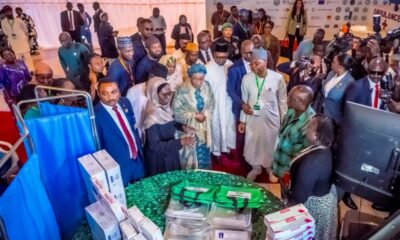
The NEMA Director-General, represented by the Acting Zonal Director, North Central, Sulieman Mohammed, gave the charge on Tuesday at the opening ceremony of the training held at the Fr. Alia Conference Hall, SEMA Headquarters, Makurdi.
The training is preparatory to Exercise “UWAR UMA,” a full-scale simulation exercise on riverine and urban flooding in Benue State. Uwar Uma, a Tiv expression meaning “Saving Lives,” captures the central objective of the exercise, according to the agency.
Sulieman urged participants to ask questions, clarify areas of uncertainty and share their operational experiences, stressing that the effectiveness of the main exercise would depend largely on how well stakeholders understood their respective roles and worked together as a coordinated response system.
He said the orientation programme was designed to provide participating stakeholders with a common understanding of the exercise scenario, objectives, operational procedures, roles and responsibilities, communication arrangements and mechanisms for coordinated disaster response.
He explained that the exercise would also familiarise participants with the bottom-up emergency response approach, beginning at the community level and progressively escalating through the Local Emergency Management Committee, the State Emergency Management Agency (SEMA) and, where necessary, to the Federal Government level through NEMA.
According to him, Benue is highly exposed to flooding because of its extensive river systems, floodplains, seasonal rainfall and the concentration of settlements and economic activities around the River Benue and its tributaries.
He stressed that the prevailing flood risk required preparedness and response arrangements to remain proactive, coordinated and practical.
“Early warning information must translate into timely community action, evacuation, rescue, relief and recovery support,” he said.
Sulieman said the forthcoming simulation would test the collective capacity of stakeholders to translate plans and early-warning information into effective action.
He added that the exercise would assess how information was received and disseminated, how communities responded, how local structures activated their response mechanisms and how additional support was mobilised as the situation escalated.
The exercise, he said, would equally test interoperability among agencies and organisations involved in flood disaster management.
The NEMA representative emphasised that the training should not be viewed as an opportunity to demonstrate perfection but as a platform to identify weaknesses in existing plans and procedures.
“Every weakness identified during this exercise provides an opportunity to strengthen our preparedness before a real flood emergency occurs,” he said.
He urged participants to maintain discipline, professionalism and teamwork, while paying particular attention to the safety of personnel, volunteers and members of the public throughout the simulation.
He further called for lessons from the programme to be applied during the field exercise and documented during the Hot Wash and After-Action Review.
Sulieman commended the Benue State Government, SEMA, Local Emergency Management Committees, participating communities, security and response agencies, humanitarian organisations and technical partners for their commitment to strengthening flood preparedness and resilience.
He particularly appreciated development and humanitarian partners, including UNOCHA, UNDP, UNICEF and the World Bank, for their support toward the exercise.
He also acknowledged the leadership of Governor Hyacinth Alia and the Benue State Government for their cooperation and support for the preparedness initiative.
“The ultimate measure of this exercise will not be how impressive the simulation appears, but whether it enables us to become faster, better coordinated and more effective in saving lives when an actual flood emergency occurs,” he said.
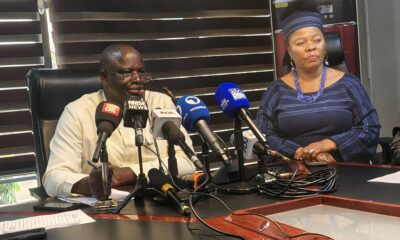
Earlier in his welcome address, the Executive Secretary of the Benue State Emergency Management Agency, Sir James Iorpuu, said the workshop, organised by NEMA in collaboration with Benue SEMA, was aimed at strengthening the state’s preparedness, testing its response mechanisms and improving inter-agency coordination for effective disaster management.
Iorpuu, who was represented by the Head of Administration, Samuel Atii, said SEMA was committed to ensuring that Benue remained proactive in disaster risk reduction and response.
He said relevant stakeholders had been mobilised to participate in the exercise because effective disaster management required collaboration among agencies and communities.
In a goodwill message, Dr. Sunday, representing the UNDP Sahel Resilience Project, said the organisation, with the support of the Government of Sweden, was pleased to partner with the Federal Government through NEMA, the Benue State Government and the World Bank in implementing the full-scale flood disaster response simulation exercise across selected states.
He commended Benue for being selected as one of the states to host the national exercise, describing it as an opportunity to strengthen disaster preparedness, institutional coordination and emergency response mechanisms.
He expressed hope that the knowledge and lessons generated from the simulation would be institutionalised and translated into practical actions during actual flood emergencies.
Also speaking, the Special Adviser to the Governor on Disaster Management, Hon. Mimidoo Ann Kadev, welcomed participants to the training and urged them to maximise the opportunity to acquire knowledge and skills that would benefit them and the state.
Kadev said the training would enhance participants’ capacity to respond promptly and effectively to challenges confronting flood-prone communities across the state.