News
Nigerians React as Kuwait Crushes Reckless Driver’s Car, Demand Tougher Action Against VIP Convoys
Nigerians on social media have expressed mixed reactions to the dramatic punishment handed to a motorist in Kuwait after he was arrested for allegedly performing dangerous drifting stunts on a public road.
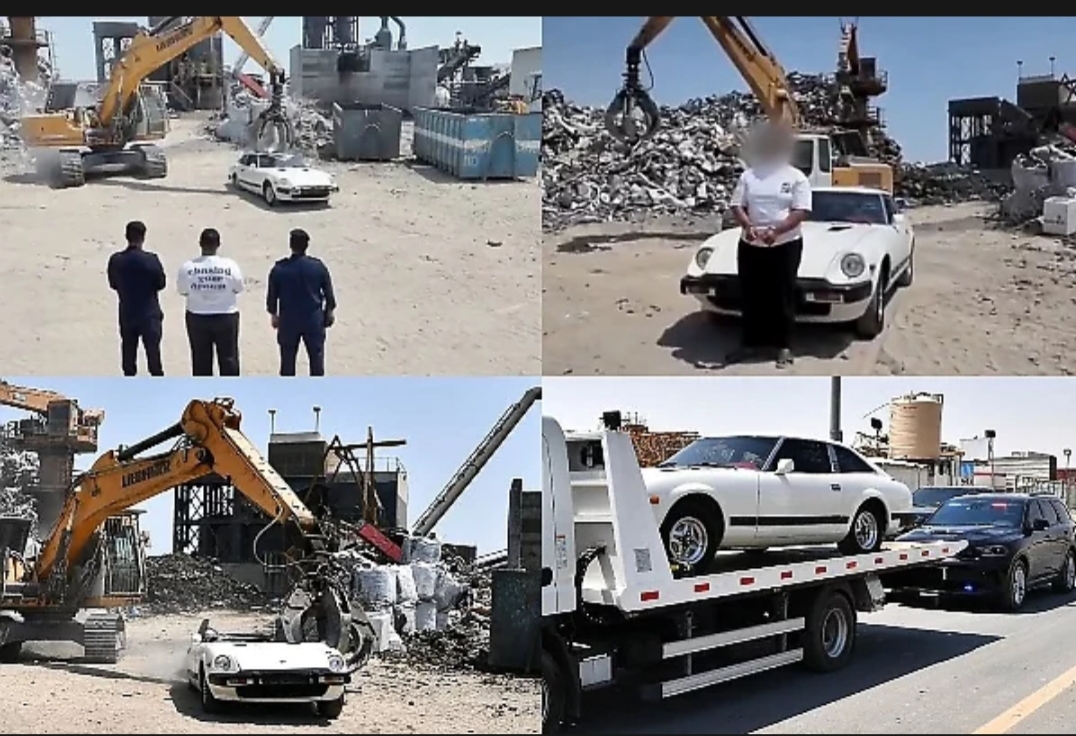
The incident, which has gone viral online, showed Kuwaiti security authorities impounding a vintage white Datsun 280Z/ZX sports coupé belonging to the driver before destroying the vehicle in a highly publicised enforcement action.
The motorist was reportedly arrested after a video of him performing high-speed drifts and other reckless manoeuvres on a public road surfaced on social media, triggering widespread outrage.
Following investigations, security officials tracked down the driver, arrested him and transferred him to the Central Prison to face legal proceedings.
Authorities said the action was taken under Article 33 bis of Kuwait’s traffic legislation, which provides for imprisonment, heavy fines and the permanent confiscation and destruction of vehicles used in certain serious traffic offences.
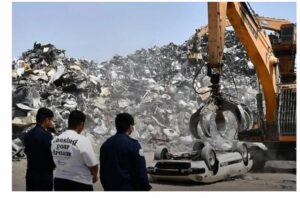
In footage of the enforcement operation, the driver was made to watch as an excavator crushed his vehicle before it was moved into heavy machinery and flattened into scrap metal.
The Kuwaiti Ministry of Interior, while warning other motorists against similar conduct, stressed that dangerous behaviour that threatens road users or property would attract severe sanctions.
The development has since sparked a fresh debate among Nigerians, with many using the incident to call for tougher enforcement of traffic laws in Nigeria, particularly against reckless driving by government and VIP convoys.
One commenter, Emeka Nwandu, welcomed the Kuwaiti approach, saying: “Good action, country with rules and regulations.”
Nwandu also expressed hope that similar measures could be adopted in Nigeria, arguing that strict enforcement could help reduce avoidable road crashes.
He particularly criticised the alleged conduct of some convoys of Nigerian leaders, accusing their drivers of engaging in excessive speeding and other dangerous practices that could endanger ordinary road users.
Another commenter, Cassey Stephen, argued that people in positions of authority sometimes appear less concerned about the dangers created by reckless convoy driving because their families are not necessarily exposed to the same risks.
Stephen stressed that the lives of other road users should not be endangered simply because a convoy is transporting a VIP.
Similarly, Olubunmi Titus applauded the reported action in Kuwait, describing it as a positive example of a society where laws and regulations are taken seriously.
For Solomon Faculty, the dramatic nature of the punishment evoked the fear associated with being confronted by powerful convoys, likening the experience to saying goodbye to a loved one before being taken into custody.
Meanwhile, Chijoke Choke gave a brief but emphatic reaction, describing the incident as “the definition of teaching someone a lesson.”
The reactions reflect a broader frustration among Nigerians over the conduct of some official and VIP convoys, with concerns frequently raised over excessive speed, aggressive overtaking, driving against traffic and alleged disregard for the safety of other road users.
For many of those reacting online, the Kuwait incident goes beyond the destruction of a single vehicle. They see it as an example of how stringent enforcement can send a strong deterrent message to motorists who deliberately put other people’s lives at risk.
The debate has therefore renewed calls for Nigerian authorities to strengthen road-safety enforcement and ensure that convoy drivers, government officials and other motorists are subjected to the same traffic laws.
Many Nigerians argue that no individual should be considered above the law, stressing that public roads are shared spaces and that the protection or convenience of one road user should never come at the expense of the lives and safety of others.