

By Ibrahim Nasiru
The continued presence of vulnerable children on the streets of northern Nigeria, many of them engaged in begging, remains one of the country’s most troubling social challenges.
It is a crisis that has persisted for generations and raises serious questions about the effectiveness of governments, institutions and political leadership.
When Nigerians demand accountability from political leaders who have occupied high office, including those who served for eight years as Vice President, their frustration is understandable.
The sight of children roaming the streets without access to quality education, adequate nutrition and basic social protection is a painful reminder of the failures of our collective system.
However, finding a lasting solution requires that we distinguish legitimate political criticism from the constitutional realities that shape governance in Nigeria.
It is important to recognise that the Vice President of Nigeria does not have unilateral control over state budgets, local government resources or basic education policies at the grassroots level.
Under Nigeria’s federal structure, state governments and local authorities play significant roles in the provision of basic education and social services. Consequently, expecting a Vice President alone to eradicate the Almajiri crisis across the northern states oversimplifies a problem that is deeply rooted in decades of social, economic and institutional challenges.
This does not mean federal leaders are powerless. Rather, it raises a more important question: What does a leader do with the influence, resources and opportunities available to them when the limits of their constitutional office prevent direct intervention?
That is where leadership should be judged—not merely by the powers attached to an office, but also by the initiatives and examples created beyond those formal powers.
Atiku’s Private Intervention
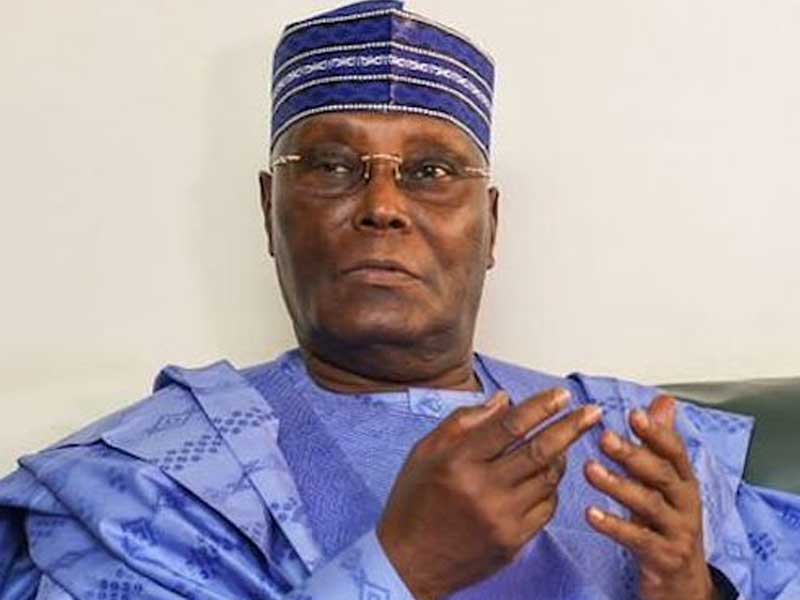
This is where former Vice President Atiku Abubakar’s interventions in education deserve consideration.
Where governments have struggled to create sustainable educational structures capable of addressing the needs of vulnerable children, Atiku has invested personal resources in education through the establishment of the American University of Nigeria in Yola.
But recognising that elite higher education alone cannot address the region’s broader educational challenges, the institution also developed programmes aimed at reaching disadvantaged communities
One such intervention was the “Feed and Read” programme, designed to provide vulnerable Almajiri children with food as well as basic literacy and numeracy education.
The objective was straightforward: address the immediate needs of children while creating a pathway from street life into structured learning.
Similarly, the Technology Enhanced Learning for All initiative extended educational opportunities to internally displaced children through educational radio programmes.
According to available accounts of the initiative, more than 20,000 displaced children were reached. These interventions demonstrate how private initiatives, technology and partnerships can complement government efforts in circumstances where conventional infrastructure is inadequate.
From Individual Efforts to Public Policy
The significance of these initiatives is not that they have solved the Almajiri crisis. They have not. Rather, they provide examples of what can be achieved when education, nutrition, technology and community engagement are brought together to address the needs of vulnerable children.
The real opportunity lies in scaling such interventions.
If private institutions and individual philanthropists can develop programmes capable of reaching thousands of disadvantaged children, state governments should be able to examine, adapt and expand successful elements of such models using public resources.
The challenge, therefore, is not simply about identifying who failed in the past. It is about determining which solutions work and creating the political will to implement them on a much larger scale.
Beyond the Politics of Blame
The Almajiri crisis cannot be resolved through political accusations alone. Neither can it be solved by assuming that one office in Abuja possesses the authority to transform the educational and social landscape of nineteen northern states.
It requires coordinated action involving the Federal Government, state governments, local authorities, traditional institutions, religious leaders, communities, civil society and private organisations.
Most importantly, it requires a shift from temporary interventions to sustainable systems that guarantee children access to education, nutrition, healthcare and opportunities for economic participation.
Atiku Abubakar’s educational initiatives in Adamawa State should therefore be viewed not as a complete solution to the Almajiri crisis, but as a proof of concept—an example of how targeted investment can create alternative pathways for vulnerable children.
The lesson is simple: leadership is not only about the powers conferred by an office. It is also about what individuals do with the influence and resources available to them.
The blueprint for addressing street begging and educational exclusion may not be perfect, but examples of workable interventions already exist.
What Nigeria needs now is the political will to identify, improve and scale those solutions nationwide.
Chief Ibrahim Nasiru is a Public Affairs Analyst.