

The Federal Government has reaffirmed its commitment to developing an integrated transportation system capable of driving economic growth, improving national connectivity and reducing the cost of movement of people and goods across Nigeria.
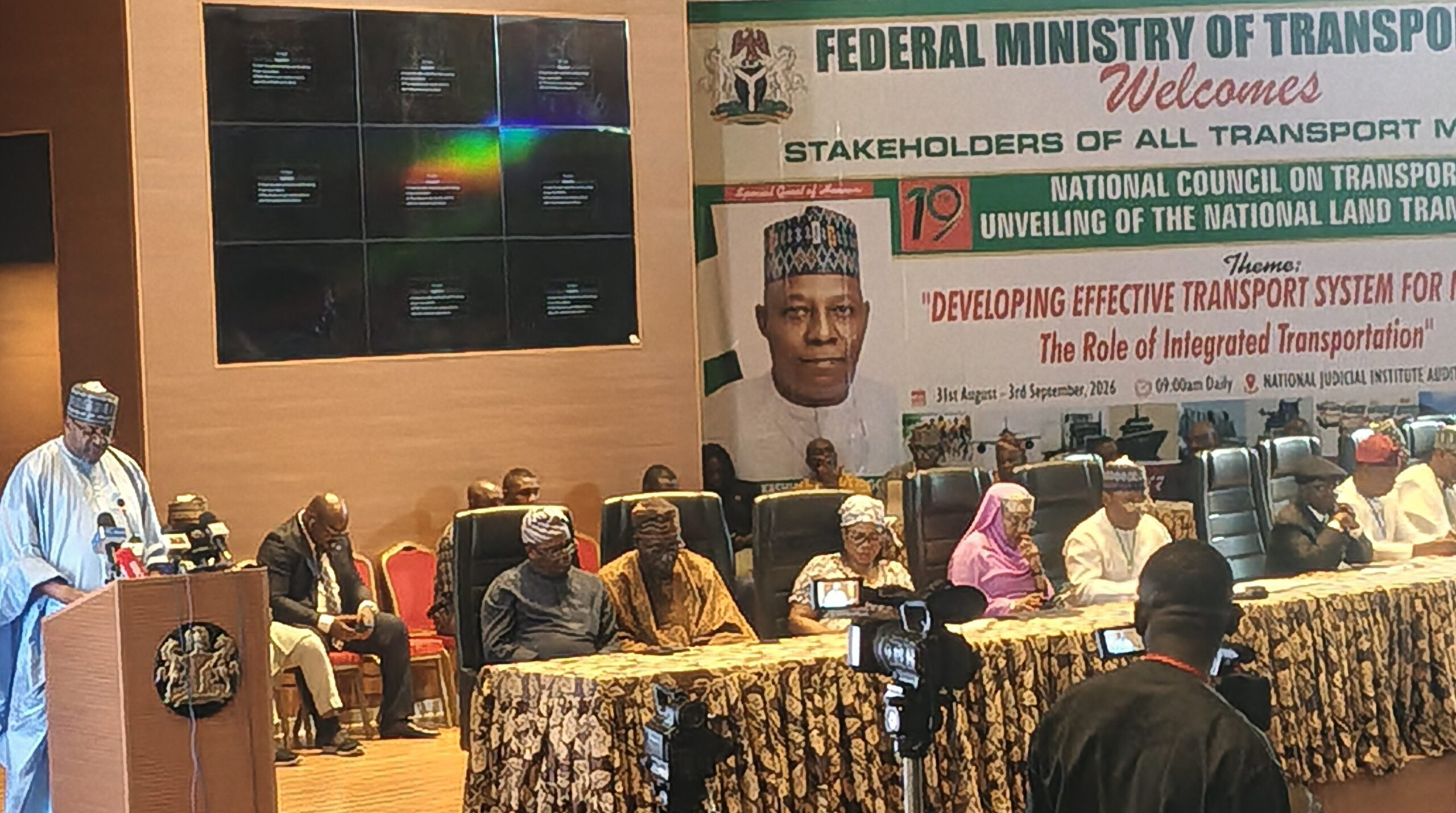
Vice President Kashim Shettima stated this in Abuja at the 19th National Council on Transportation Conference, where he was represented by the Director-General, General Duties, Aliyu Modibbo Umar.
The conference, themed “Developing an Effective Transport System for Nigeria: The Role of Integrated Transportation,” brought together stakeholders in the transportation sector to deliberate on measures to improve the country’s transport infrastructure and services.
Shettima said transportation remained central to the success of the Federal Government’s Renewed Hope Agenda, stressing that an efficient transport system was essential to productivity, competitiveness and economic development.
According to him, the administration’s responsibility is to provide infrastructure capable of supporting the economy and ensuring that Nigerians benefit from the opportunities created by ongoing reforms.

He said the administration had elevated transportation, logistics and innovation as strategic priorities, noting that, for the first time since Nigeria’s return to democratic rule in 1999, specific attention had been given to transportation, logistics and innovation at the highest level of government.
The Vice President highlighted the Federal Government’s railway modernisation programme, describing it as a critical component of the country’s emerging integrated transport network.
He said the administration was moving beyond isolated projects to develop connected transport corridors linking the eastern, central and northern parts of the country.
Shettima also cited the Kaduna-Maradi railway project, describing it as important to domestic connectivity, cross-border trade and regional integration.
He stressed that ports, railways, roads, inland waterways and aviation must operate as interconnected components of a single national transport system.
“Ports must connect to rail and roads. Rail must connect production centres to markets, while roads must provide first- and last-mile access,” he said.
The Vice President added that the same integrated approach should be applied to urban transportation to address congestion and improve mobility in Nigerian cities.
He disclosed that the Federal Government had approved high-capacity public transportation projects for selected cities, urging the Federal Ministry of Transportation to work with participating state governments to establish the necessary technical, institutional, regulatory and implementation frameworks without delay.
.
According to him, the success of the projects would provide a model for extending integrated transportation solutions to other cities across the country.
Shettima said the dividends of democracy would become more visible when transportation infrastructure enables workers to commute faster, students to travel safely, traders to access markets and families to spend less on transportation.
He further called for stronger regulation, technology deployment, institutional cooperation and coordinated planning across the different modes of transportation.
The Vice President urged the council to ensure that maintenance was incorporated into every transportation investment, stressing that infrastructure must remain safe, functional and efficient throughout its useful life.
He said Nigeria’s large population and strategic position in Africa presented enormous opportunities for the development of a world-class transport network.
“Our task is to transform isolated projects into connected networks and infrastructure spending into economic opportunities,” he said.
Shettima urged the council to pursue practical and actionable resolutions, ensure the completion of approved projects and accelerate the implementation of railway projects and other investments that would promote integration across the transportation sector.
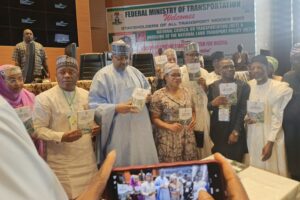

Also speaking, the Permanent Secretary in the Federal Ministry of Transportation said the government was making significant progress towards building an integrated transportation system that connects people, goods, production centres, markets and economic gateways.
The Permanent Secretary said integration meant ensuring that roads, railways, ports, inland waterways and urban transport systems functioned as components of one national network rather than developing in isolation.
He listed the Lagos-Ibadan and Abuja-Kaduna railway corridors among the operational modern rail lines, alongside the Onitsha-Aba and Itakpe-Warri corridors.
He disclosed that the Kaduna-Kano railway was nearing completion, while the Kaduna-Zaria-Kano section was expected to be commissioned in December 2026.
He added that the Kaduna-Daura-Katsina railway was also expected to be ready by the end of the year, with final works being completed.
According to him, arrangements were also being concluded for the commencement of the next phase of the Kaduna-Maradi railway project.
The Permanent Secretary further disclosed that efforts were underway to strengthen the connection between airports and railway networks, citing plans for a metro connection from Kaduna Airport to major parts of the state.
He said the Lagos-Ibadan railway had also been connected to the Apapa Port, enabling the movement of containers by rail and reducing dependence on road transportation.
He explained that the development would eventually allow containers to be moved from the port through Ibadan and onward to Abuja by rail.
The Permanent Secretary said the projects formed part of a broader national strategy aimed at connecting communities, production centres, markets, ports and international trade corridors.
He also disclosed that the government was expanding cleaner transportation initiatives, including Compressed Natural Gas (CNG) and electric mobility, as part of efforts to reduce transportation costs and promote environmental sustainability.
He said the government’s ambition was to move “from isolated projects to connected corridors, from segmented modes to an integrated system, and from fragmented development to a transportation network that actively supports national economic development.”
He assured that the Ministry of Transportation would continue working with the National Assembly, state governments, government agencies, development partners and the private sector to deliver an efficient, safe, affordable and sustainable transportation system for Nigeria.