


By Titus Atondu, Makurdi
The Food and Agriculture Organisation of the United Nations (FAO), the Benue State Government and other partners have commenced the development of a Climate-Resilient Livelihoods Strategy and Climate-Smart Agriculture Investment Framework aimed at improving the livelihoods of Internally Displaced Persons (IDPs) and vulnerable host communities in the state.
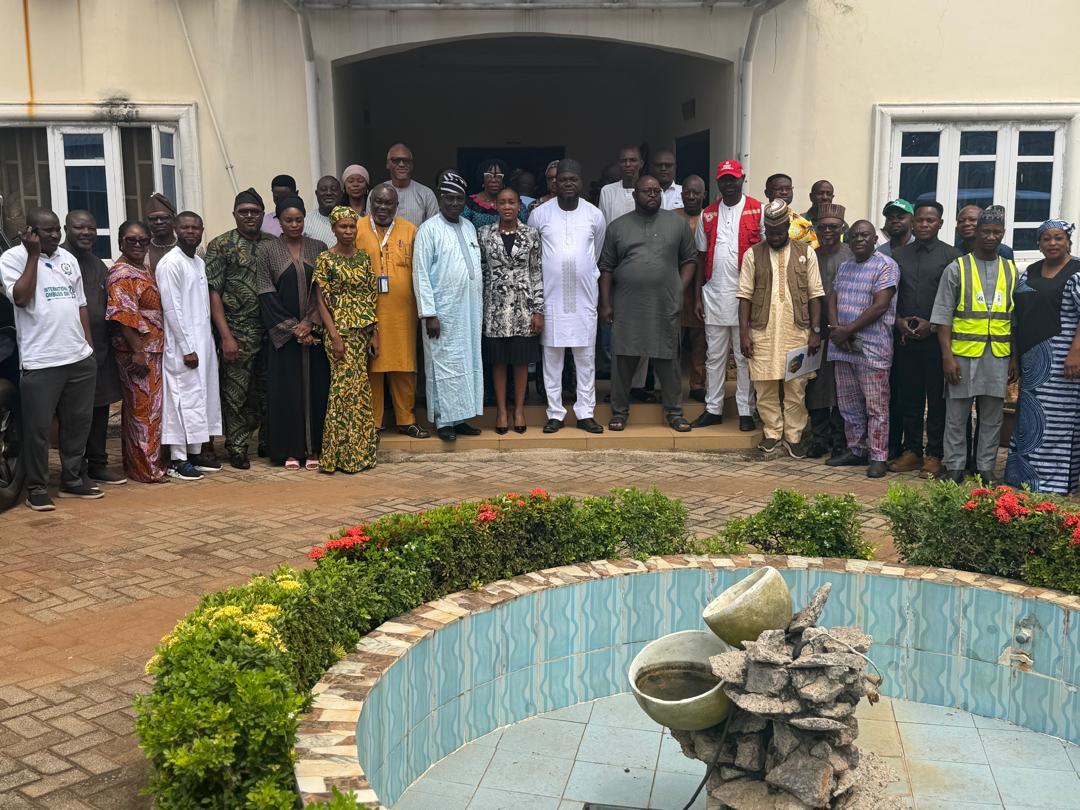
The initiative was unveiled on Saturday at an inception workshop in Makurdi, with stakeholders emphasising the need for sustainable economic opportunities to support the return and reintegration of communities displaced by conflict and flooding.
Speaking at the workshop, FAO Climate Change Specialist, Dr Nifesimi Ogunkua, who represented the FAO Representative in Nigeria, Dr Hussein Gadain, said sustainable livelihoods were fundamental to finding lasting solutions to displacement.
Gadain said the ability of displaced families to produce food, generate income, access markets and productive resources, and rebuild their economic independence was crucial to restoring their dignity and reducing prolonged dependence on humanitarian assistance.
He noted that the initiative was particularly significant for Benue, where agriculture remains central to the state’s economy and livelihoods, amid the challenges posed by displacement, climate variability, pressure on natural resources and other shocks.
According to him, the FAO intervention, under the Internal Displacement Solutions Fund Joint Programme, would strengthen government capacity and develop climate-resilient livelihood pathways, with particular attention to women, youths, persons with disabilities, IDPs and vulnerable host communities.
He explained that the Climate-Resilient Livelihoods Strategy would identify economically viable, environmentally sustainable and climate-resilient livelihood opportunities for affected communities.
He added that the accompanying Climate-Smart Agriculture Investment Framework would translate the identified priorities into concrete and investable actions capable of attracting public, private, development and climate financing.
“The process must be government-led and stakeholder-owned, and FAO and the International Crops Research Institute for the Semi-Arid Tropics (ICRISAT) are providing technical support.
“The resulting strategy and investment framework must reflect the priorities and realities of Benue,” he said.
Gadain urged participants to contribute actively to the process by sharing their experiences, challenging assumptions and identifying practical opportunities that would make the framework realistic, implementable and owned by the people and institutions of the state.
Also speaking, the Director-General, Bureau for International Cooperation and Development in Benue State, Mr Leo Viashima, said achieving durable solutions for displaced persons required a multisectoral approach and strong collaboration among all stakeholders.
Viashima described durable solutions as long-term interventions designed to address emergencies arising from crises and flooding across different parts of the state.
He said improved security was already encouraging some displaced persons to return to their ancestral communities, citing Tatyough in Guma Local Government Area as an example.
The official added that the state government had prioritised IDP farmers by ensuring they received fertiliser and other agricultural inputs ahead of other farmers.
He further disclosed that the Solid Project was working towards facilitating the return of about 900 displaced persons to their ancestral homes while supporting 1,000 cooperative societies to strengthen livelihoods and promote self-reliance.
In his remarks, the Director-General, Sustainable Development Goals (SDGs) in the state, Mr John Akuse, said the FAO initiative had introduced a new investment component into Benue’s efforts to achieve durable solutions for people displaced by conflict and flooding.
Akuse said the programme was designed to mobilise support for displaced persons by facilitating their resettlement in their ancestral communities.
He disclosed that the state governor had earmarked 10 per cent of the annual budget for initiatives aimed at facilitating the return of IDPs to their homes.
He urged all Ministries, Departments and Agencies (MDAs) in the state to align their programmes and activities with the durable-solutions agenda.
According to him, coordinated action was necessary to ensure that the return and reintegration of displaced communities translated into sustainable livelihoods, self-reliance and improved resilience