




Business
RMAFC, NOUN Move to Deepen Partnership on Fiscal Research, Digital Training
The Revenue Mobilisation Allocation and Fiscal Commission (RMAFC) and the National Open University of Nigeria (NOUN) have initiated discussions on a strategic partnership aimed at strengthening fiscal research, digital capacity building and remuneration reforms within Nigeria’s public sector.
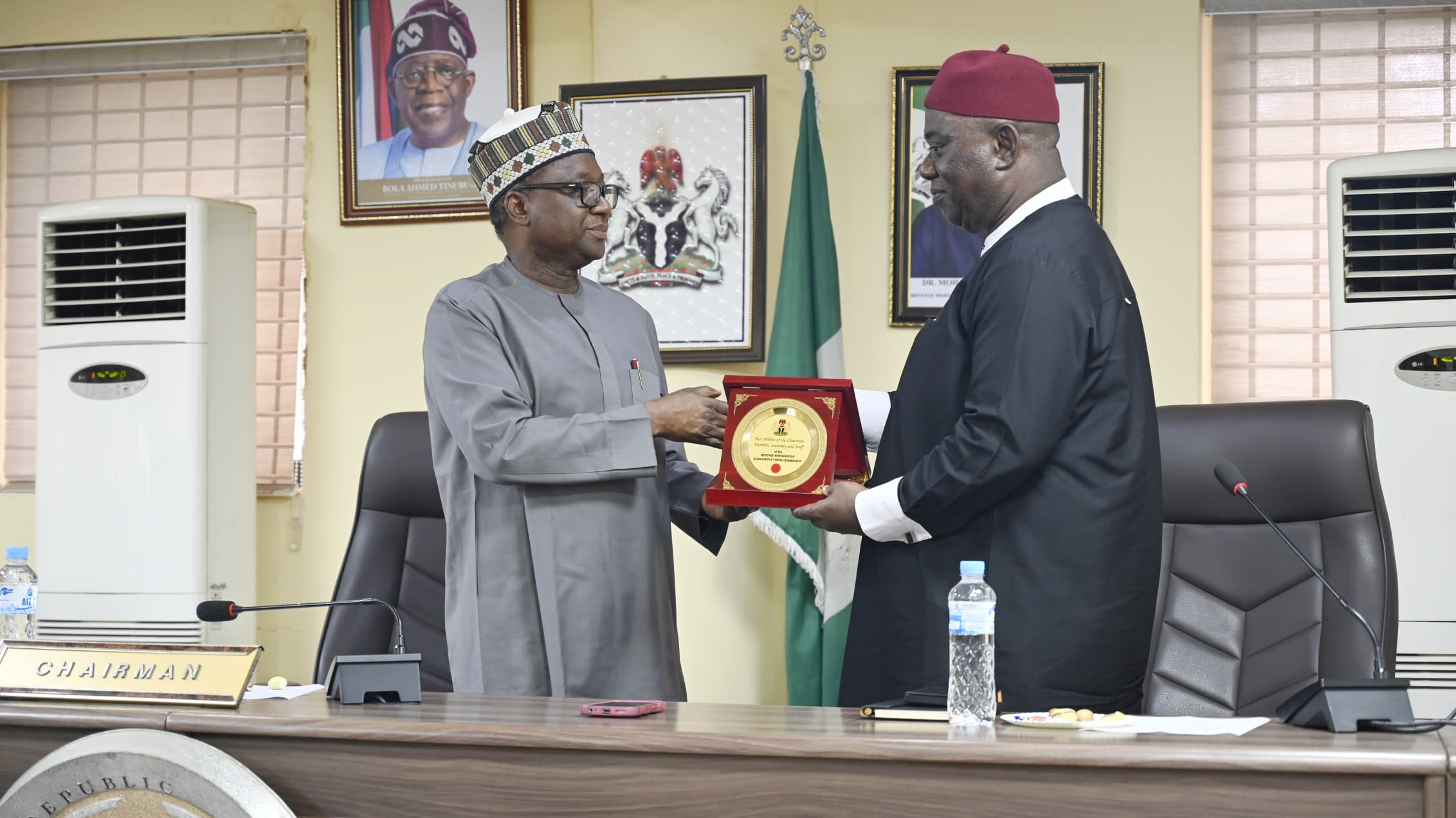
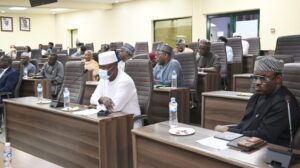
The proposed collaboration was the focus of a courtesy visit by the Vice-Chancellor of NOUN, Professor Oduma Orji Oduma, and members of the university’s management to the RMAFC headquarters in Abuja.
Receiving the delegation, the Chairman of RMAFC, Dr. Mohammed Bello Shehu, described the visit as timely, stressing that stronger collaboration between government institutions and academia is essential to addressing the country’s fiscal and economic challenges.
He reaffirmed the commission’s commitment to evidence-based fiscal reforms, improved resource allocation and sustainable national development through strategic partnerships.
Shehu also commended NOUN for expanding access to higher education through its Open and Distance Learning (ODL) model, while assuring the university that its requests, particularly those relating to remuneration, would receive objective consideration.
According to him, the commission will conduct a comprehensive job evaluation covering comparable university positions, labour market benchmarking and fiscal impact analysis to determine the viability of a specialised salary structure or differentiated allowances for ODL personnel.
He maintained that any recommendation would be guided by empirical evidence, fairness, equity and fiscal sustainability in line with the commission’s constitutional mandate.
Earlier, Professor Oduma called for a long-term partnership between the two institutions and proposed the establishment of a Centre for Fiscal Studies and Policy for Revenue Studies to serve as a national hub for fiscal research, revenue forecasting, policy development and impact assessment.
The vice-chancellor also offered the university’s expertise in developing digital learning platforms and nationwide capacity-building programmes for fiscal officers, revenue administrators and other public servants, citing NOUN’s extensive ICT infrastructure and network of more than 128 study centres.
Highlighting the operational demands of Open and Distance Learning, he noted that the university makes significant investments in ICT infrastructure, digital libraries, online learning platforms and round-the-clock service delivery. He therefore appealed for a remuneration framework that reflects the unique nature of the institution’s operations.
Professor Oduma further assured the commission of the quality of NOUN graduates, stating that many are gainfully employed while the university continues to strengthen quality assurance and academic partnerships.
Also speaking, the Federal Commissioner representing Gombe State, Hon. Muhammed Kabeer Usman, described the proposed partnership as a mutually beneficial initiative that would improve institutional capacity and public sector efficiency.
His Ogun State counterpart, Hon. Akeem Amosun, stressed the importance of research-driven policy formulation, urging both organisations to translate their discussions into practical programmes while ensuring that any remuneration review is supported by objective data, equity and fiscal sustainability.
The Director of Allocation and Fiscal Efficiency at RMAFC, Dr. Umar Usman Kukankada, said the commission would require detailed information from NOUN, including its ICT and ODL expenditure profile, staffing structure, operational allowances, study centre network and graduate employability data to support a comprehensive assessment.
He added that the commission would also evaluate the proposal for the Centre for Fiscal Studies and the digital training platform by outlining its objectives, governance framework, implementation timeline, expected outcomes and financial implications.
Both institutions concluded the meeting by reaffirming their commitment to continued technical engagements aimed at advancing research, policy development, digital learning and fiscal governance in support of Nigeria’s socio-economic development.