For years, Nigeria’s battle against insecurity has stretched the capacity of its Armed Forces. From insurgency in the North-East and banditry in the North-West to farmer-herder conflicts in the North-Central, oil theft in the Niger Delta and separatist violence in parts of the South-East, the military has been required to confront multiple threats simultaneously across vast geographical areas.
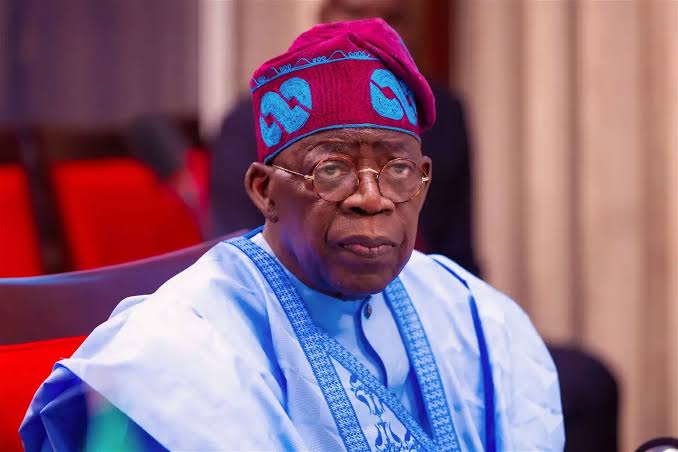
Against this backdrop, President Bola Ahmed Tinubu’s approval for the expansion of the Nigerian Army from eight to 12 divisions, alongside the recruitment of 28,000 additional soldiers, represents one of the most ambitious military restructuring efforts in recent years.
The decision signals a strategic shift aimed at improving operational effectiveness, strengthening command structures and positioning the Army to respond more rapidly to emerging security threats.
According to a statement by the President’s Special Adviser on Information and Strategy, Bayo Onanuga, the expansion reflects the administration’s determination to strengthen Nigeria’s defence architecture.
The Presidency said the move underscores President Tinubu’s commitment to equipping the Armed Forces to effectively address the country’s evolving security challenges while reinforcing national defence capabilities.
Beyond increasing troop numbers, the initiative is expected to decentralise military operations by bringing command structures closer to conflict-prone areas.
Military divisions are not merely administrative formations; they serve as operational headquarters responsible for planning, coordinating and executing security operations within designated areas.
With only eight divisions previously covering the entire country, commanders often supervised extensive territories, making rapid decision-making and deployment more challenging.
The establishment of four additional divisions in Makurdi, Ilorin, Jalingo and Benin City is expected to reduce operational pressure on existing formations while improving command and control.
According to the Presidency, the new divisions will Improve command and operational coordination, Decentralise military decision-making, Strengthen border security.
Enhance the protection of critical national infrastructure, improve counter-insurgency and internal security operations.Enable faster responses to emerging threats across Nigeria.
For military analysts, placing division headquarters closer to security flashpoints could significantly reduce response times and improve coordination with other security agencies.
Reinforcing the Army’s Human Capacity
The approval for the recruitment of 28,000 additional personnel addresses another long-standing concern—the need for increased manpower.
Nigeria’s security landscape has expanded considerably over the past decade, with troops frequently deployed across multiple theatres of operation.
Additional personnel will help reduce operational fatigue, allow for troop rotation, strengthen newly created formations and enhance the military’s ability to sustain prolonged operations.
The recruitment also complements ongoing efforts to modernise the Armed Forces through better training, improved logistics and enhanced welfare.Building on Existing Military Investments.
Since assuming office, the Tinubu administration has approved increased military recruitment, invested in new combat platforms and equipment, improved troop welfare and continued support for military modernisation.
These measures are intended to ensure that personnel are not only increased in number but are also adequately equipped to confront increasingly sophisticated security threats.
The Presidency described the Army expansion as part of a broader programme designed to improve operational readiness across all theatres.
A Two-Phase Implementation Plan
The restructuring will be implemented in phases. The first phase, expected to be completed by September 2026, includes the establishment of the 5 Division in Makurdi, the 9 Division in Ilorin, and the 10 Division in Jalingo, alongside the reorganisation of existing formations.
The second phase, scheduled for completion by December 2026, will establish the 83 Division in Benin City and conclude additional restructuring efforts..Upon completion, the Nigerian Army’s 12 divisions will have headquarters in Kaduna, Ibadan, Jos, Makurdi
Port Harcourt, Maiduguri, Sokoto, Ilorin, Jalingo
Lagos, Enugu and Benin City. Each division will oversee designated operational areas across the federation.
President Tinubu also commended the Chief of Army Staff, Lieutenant General Waidi Ibrahim Shuaibu, alongside officers and soldiers of the Nigerian Army for their dedication to national service.
He reaffirmed his administration’s commitment to ensuring the Armed Forces remain adequately equipped, highly motivated and capable of safeguarding Nigeria’s territorial integrity and protecting citizens.
Strong political backing, analysts argue, is essential for sustaining military reforms, particularly when they involve large-scale organisational restructuring and increased investment.
While expanding the Army marks a significant milestone, security experts note that military strength alone cannot completely eliminate insecurity.
Success will also depend on intelligence gathering, collaboration among security agencies, community engagement, judicial reforms and addressing the socio-economic conditions that often fuel violent extremism and organised crime.
Nevertheless, the creation of four new divisions and the recruitment of 28,000 additional personnel represent a major enhancement of Nigeria’s military capacity.If effectively implemented alongside broader security reforms, the expansion could improve operational efficiency, strengthen territorial coverage and enable quicker responses to security threats across the country.
As Nigeria continues to confront complex and evolving security challenges, the Army’s expansion may become one of the defining pillars of the Tinubu administration’s national security strategy, with its true impact measured not by the number of new formations created, but by safer communities and improved national stability.