

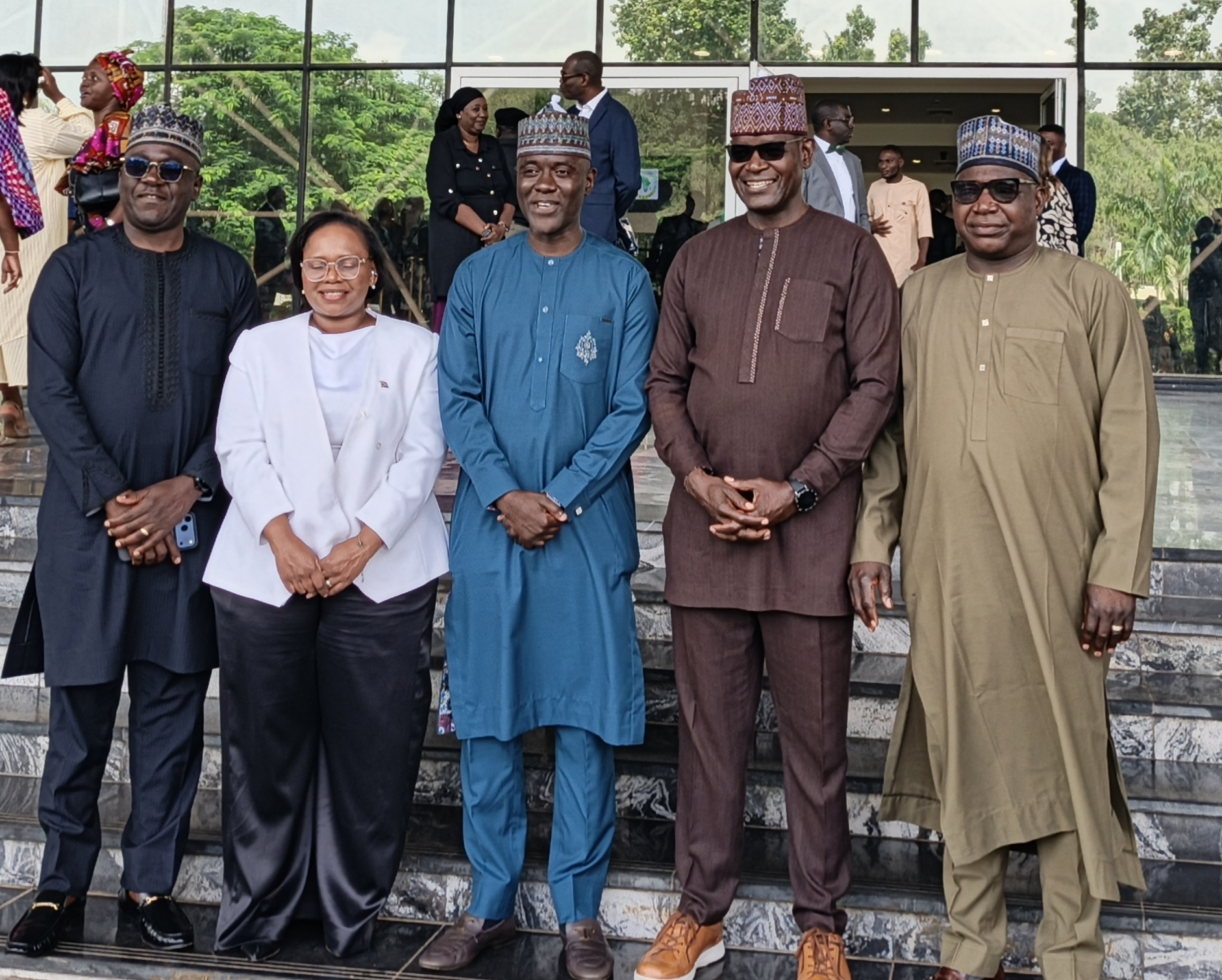
Nigeria has reaffirmed its commitment to strengthening Africa’s digital future by hosting the Seventh Ordinary Session of the African Telecommunications Union (ATU) Conference Preparatory Committee in Abuja, with leaders calling for greater continental cooperation ahead of the International Telecommunication Union (ITU) Plenipotentiary Conference scheduled for November in Doha, Qatar.
Speaking at the opening ceremony on Monday, Permanent Secretary of the Federal Ministry of Communications, Innovation and Digital Economy, Engr. Nadungu Gagare, welcomed delegates from across Africa, describing the gathering as a critical platform for shaping the continent’s digital transformation agenda.
He conveyed the goodwill of the Minister of Communications, Innovation and Digital Economy, Dr. Bosun Tijani, reaffirming Nigeria’s commitment to working closely with the ATU and its member states to accelerate digital integration, innovation and sustainable socio-economic development across Africa.
Gagare noted that the committee’s deliberations would review the Union’s activities over the past four years, including the outcomes of the recent special session of the Administrative Council held in Abuja, while laying the groundwork for decisions to be taken at the forthcoming Conference of Plenipotentiaries.
“As Africa navigates an era of rapid technological advancement and digital innovation, collaboration among member states has never been more important,” he said, expressing confidence that the committee would produce recommendations that would strengthen the ATU and promote inclusive digital development across the continent.
He reiterated Nigeria’s resolve to support the Union’s vision of building a connected, innovative and prosperous Africa and wished delegates productive deliberations during their stay in Abuja.
Also speaking, Executive Vice Chairman and Chief Executive Officer of the Nigerian Communications Commission (NCC), Dr. Aminu Maida, described the conference as more than a routine preparatory meeting, saying it represented the foundation upon which Africa’s influence in global telecommunications policy would be built.
Maida said Nigeria was honoured to host the gathering, which reflected Africa’s determination to develop common positions on issues shaping the future of telecommunications and the digital economy.
According to him, delegates are expected to review the ATU’s activities from 2023 to 2026, prepare resolutions and recommendations for the Union’s Conference of Plenipotentiaries, and fine-tune Africa’s collective preparations for the ITU Plenipotentiary Conference (PP-26) in Doha.
He stressed that while the ATU conference would determine the strategic direction of Africa’s telecommunications union, the ITU conference would shape the future leadership and priorities of the global telecommunications body.
“Africa’s influence at international forums depends not on the size of our delegations but on the quality of our preparation, the coherence of our positions and the consistency with which we advance them,” Maida said.
He urged African countries to institutionalise cooperation beyond conferences through regular coordination mechanisms, designated national focal points, technical collaboration and continuous knowledge sharing.
The NCC chief identified spectrum harmonisation, artificial intelligence governance, cybersecurity, digital identity, data protection and universal connectivity as key issues requiring coordinated continental action.
He argued that Africa’s growing digital economy, expanding mobile connectivity and youthful population make it imperative for the continent to play a more active role in shaping global standards rather than merely adopting them.
“Our objective is not to resist global standards but to help shape standards that reflect African realities while remaining globally relevant,” he said.
Maida also called for stronger African participation in ITU study groups, technical committees and regional preparatory meetings, stressing that sustained technical engagement would ensure African perspectives are reflected from the earliest stages of global policy development.
He commended the outgoing Secretary-General of the African Telecommunications Union for eight years of service, noting that the Union had made significant progress in coordinating African positions and strengthening the continent’s voice within international telecommunications forums.
Reaffirming Nigeria’s commitment to regional cooperation, Maida pledged continued technical support, regulatory collaboration, peer learning and active participation in ATU and ITU activities.
He urged delegates to ensure that the Abuja meeting delivers three major outcomes: stronger African alignment ahead of the ITU PP-26, a practical framework for continuous collaboration between conferences, and renewed commitment to technically rigorous African participation in global telecommunications processes.
Declaring the session officially open, Maida expressed confidence that the committee’s work would not only prepare documents for future meetings but also strengthen Africa’s capacity to shape the digital policies and technologies that will define the continent’s future.