


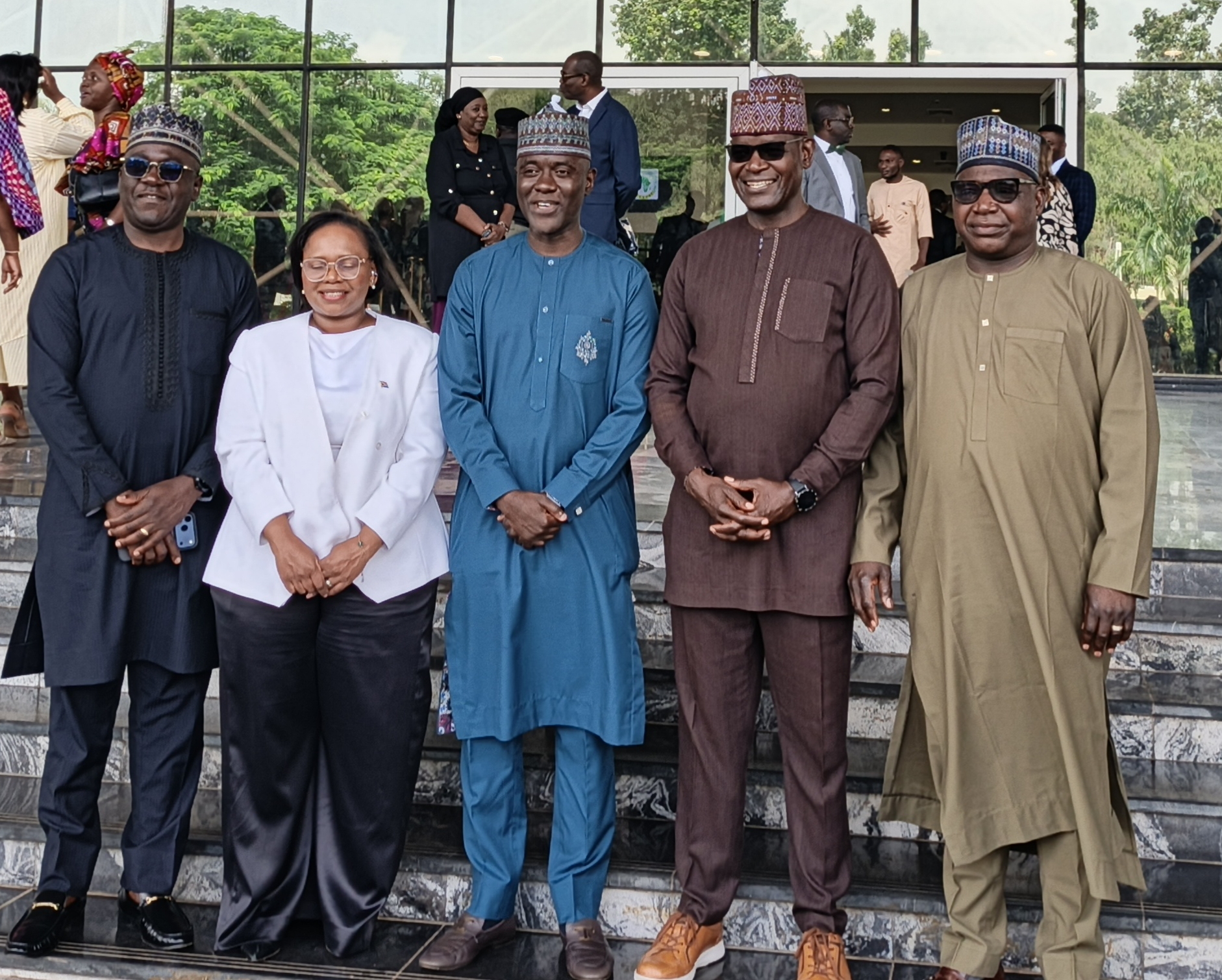
Ahead of the 2026 International Telecommunication Union in Doha 2026, The Executive Vice Chairman and Chief Executive Officer of the Nigerian Communications Commission (NCC), Dr. Aminu Maida, has warned that Africa risks losing its influence in global telecommunications governance unless countries on the continent deepen collaboration and present unified, technically sound positions at international forums.
Speaking at the ongoing event of the 7th Ordinary Session of the Conference Preparatory Committee (CPC) of the African Telecommunications Union (ATU) in Abuja on Monday, Maida stressed that Africa’s voice in global digital policy would be determined by the quality of its preparation rather than the size of its delegations.
Representing the NCC, the Federal Ministry of Communications, Innovation and Digital Economy and the Federal Government of Nigeria, Maida told delegates that “preparation is not a procedural step, but the place where influence is built.”
He said the two-day meeting should deliver three key outcomes: stronger African alignment ahead of the International Telecommunication Union (ITU) Plenipotentiary Conference (PP-26) in Doha, the establishment of practical mechanisms for collaboration between conferences, and sustained technical participation in ITU processes.
According to him, Africa must approach international negotiations with common positions that are both coherent and technically robust.
Maida explained that the committee would review the activities of the African Telecommunications Union from 2023 to 2026 and prepare recommendations for the ATU Conference of Plenipotentiaries (CPL-26), while also finalising Africa’s preparations for the ITU PP-26 scheduled for Doha later this year.
He noted that while CPL-26 would define the strategic direction of the African Telecommunications Union, the ITU conference would determine the priorities and leadership of the global telecommunications body.
“Our work here must serve both purposes clearly, strengthening the ATU as Africa’s coordinating institution while ensuring that Africa is well prepared to participate effectively at the ITU,” he said.
The NCC boss identified spectrum harmonisation, artificial intelligence governance, data protection, universal access, digital identity and cybersecurity as major policy issues requiring coordinated African responses.
He maintained that no country could effectively address such cross-border challenges in isolation and called for stronger institutional cooperation among African regulators.
“Coordination should not begin only when a conference agenda is circulated, and it should not end when delegates leave the room,” Maida said.
He proposed continuous collaboration through standing working arrangements, designated national focal points, regular technical coordination meetings and shared access to research and evidence to strengthen Africa’s collective positions.
Maida further urged African countries to increase participation in ITU study groups, technical committees and regional preparatory meetings, noting that standards are often shaped long before final conferences take place.
“Our objective is not to resist global standards. It is to help shape standards that are globally sound and sufficiently informed by African realities,” he said.
He observed that Africa’s rapid expansion in mobile connectivity, digital financial services and internet adoption among young people makes it imperative for the continent to play a greater role in setting global telecommunications standards.
Earlier, the Permanent Secretary of the Federal Ministry of Communications, Innovation and Digital Economy, Engr. Faruk Yabo, welcomed delegates to Abuja and reaffirmed Nigeria’s commitment to supporting the African Telecommunications Union in advancing regional digital integration and sustainable socio-economic development.
Yabo said the committee’s deliberations would provide the foundation for decisions to be taken at the forthcoming Conference of Plenipotentiaries and further strengthen the Union’s capacity to drive inclusive digital development across Africa.
Also speaking, ATU Secretary-General John Omo, who is expected to complete his second term at CPL-26, thanked Nigeria for hosting the meeting and highlighted the Union’s achievements over the past eight years.
He said ATU membership had grown from 49 to 52 member states, while associate membership increased from 50 to 56 organisations, with academia now participating through 18 institutions.
Omo said the Union had recorded significant progress in spectrum management, satellite communications, submarine cable resilience, artificial intelligence, cybersecurity and broadband expansion across Africa.
However, he expressed concern over funding challenges facing the organisation, noting that irregular payment of membership contributions had affected planning and operational efficiency.
He urged delegates to review the Union’s legal instruments and governance framework to reflect its expanding responsibilities ahead of CPL-26, where a new Secretary-General for the 2027–2031 term will be elected.
Declaring the session open, Maida said the success of the Abuja meeting would be measured by Africa’s ability to leave with stronger continental alignment ahead of ITU PP-26, practical mechanisms for sustained collaboration and renewed commitment to technically rigorous participation in global telecommunications decision-making.
“If we achieve those three things, this committee will have done far more than prepare documents for another meeting. It will have strengthened Africa’s capacity to shape the decisions that will define our digital future,” he said.