


Across Nigeria’s troubled security landscape, the Armed Forces have continued to fight a complex war on multiple fronts—against terrorism in the North-East, banditry in the North-West, kidnapping in the North-Central, oil theft in the Niger Delta, and violent criminal groups in the South-East.
The latest operational briefing from the Defence Headquarters covering 10 to 16 July 2026 paints a picture of an increasingly intelligence-driven military campaign focused not only on neutralising criminal elements but also on rescuing victims and disrupting criminal logistics.
The operations underscore the changing nature of Nigeria’s security response, where success is measured not only by the number of terrorists neutralised but by lives saved, criminal networks dismantled, and communities restored.
Intelligence Replacing Conventional Warfare
One of the defining features of the week’s operations was the growing reliance on intelligence-led missions.
In the North-East, troops of Operation Hadin Kai continued sustained pressure on Boko Haram and ISWAP remnants. Rather than relying solely on battlefield engagements, military intelligence led to the arrest of several terrorist collaborators, logistics suppliers and even a suspected foreign spy who claimed to be from the Niger Republic.
The arrests of individuals supplying fuel and other materials to insurgents highlight a strategic shift. Security experts have long argued that defeating terrorism requires dismantling supply chains as much as eliminating fighters.
The military’s ability to intercept logistics suppliers across Borno State suggests increasing penetration of terrorist support networks that have sustained insurgency for years.
Rescue Operations Becoming a Measure of Success
Perhaps the most encouraging aspect of the week’s operations was the number of civilians rescued across different theatres.
From Borno to Zamfara, Plateau, Niger, Benue, Kogi, Edo and Abia States, troops rescued numerous kidnapping victims, including women, children, students, commuters and farmers.
Among the most notable operations was the rescue of a school principal, a National Examinations Council (NECO) official and two students abducted during an attack on an examination centre in Dekina Local Government Area of Kogi State. Sustained pressure by security agencies forced the kidnappers to abandon their captives.
Similarly, in Borno State, military personnel rescued women and children near Armuda Bridge in Gwoza after treating them for minor injuries before reuniting them with their community.
These rescues reflect an operational doctrine increasingly focused on preserving lives while denying criminal groups the financial benefits of kidnapping.
Community Collaboration Proving Effective
The briefing also highlights the growing role of local communities and vigilante organisations in complementing military operations.
Forest Guards in Kwara State acted on credible intelligence to rescue two children and neutralise a suspected terrorist while recovering an AK-47 rifle and other weapons.
In Kogi State, local hunters apprehended a suspected terrorist before handing him over to military authorities for investigation.
This cooperation reflects a broader recognition that local intelligence remains one of the military’s most valuable assets in tracking criminal movements across difficult terrain.
Cutting Off Criminal Supply Chains
Beyond arrests, troops also intercepted weapons, ammunition and illegal arms moving across different regions.
In Kaduna State, soldiers intercepted a suspected arms shipment containing locally fabricated rifles and submachine guns allegedly destined for criminal groups.
Elsewhere, troops arrested an ammunition courier transporting dozens of rounds of ammunition along the Keffi-Abuja road, while other operations led to the recovery of assault rifles, pump-action guns, pistols and magazines.
Each interception reduces the firepower available to terrorists, kidnappers and armed criminal gangs. Economic Security Remains a National Priority.While counter-terrorism dominates headlines, the military continues to wage an equally important battle against economic sabotage in the Niger Delta.
Under Operation Delta Safe, troops uncovered illegal refining sites in Rivers State containing stolen crude oil and equipment used for illicit refining.
Illegal oil refining continues to deprive Nigeria of significant revenue while causing severe environmental degradation. The destruction of illegal refining infrastructure therefore serves both economic and environmental objectives.
Security Is Still a National Challenge
Despite these gains, the operations also reveal the scale of Nigeria’s continuing security challenges. Kidnappers remain active along highways. Terrorists continue infiltration attempts in parts of the North-East.
Criminal groups still target schools and educational institutions.
Oil thieves continue operating in the Niger Delta.
Separatist-linked criminal activities persist in parts of the South-East.
The nationwide spread of these threats demonstrates that security agencies must continue operating simultaneously across multiple theatres.
A Symbolic Victory Beyond the Battlefield
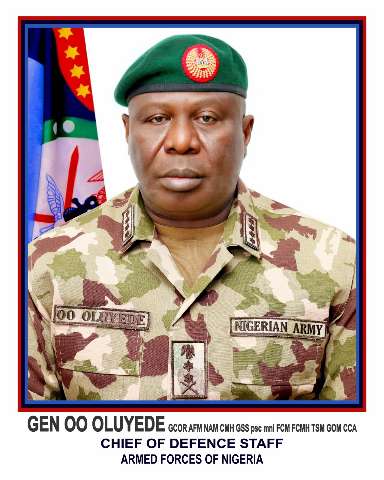
Beyond the weekly operational successes, the Chief of Defence Staff, General Olufemi Oluyede, highlighted what many consider one of the military’s most significant achievements this year—the successful rescue of the 44 pupils and teachers abducted in Oriire Local Government Area of Oyo State after spending 56 days in captivity.
According to Defence Headquarters, the operation was completed without any concession to the abductors, demonstrating what intelligence-led coordination among security agencies can achieve.
The Road Ahead
The military insists that operations will continue until peace and stability are restored nationwide..While the latest briefing shows measurable progress through arrests, rescues and the disruption of criminal networks, sustaining these gains will require continued intelligence sharing, community cooperation and coordination among security agencies.
Ultimately, Nigeria’s security challenge remains a marathon rather than a sprint. Each rescued victim, intercepted weapon and dismantled criminal network represents another step toward restoring confidence in communities long affected by violence.
For many Nigerians, however, the true measure of success will be the day such weekly operational briefings become stories of a conflict that has finally come to an end.