Business
FG Launches Five Flagship Programmes to Accelerate Poverty Reduction, Human Capital Development

By Matthew Otabe
The Federal Government has launched five flagship programmes aimed at accelerating poverty reduction, strengthening community resilience, improving human capital development and supporting vulnerable Nigerians as part of President Bola Ahmed Tinubu’s Renewed Hope Agenda.
The programmes, unveiled in Abuja on Thursday, include the Nigeria Community Action for Resilience and Economic Stimulus (NG-CARES) Additional Financing, the Solutions for Internally Displaced Persons and Host Communities (SOLID) Programme, and the Human Capital Opportunities for Prosperity and Equity (HOPE) initiative, comprising HOPE-GOV, HOPE-PHC and HOPE-EDU.
Representing President Tinubu at the launch, the Minister of Finance and Coordinating Minister of the Economy, Prof. Taiwo Oyedele, described the initiatives as landmark interventions designed to ensure that the gains of ongoing economic reforms translate into improved living standards for ordinary Nigerians.
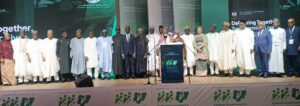
He said the programmes reflect the administration’s commitment to protecting vulnerable citizens, empowering communities and investing in human capital to drive sustainable national development.

“These are not just programmes; they are promises kept. We came into office determined to reform the economy, secure the nation and invest in our people. Today, we are delivering on that commitment,” he said.
According to the minister, the programmes form part of Nigeria’s long-term development strategy under the Renewed Hope Development Plan 2026-2050, which focuses on economic diversification, stronger institutions and human capital development.
He noted that recent economic reforms were beginning to yield positive results, citing improving economic growth, declining inflation, rising investor confidence and stronger external reserves.
Oyedele said the administration had already reached about 15 million vulnerable households, lifting an estimated 7.5 million Nigerians out of poverty, adding that the newly launched programmes would expand those gains.
He disclosed that the NG-CARES Additional Financing, valued at $1.25 billion and supported by the World Bank, would focus on supporting smallholder farmers and micro and small enterprises.
He said the $300 million SOLID Programme would provide long-term support for internally displaced persons and host communities through investments in infrastructure, livelihoods and essential social services.
The minister also explained that the $1.5 billion HOPE Programme would strengthen governance at the ward level, improve primary healthcare delivery, enhance foundational education and support teachers across the country.
According to him, the five interventions represent a coordinated national strategy to reduce poverty, improve access to healthcare and education, strengthen livelihoods and build resilient communities.
He called on state governments, local government councils, development partners and implementing agencies to ensure effective implementation of the programmes.
Earlier, the Minister of Budget and Economic Planning, Sen. Abubakar Atiku Bagudu, described the launch as another milestone in translating the Renewed Hope Agenda into practical interventions for poor and vulnerable Nigerians.
Bagudu said the programmes were designed to cushion the effects of the global cost-of-living crisis, strengthen social protection systems, expand economic opportunities and improve human capital outcomes.

He attributed rising living costs partly to global disruptions caused by the Russia-Ukraine conflict and instability in the Middle East, which have affected energy and fertiliser prices worldwide.
The minister acknowledged the World Bank’s support for Nigeria’s reform agenda, noting that the programmes complement government investments made possible through ongoing macroeconomic reforms.
He explained that the initiatives were approved by the National Economic Council to ensure collaboration among the Federal Government, states and local governments in addressing poverty, education, healthcare and livelihood challenges.
Bagudu said the first phase of the NG-CARES programme, implemented between 2021 and 2025 with $750 million in funding, reached 17.6 million beneficiaries, including poor households, farmers, micro-enterprises and communities affected by the COVID-19 pandemic.
He added that the additional financing would further strengthen food security, community resilience and social protection nationwide.
According to him, the SOLID Programme would move beyond emergency humanitarian assistance by supporting long-term development in states hosting large populations of internally displaced persons through investments in infrastructure, livelihoods and social cohesion.
He noted that the HOPE Programme would improve governance, healthcare delivery and learning outcomes through coordinated implementation involving the three tiers of government.
Bagudu stressed that the programmes would complement the administration’s economic reforms by ensuring that growth translates into measurable improvements in the lives of vulnerable Nigerians.
He urged all implementing institutions, state governments, local councils, development partners and the private sector to work together to ensure the success of the initiatives, saying the programmes represent a whole-of-government approach to inclusive national development.