The Federal Government has announced plans to deliver about 160,000 affordable housing units across 774 local government areas, as part of efforts to close Nigeria’s housing deficit and expand access for low-income and informal workers.
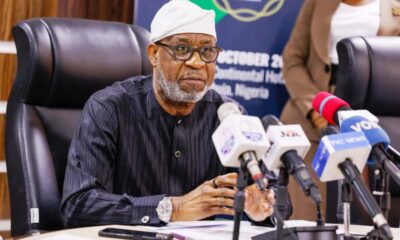
Minister of Housing and Urban Development, Engr. Dr. Muttaqha Rabe Darma, who represented President Bola Ahmed Tinubu, disclosed this on Monday at the 20th anniversary edition of the African International Housing Show, AIHS, in Abuja.
Speaking on the theme _“Housing Solutions for Low Income and Informal Workers in Africa,”_ Darma described housing as “a catalyst for economic growth, social stability, job creation, improved public health and national development.”
He congratulated the convener, organizing committee and stakeholders for sustaining the AIHS for two decades, noting that the platform has become Africa’s premier forum for housing and construction dialogue.
“Every investment in housing stimulates multiple sectors, creates employment opportunities, strengthens local industries, and ultimately improves the quality of life for our people,” the Minister said.
Darma said under the Renewed Hope Agenda, the government has elevated housing from a social service to a strategic driver of economic growth and industrialization.
Key interventions, he noted, include ongoing projects in all states and the FCT, with 14 flagship developments. Ongoing sites include 2,888 units in Karsana, Abuja; 2,084 units in Epe, Lagos; and 2,200 units in Lamu, Kano State.
He stressed that National Housing Programme which inherited projects are being completed while new ones are initiated, with completed estates handed over to state governments for allocation to citizens.
“A long-term objective to build 1,100,000 affordable housing units, with mortgage, rent-to-own and purchase options for low- and middle-income Nigerians.”
He added that the government is expanding the use of Public-Private Partnerships and innovative finance through institutions such as Real Estate Investment Trusts, Federal Mortgage Bank of Nigeria, Family Homes Funds, Nigeria Mortgage Refinance Company and private developers.
Beyond construction, Darma said the National Urban Renewal Programme is delivering roads, drainage, water, sanitation, street lighting and environmental upgrades in underserved communities.
The government has also launched Nigeria’s first integrated National Housing Data Programme to support evidence-based planning and investment, and is strengthening the National Digital Land Information System to improve transparency and access to land.
On local content, he said the Ministry is promoting building materials manufacturing and adoption of construction technologies to reduce import dependence, lower costs and create jobs.
The Minister announced a new _Mass Social Housing Scheme_ to deliver 200 affordable housing units in each of the 774 LGAs — totaling about 160,000 units nationwide.
“This initiative complements the broader Renewed Hope Housing Programme and reinforces our commitment to ensuring that every Nigerian has an opportunity to own decent housing,” he said.
Darma stressed that government alone cannot meet the housing gap, and called for stronger partnerships among governments, financial institutions, private sector, development partners and communities.
Chairman, Senate Committee on Housing, Senator Aminu Tambuwal, who represented Senate President Godswill Akpabio, said the 10th Senate remains committed to providing legislative support through enabling laws, oversight and stakeholder engagement.
He urged stakeholders to use the AIHS platform to forge partnerships that will accelerate delivery of affordable and sustainable housing.
Managing Director, Federal Mortgage Bank of Nigeria, FMBN, Shehu Usman Osidi, said the Bank is expanding access to housing finance through products such as the National Housing Fund mortgage, Home Renovation Loan, Rent-to-Own, Rent Assistance Loan, and Cooperative Housing Development Loan.
He also highlighted new windows for Nigerians in the diaspora and non-interest financing options to improve inclusion.
Osidi noted that across Africa, rising land and construction costs, weak infrastructure and limited access to affordable finance have pushed homeownership out of reach for many low-income and informal workers. He called for innovative finance models and stronger PPPs to bridge the gap.
Organizers said the 20th edition of the African International Housing Show brought together policymakers, investors, developers, financial institutions and professionals to discuss practical solutions to Africa’s housing challenges.
Darma, on behalf of President Tinubu, declared the 20th anniversary edition open and urged participants to translate discussions into “actionable partnerships and measurable outcomes” that will impact millions of Africans still in need of decent and affordable housing